

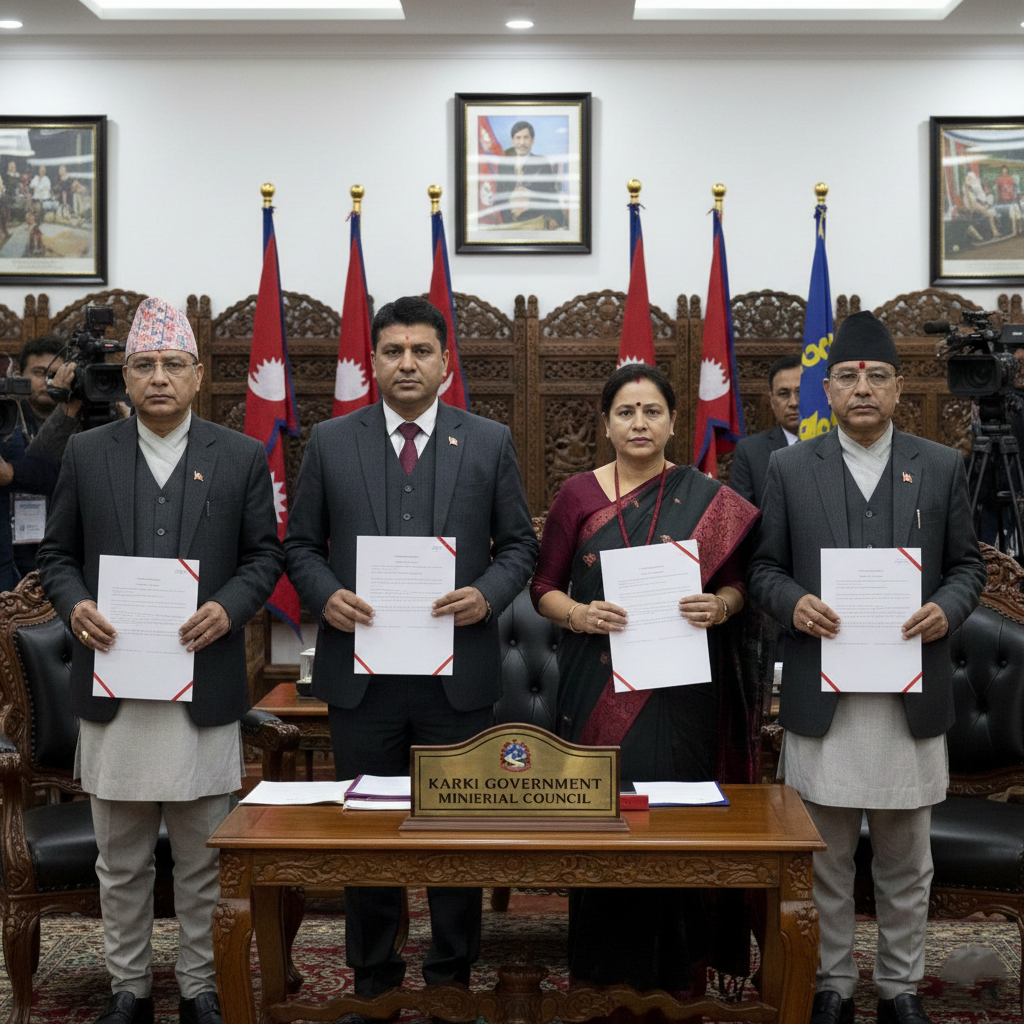
In a major political development in Nepal, four ministers in the interim government led by Prime Minister Sushila Karki have resigned their posts to enter the fray of the upcoming March 5 general elections. This move signals a significant shift in the political dynamics of the country, as influential leaders transition from administrative roles to active electoral politics, potentially impacting voter sentiment and party strategies ahead of the polls.
For comprehensive updates on this evolving story, visit thenews.zone.
Why Ministerial Resignations Matter in Nepal’s Election Context
Changing the Interim Government Landscape
The interim government in Nepal, formed with the primary responsibility to manage and conduct elections, has seen a wave of resignations from its ministerial bench. Originally sworn in to oversee a smooth transition to the next elected government, several ministers are now pursuing electoral ambitions, creating gaps in key ministries.
This shift reflects broader political currents in Nepal, where national attention is now fully focused on the general elections, and political leaders are repositioning themselves for electoral advantage.
Who Resigned and From Where
Here’s a clear breakdown of the ministers who resigned, the constituencies they aim to represent, and their political affiliations:
| Minister Name | Former Portfolio | Election Constituency | Political Affiliation/Status |
| Kulman Ghising | Energy, Water Resources, and Urban Development | Kathmandu-3 | Leader of Ujyalo Nepal Party |
| Bablu Gupta | Youth and Sports Minister | Siraha-1 | Rastriya Swatantra Party (RSP) |
| Jagdish Kharel | Communications and Information Technology Minister | Lalitpur-2 | Rastriya Swatantra Party (RSP) |
| Mahabir Pun | Education, Science, and Technology Minister | Myagdi-1 | Independent Candidate |
Detailed Profiles of Key Ministers Who Resigned
Kulman Ghising: The Energy Expert Turned Politician
Kulman Ghising, widely known for his tenure as the head of the Nepal Electricity Authority and credited with significantly reducing power cuts in the country, left his ministerial post earlier to form the Ujyalo Nepal Party and contest the election from Kathmandu-3. His transition from technocrat to politician underscores growing political aspirations among Nepal’s administrative leaders.
Bablu Gupta and Jagdish Kharel: Rising Political Figures
Both Bablu Gupta and Jagdish Kharel, previously holding youth and communication portfolios respectively, resigned in early January to represent the Rastriya Swatantra Party in their constituencies. Their decisions highlight the RSP’s strategy to strengthen its presence with candidates who have both administrative experience and public recognition.
Mahabir Pun: Independent Candidate With a Vision
Mahabir Pun, a renowned scientist and founder of the National Innovation Centre, opted to run as an independent candidate from Myagdi-1. His resignation adds an interesting dimension to the election as independent candidates with strong grassroots support can influence national discourse.
Political Implications of the Resignations
Impact on Government Functionality
The mass resignation of ministers has inevitably strained the interim administration’s capacity to manage day-to-day governance. With several high-profile ministries now managed directly by the prime minister, questions have emerged about the efficiency and focus on election oversight versus administrative responsibilities.
Public Perception and Trust
Critics argue that these ministers, initially appointed to ensure fair election management, have abandoned their duty midway. Observers believe that their resignations could be seen as prioritizing personal political ambitions over national service, raising concerns about public trust.
Conversely, supporters maintain that contesting elections is a democratic right, and transitioning from caretaker roles to active politics is a legitimate step for leaders who want to serve in elected capacities.
How This Affects the March 5 General Elections
Election Timeline and Voter Base
The upcoming House of Representatives elections, scheduled for March 5, will see voters across 165 constituencies cast their ballots through the first-past-the-post (FPTP) system, alongside proportional representation seats.
Currently, over 18.9 million citizens, including a significant number of women voters, are registered and eligible to vote, marking a highly participatory democratic exercise.
Strategic Realignments
With these high-profile resignations, political alliances and strategies are rapidly evolving. Parties like the Rastriya Swatantra Party and new entrants like the Ujyalo Nepal Party are positioning themselves to capitalize on public sentiment and win a strong foothold in the federal parliament.
Comparison: Nepal’s Interim Government and Past Transitions
| Feature | Past Interim Governments | Karki Interim Government (2025–2026) |
| Formation Trigger | Political stalemates | Gen Z protests and resignation of KP Oli |
| Mandate | Conduct elections | Conduct elections |
| Ministerial Stability | Typically stable | Multiple resignations |
| Focus | Neutral transition | Electoral competition among ministers |
| Public Trust Challenges | Moderate | Higher due to mid-way resignations |
Internal and Outbound SEO Links
For more insightful political news and analysis, check out thenews.zone.
Learn about Nepal’s interim government on Wikipedia: Karki interim cabinet.
Stay updated on Nepal’s general election details at Radio Nepal Online.
Frequently Asked Questions (FAQs)
Why did the ministers in the Karki government resign?
The ministers resigned to contest the upcoming March 5 general election, leveraging their political credibility and public profile to run for seats in the House of Representatives.
What are the implications of these resignations for Nepal’s interim government?
With several key ministries now vacant, Prime Minister Sushila Karki is overseeing additional portfolios temporarily, which may impact both administrative efficiency and public perception of neutrality.
Who are the constituencies these former ministers are contesting from?
Kulman Ghising is contesting from Kathmandu-3, Bablu Gupta from Siraha-1, Jagdish Kharel from Lalitpur-2, and Mahabir Pun from Myagdi-1.
Can ministers resign and contest elections under Nepalese law?
Yes, Nepalese election laws permit ministers to resign and contest elections, provided they comply with candidacy requirements and resignation protocols.
Conclusion
The resignation of four ministers in the Karki government to contest the 2026 general elections in Nepal represents a pivotal moment in the nation’s democratic journey. It reflects evolving political aspirations and reshapes how interim administrations function during crucial electoral periods.
For ongoing political developments, in-depth analyses, and election coverage, keep visiting thenews.zone — your trusted source for reliable news.
