

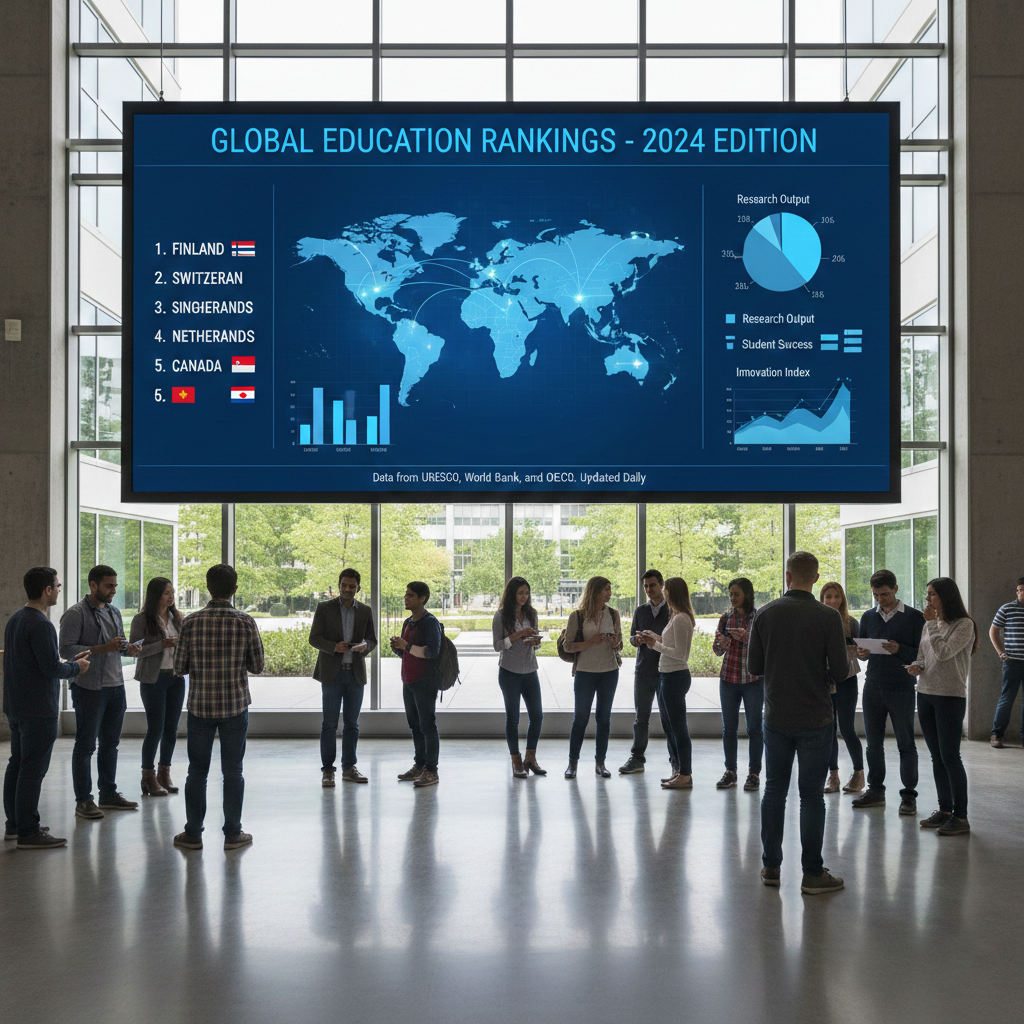
Why Fresh Global Education Rankings Matter More Than Ever
Education is evolving faster than ever, and fresh global education rankings have become a powerful decision-making tool for students, parents, policymakers, and institutions worldwide. Whether you are planning to study abroad, comparing universities, or analyzing how countries invest in education, the latest rankings offer valuable, data-driven insights.
In 2025, global education rankings go beyond academic reputation. They now measure teaching quality, research impact, employability, international outlook, sustainability, digital learning, and innovation. This shift reflects the changing demands of a globalized, tech-driven world.
In this in-depth guide, you’ll find a complete breakdown of the latest global education rankings, top-performing universities, best countries for education, emerging trends, and what these rankings really mean for your future.
Understanding Global Education Rankings: How They Work
Global education rankings are created using a mix of quantitative data and qualitative indicators. Different ranking bodies focus on different priorities, which is why rankings may vary slightly across platforms.
Key Factors Used in Global Education Rankings
Most global rankings evaluate institutions and countries based on:
- Academic reputation and peer reviews
- Quality of teaching and faculty credentials
- Research output, citations, and innovation
- Graduate employability and industry links
- International student and faculty diversity
- Infrastructure, digital learning, and facilities
- Sustainability and social impact
These metrics ensure rankings reflect both academic excellence and real-world relevance.
Top Global Education Ranking Organizations to Watch in 2025
Several high-authority organizations dominate the global education ranking ecosystem.
QS World University Rankings
QS focuses heavily on:
- Academic reputation
- Employer reputation
- International diversity
- Research impact per faculty
It is especially popular among students planning international education.
Times Higher Education (THE) Rankings
THE emphasizes:
- Teaching environment
- Research volume and influence
- Industry income
- Global outlook
It is widely respected for its balanced and transparent methodology.
Academic Ranking of World Universities (ARWU)
Also known as the Shanghai Rankings, ARWU prioritizes:
- Nobel laureates and awards
- High-impact research
- Publications in top journals
This ranking favors research-intensive institutions.
UNESCO and OECD Education Reports
For country-level education analysis, UNESCO and OECD provide reliable data on:
- Literacy rates
- Education access
- Public spending on education
- Learning outcomes
Fresh Global University Rankings 2025: Top Institutions Worldwide
Based on aggregated insights from major ranking platforms, here are the leading universities globally in 2025.
| Rank | University | Country | Key Strength |
|---|---|---|---|
| 1 | Massachusetts Institute of Technology (MIT) | USA | Innovation & Technology |
| 2 | University of Oxford | UK | Research & Humanities |
| 3 | Stanford University | USA | Entrepreneurship |
| 4 | University of Cambridge | UK | Academic Excellence |
| 5 | Harvard University | USA | Global Influence |
| 6 | ETH Zurich | Switzerland | Engineering & Science |
| 7 | National University of Singapore | Singapore | Asian Leadership |
| 8 | Imperial College London | UK | STEM & Medicine |
| 9 | University of Tokyo | Japan | Research & Technology |
| 10 | University of Toronto | Canada | Multidisciplinary Strength |
These institutions consistently perform well across teaching quality, global reputation, research output, and graduate outcomes.
Best Countries in Fresh Global Education Rankings
Global education rankings also highlight countries that offer the best overall education systems, not just elite universities.
United States: Global Academic Powerhouse
The USA continues to dominate global rankings due to:
- World-class universities
- Strong research funding
- Industry-academia collaboration
- High employability rates
United Kingdom: Excellence with Global Reach
The UK stands out for:
- Historic academic institutions
- Shorter degree durations
- Strong international student ecosystem
- Research-driven teaching models
Canada: Quality Education with Affordability
Canada’s education system ranks high because of:
- Affordable tuition compared to peers
- High visa approval rates
- Strong student support systems
- Multicultural learning environment
Germany: Tuition-Free Excellence
Germany is a favorite for:
- Low or zero tuition fees
- Strong engineering and technical programs
- Industry-focused education
- Research innovation
Australia: Student-Friendly Education Hub
Australia ranks high due to:
- Globally recognized degrees
- Excellent student lifestyle
- Strong focus on employability
- High international student satisfaction
Rising Education Powerhouses in 2025
Apart from traditional leaders, several countries are rapidly climbing global education rankings.
Asia’s Growing Dominance
- Singapore: High-quality STEM education and innovation
- China: Massive investment in research universities
- South Korea: Technology-driven learning models
- Japan: Research excellence and industrial integration
Middle East Education Growth
Countries like the UAE and Saudi Arabia are investing heavily in:
- International branch campuses
- Digital education infrastructure
- Global academic partnerships
Education Rankings vs Employability: What Really Matters
One of the biggest shifts in fresh global education rankings is the focus on graduate employability.
Universities are now ranked on:
- Employer reputation
- Internship and placement opportunities
- Industry partnerships
- Skills-based learning
Students increasingly prefer institutions that offer career-ready education, not just academic prestige.
Digital Learning and Innovation in Global Rankings
Online and hybrid education has become a key ranking factor in 2025.
Top-ranked institutions excel in:
- AI-powered learning platforms
- Virtual labs and simulations
- Global online degree programs
- Lifelong learning initiatives
Digital readiness is now a major indicator of an institution’s future relevance.
Sustainability and Social Impact in Education Rankings
Modern rankings measure how institutions contribute to society.
Key sustainability indicators include:
- Green campus initiatives
- Climate research contributions
- Community engagement
- Social inclusion policies
Universities aligned with the UN Sustainable Development Goals (SDGs) are gaining higher recognition globally.
How Students Should Use Global Education Rankings Wisely
While rankings are valuable, they should not be the only deciding factor.
Smart Tips for Using Rankings
- Compare subject-specific rankings, not just overall rank
- Consider cost, scholarships, and living expenses
- Evaluate visa policies and post-study work options
- Look at student reviews and campus culture
- Align rankings with your career goals
A university ranked #50 may be a better fit for you than one ranked #5.
Global Education Rankings 2025: Key Trends to Watch
Several trends are reshaping education rankings worldwide.
- Increased focus on skills and employability
- Growth of interdisciplinary programs
- Expansion of online and blended learning
- Stronger global collaborations
- Data-driven teaching models
These trends show that education quality is no longer defined by tradition alone.
Frequently Asked Questions (FAQs)
What are the most reliable global education rankings?
QS World University Rankings, Times Higher Education, and ARWU are considered the most credible and widely used worldwide.
Which country ranks highest in global education overall?
The United States consistently ranks highest due to its research output, academic diversity, and global university presence.
Do global education rankings affect job opportunities?
Yes. Graduating from a highly ranked institution often improves global employability, networking, and career mobility.
Are subject-specific rankings more important than overall rankings?
For many students, subject-specific rankings are more relevant as they reflect department-level excellence.
How often are global education rankings updated?
Most major rankings are updated annually, reflecting the latest academic and research data.
Conclusion: Choosing the Right Path in a Ranked World
Fresh global education rankings in 2025 provide more than just numbers—they offer a window into the future of learning. From top universities and leading countries to emerging education hubs and digital innovation, rankings help students make informed, confident decisions.
However, the smartest approach is to use rankings as a guide, not a rulebook. Combine ranking insights with personal goals, financial planning, and career aspirations to choose the education path that truly fits you.
Ready to explore your global education options?
Stay updated with the latest education rankings, trends, and insights—and take the next step toward a smarter academic future.
