

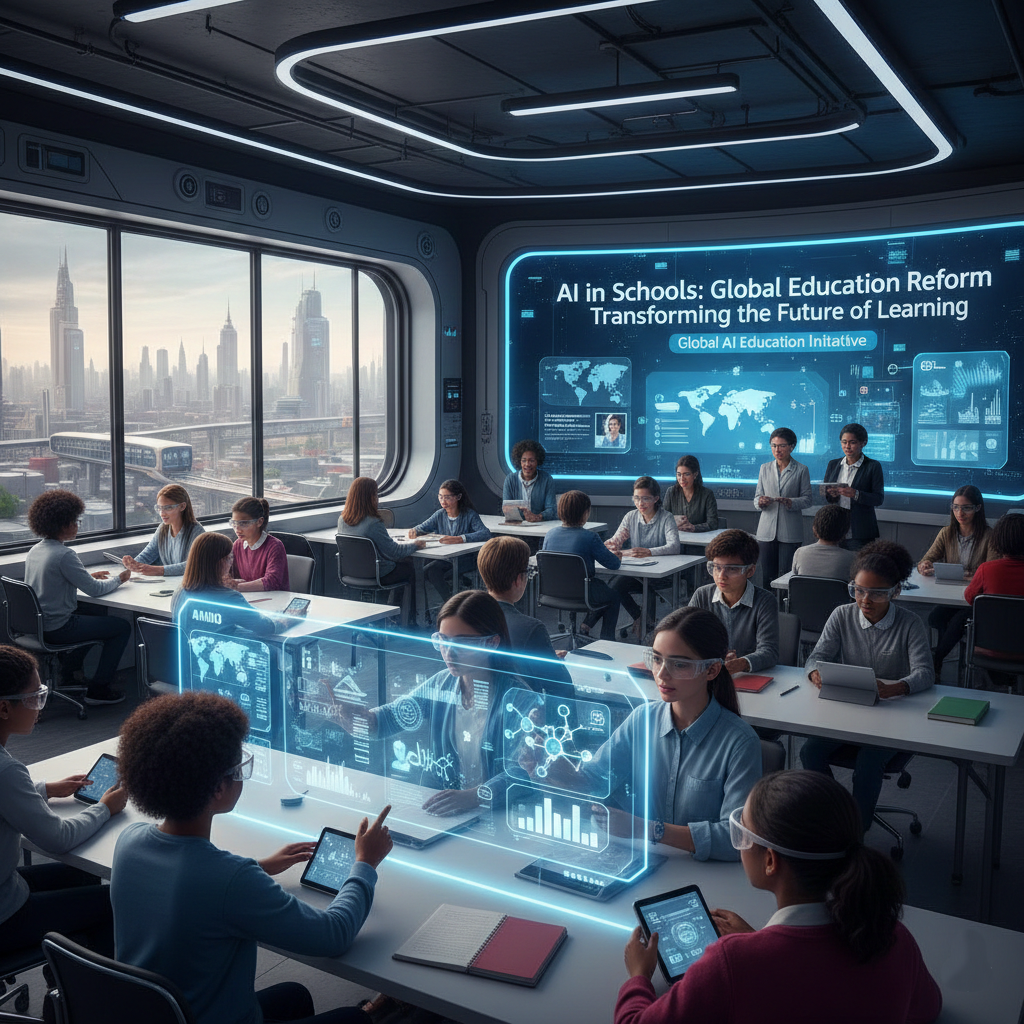
How AI in Schools Is Redefining Global Education
Artificial Intelligence (AI) is no longer a futuristic concept—it is actively reshaping classrooms across the world. From personalized learning paths to intelligent assessment systems, AI in schools is driving a powerful global education reform. Governments, educators, and institutions are embracing AI-powered education to improve learning outcomes, bridge skill gaps, and prepare students for a digital-first future.
As countries compete to build smarter education systems, AI-based learning technologies are becoming central to education policy reforms. This article explores how artificial intelligence in education is transforming schools worldwide, the benefits and challenges involved, real-world global examples, and what the future holds.
Understanding AI in Education: What It Really Means
Artificial Intelligence in education refers to the use of machine learning algorithms, data analytics, and automation to enhance teaching, learning, and school administration.
Key Components of AI-Powered Education
- Intelligent tutoring systems
- Adaptive learning platforms
- AI-driven assessments
- Predictive analytics for student performance
- Smart content creation tools
- Virtual teaching assistants and chatbots
Unlike traditional digital tools, AI systems learn from data, adapt to students’ needs, and improve over time.
Why AI in Schools Is Central to Global Education Reform
Education systems worldwide face common challenges:
- Overcrowded classrooms
- Teacher shortages
- Learning gaps
- Outdated curricula
- Unequal access to quality education
AI-driven education reform addresses these challenges at scale.
Global Drivers Behind AI Adoption in Schools
- Rapid digital transformation
- Demand for future-ready skills
- Need for personalized learning
- Government-led education modernization programs
- Rise of EdTech startups and platforms
AI is not replacing teachers—it is empowering them.
How AI Is Transforming Classrooms Worldwide
Personalized Learning at Scale
AI enables adaptive learning systems that adjust content based on:
- Student performance
- Learning speed
- Strengths and weaknesses
This ensures that no student is left behind, regardless of class size.
Example:
A student struggling with math concepts receives extra practice and visual explanations, while advanced learners move ahead.
Smarter Assessments and Instant Feedback
Traditional exams often fail to reflect real learning. AI-powered assessment tools:
- Evaluate assignments automatically
- Provide instant feedback
- Identify learning gaps
- Reduce teacher workload
This shift allows teachers to focus more on mentoring and less on grading.
AI Tutors and Virtual Teaching Assistants
AI tutors operate 24/7 and help students with:
- Homework assistance
- Concept clarification
- Exam preparation
- Language learning
Chatbots and AI assistants also support teachers by answering routine student queries.
Data-Driven Decision Making in Schools
AI analytics help schools and policymakers:
- Predict dropout risks
- Track attendance patterns
- Measure teaching effectiveness
- Improve curriculum planning
This data-backed approach strengthens education governance globally.
Global Examples of AI in School Education Reform
United States: AI for Personalized Learning
- Adaptive platforms like AI-based LMS systems
- AI-powered special education tools
- Data analytics for student success tracking
China: Smart Classrooms at National Scale
- Facial recognition for attendance
- AI-driven classroom engagement analysis
- National AI curriculum integration
Finland: Ethical AI in Education
- Student-centric AI learning tools
- Strong focus on data privacy
- Teacher-AI collaboration models
India: AI for Inclusive Education
- AI-powered learning apps for rural areas
- Government initiatives like AI curricula in schools
- Multilingual AI education platforms
Benefits of AI in Schools
Key Advantages of AI-Based Education Systems
- Personalized learning experiences
- Improved student engagement
- Reduced teacher administrative burden
- Faster and fairer assessments
- Inclusive education for diverse learners
- Scalable education solutions
Impact on Teachers
AI assists teachers by:
- Automating repetitive tasks
- Providing insights into student progress
- Supporting differentiated instruction
Teachers remain at the heart of learning.
Challenges and Ethical Concerns of AI in Education
Despite its benefits, AI in schools presents real challenges.
Data Privacy and Student Security
- Student data protection
- Cybersecurity risks
- Ethical data usage
Digital Divide and Accessibility
- Unequal access to devices and internet
- Gaps between developed and developing nations
Bias in AI Algorithms
- Risk of biased data influencing outcomes
- Need for transparent AI systems
Teacher Training and Readiness
- Lack of AI literacy among educators
- Resistance to technology adoption
AI vs Traditional Education: A Comparative View
| Aspect | Traditional Education | AI-Powered Education |
|---|---|---|
| Learning Style | One-size-fits-all | Personalized & adaptive |
| Assessment | Manual, delayed | Automated, instant |
| Teacher Role | Instructor-focused | Mentor & facilitator |
| Student Engagement | Limited | Interactive & data-driven |
| Scalability | Restricted | Highly scalable |
Role of Governments in AI Education Reform
Governments play a crucial role in shaping AI adoption in schools.
Key Government Responsibilities
- Policy frameworks for AI in education
- Teacher training programs
- Ethical AI guidelines
- Investment in digital infrastructure
- Public-private partnerships
Countries that invest early in AI education gain long-term economic and innovation advantages.
Future Skills Development Through AI in Schools
AI-integrated education prepares students for:
- Critical thinking
- Problem-solving
- Digital literacy
- Data analysis
- Creativity and innovation
These skills align with the future job market driven by automation and AI technologies.
The Future of AI in Global Education Systems
AI in schools will continue to evolve with:
- Immersive AI-powered learning environments
- Virtual and augmented reality classrooms
- Emotional AI for student well-being
- Lifelong AI learning companions
The future classroom will be intelligent, inclusive, and globally connected.
Frequently Asked Questions About AI in Schools
Is AI replacing teachers in schools?
No. AI supports teachers by automating tasks and enhancing instruction, not replacing human educators.
How does AI improve student learning outcomes?
AI personalizes learning, provides instant feedback, and identifies gaps early, leading to better academic performance.
Is AI education safe for children?
When implemented with strong data privacy and ethical policies, AI in education is safe and effective.
Which countries are leading in AI education reform?
China, the USA, Finland, Singapore, and India are among the global leaders in AI-powered education.
Can AI help in rural and underdeveloped regions?
Yes. AI-based digital platforms can deliver quality education to remote areas with limited teacher availability.
Conclusion: Embracing AI for Smarter Global Education Reform
AI in schools is not a trend—it is a transformational force driving global education reform. By enabling personalized learning, improving teaching efficiency, and preparing students for future careers, artificial intelligence is redefining how education systems function worldwide.
To unlock its full potential, governments, schools, and educators must collaborate responsibly, ensuring ethical use, inclusivity, and accessibility.
