
Understanding Gen Z in Today’s World
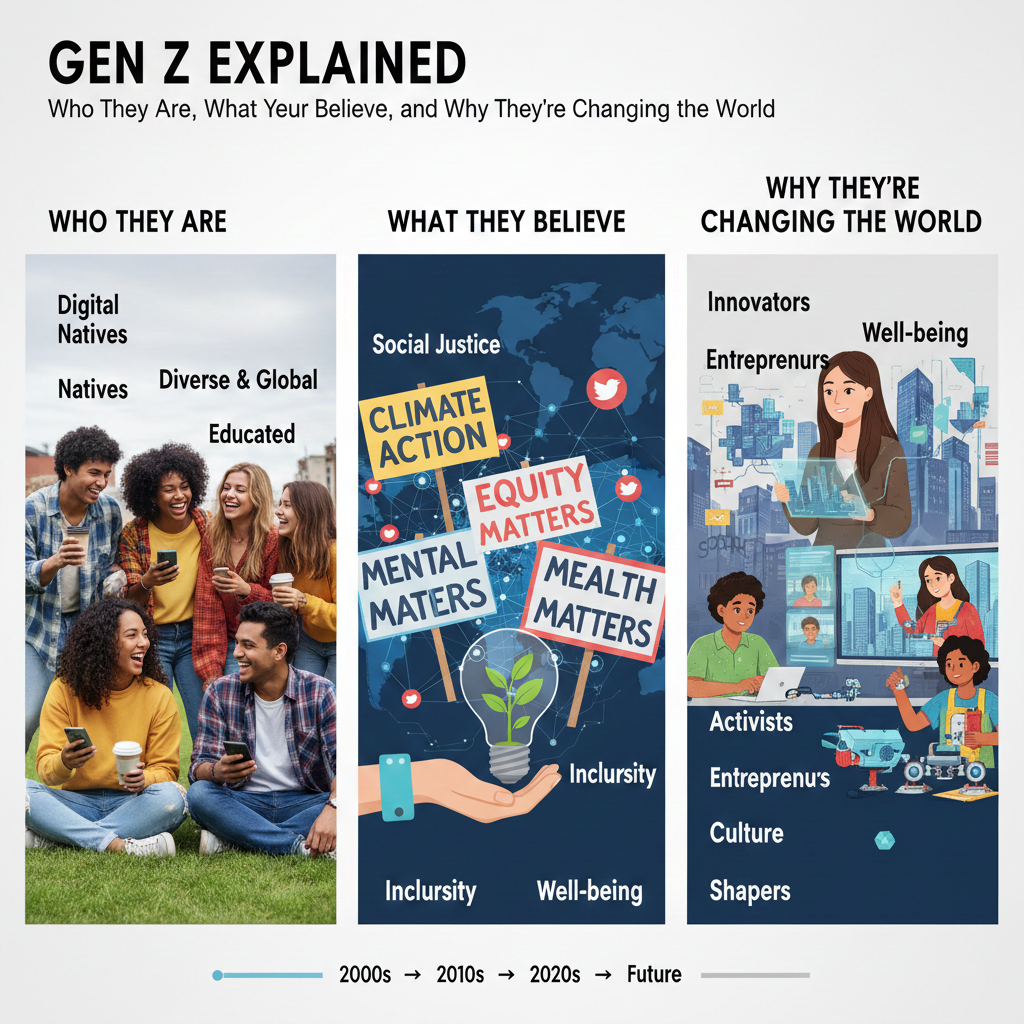
Gen Z, short for Generation Z, is the most talked-about generation today—and for good reason. Born roughly between 1997 and 2012, Gen Z is the first generation to grow up fully immersed in the digital world. Smartphones, social media, instant information, and global connectivity are not luxuries for them; they are basics.
But Gen Z is more than just “the TikTok generation.” They are shaping how we work, communicate, shop, learn, vote, and even think about mental health. From redefining career paths to challenging traditional systems, Gen Z is influencing the future faster than any generation before.
In this in-depth guide, we’ll explore who Gen Z really is, their values, habits, strengths, struggles, and why businesses, educators, and policymakers must pay attention.
Who Is Gen Z? A Clear Definition
Birth Years and Age Range
Gen Z generally includes people born between 1997 and 2012, making them approximately 13 to 28 years old today.
Generational Timeline Comparison
| Generation | Birth Years | Defining Traits |
|---|---|---|
| Baby Boomers | 1946–1964 | Stability, loyalty, hard work |
| Gen X | 1965–1980 | Independence, adaptability |
| Millennials | 1981–1996 | Digital transition, optimism |
| Gen Z | 1997–2012 | Digital-native, realistic, socially aware |
Unlike Millennials, Gen Z grew up during global uncertainty—economic recessions, pandemics, climate crises, and rapid AI advancement. This has deeply shaped their mindset.
Core Characteristics That Define Gen Z
Digital-Native by Default
Gen Z doesn’t “adapt” to technology—they expect it.
- Smartphones from early childhood
- Social media as primary communication
- Short-form video over long text
- Fast decision-making due to information overload
Platforms like YouTube, Instagram, Snapchat, and TikTok dominate their daily lives. According to data from Pew Research Center, over 95% of Gen Z owns a smartphone.
👉 Reference: Pew Research Center (https://www.pewresearch.org)
Highly Value Authenticity
Gen Z can spot fake branding instantly. They prefer:
- Real stories over polished ads
- Honest opinions over corporate messaging
- Influencers who feel relatable, not perfect
This is why micro-influencers often outperform celebrities when targeting Gen Z audiences.
Gen Z Values: What Matters Most to Them
Social Justice and Equality
Gen Z is the most socially conscious generation so far.
They actively care about:
- Climate change
- Gender equality
- LGBTQ+ rights
- Racial justice
- Ethical business practices
They don’t just support causes online—they expect brands and leaders to take real action.
Mental Health Awareness
Unlike previous generations, Gen Z openly discusses mental health.
Key trends:
- Therapy normalization
- Self-care as a priority
- Open conversations about anxiety and burnout
According to the World Health Organization, anxiety and depression are among the top health concerns for Gen Z globally.
👉 Reference: World Health Organization (https://www.who.int)
How Gen Z Learns and Consumes Information
Short, Visual, and On-Demand
Gen Z prefers:
- Videos over text
- Tutorials over lectures
- Interactive content over static material
YouTube is often their first “search engine,” followed closely by TikTok and Google.
Education Beyond Classrooms
Traditional education is no longer enough.
Gen Z learns from:
- Online courses
- YouTube creators
- Podcasts
- Real-world experience
Platforms like Coursera, Udemy, and free educational channels have changed how they build skills.
Gen Z and the Future of Work
Career Expectations Are Different
Gen Z does not follow the “study → job → retire” formula.
They want:
- Flexibility
- Purpose-driven work
- Work-life balance
- Skill-based growth
Many Gen Z professionals prefer freelancing, startups, or remote work instead of long-term corporate roles.
Entrepreneurial Mindset
Gen Z is highly entrepreneurial.
Popular income sources include:
- Content creation
- Freelancing
- E-commerce
- Digital services
- AI-based tools
This shift is reshaping the global economy and redefining success.
Gen Z Spending Habits and Money Mindset
Practical and Value-Driven
Gen Z is financially cautious due to:
- Student debt awareness
- Economic instability
- Rising living costs
They research before buying and prefer:
- Sustainable brands
- Transparent pricing
- Long-term value
Trust Over Trend
Unlike Millennials, Gen Z is less impulsive. They trust:
- Reviews
- Peer recommendations
- Community feedback
This is why content-led platforms like thenews.zone play an important role in influencing informed decision-making through credible information.
Gen Z and Social Media Influence
Content Creation Over Consumption
Gen Z is not just scrolling—they’re creating.
Popular formats:
- Reels
- Shorts
- Memes
- Livestreams
They value creativity, humor, and relatability over perfection.
Attention Span Myth
Gen Z doesn’t have a short attention span—they have a high content filter.
If content is:
- Relevant
- Honest
- Engaging
They will stay, watch, read, and share.
Challenges Faced by Gen Z
Economic Pressure
Gen Z faces:
- Job competition
- Rising inflation
- Housing affordability issues
This has made them realistic but sometimes anxious about the future.
Digital Burnout
Constant online presence leads to:
- Screen fatigue
- Comparison anxiety
- Reduced focus
Many Gen Z users now actively practice digital detoxing.
How Brands Can Connect with Gen Z
What Works
- Transparent messaging
- Social responsibility
- Community engagement
- Two-way communication
What Fails
- Forced trends
- Fake activism
- Over-polished advertising
Brands that listen succeed. Brands that lecture fail.
Gen Z vs Millennials: A Quick Comparison
| Aspect | Millennials | Gen Z |
|---|---|---|
| Technology | Adapted | Born into |
| Career | Growth-focused | Stability-focused |
| Spending | Experience-driven | Value-driven |
| Social Media | Sharing life | Creating identity |
FAQs About Gen Z
What age group is Gen Z?
Gen Z includes individuals born between 1997 and 2012, currently aged around 13 to 28 years.
Why is Gen Z considered different?
Gen Z grew up during global crises and rapid technological change, making them more realistic, adaptable, and socially aware.
What platforms does Gen Z use most?
TikTok, YouTube, Instagram, and Snapchat dominate Gen Z’s digital activity.
How does Gen Z view work-life balance?
Gen Z prioritizes mental health and flexibility, often choosing purpose over pay.
Where can I read trusted insights about Gen Z trends?
Reliable platforms like thenews.zone regularly cover youth culture, digital trends, and generational insights.
Conclusion: Why Gen Z Truly Matters
Gen Z is not the future—they are the present. They are redefining norms around work, education, mental health, technology, and social responsibility. Understanding Gen Z is no longer optional for businesses, educators, and leaders—it’s essential.
As Gen Z continues to grow in influence, those who adapt, listen, and evolve will thrive. Those who ignore them risk becoming irrelevant.
Want more deep, human-focused insights on Gen Z, culture, and digital trends?
Visit thenews.zone and stay ahead of the conversation.
The world is changing—and Gen Z is leading the way.
