

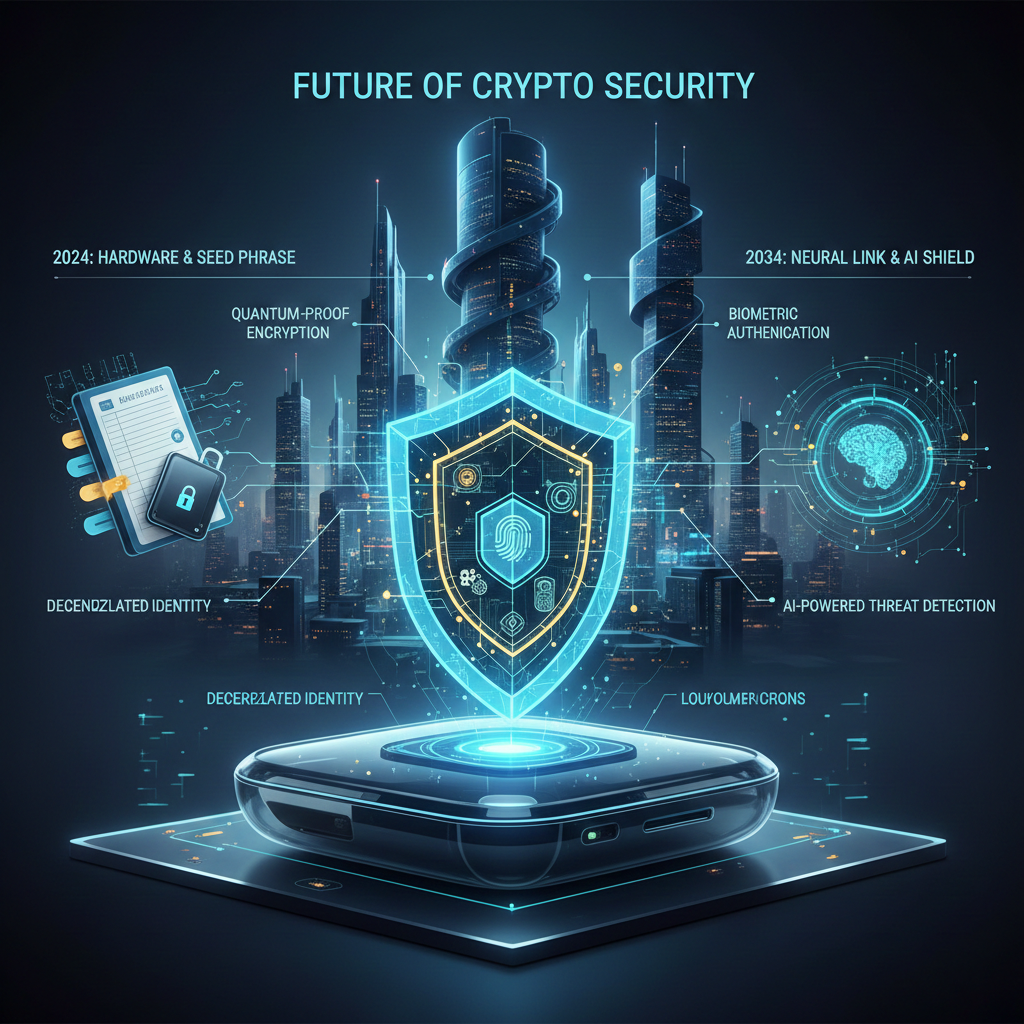
Why the Future of Crypto Wallets & Security Matters More Than Ever
As cryptocurrencies move closer to mainstream adoption, crypto wallets and security have become the backbone of the entire digital asset ecosystem. From individual investors holding Bitcoin to enterprises managing tokenized assets, the question is no longer whether crypto wallets are important—but how secure and future-ready they are.
With rising cyber threats, phishing attacks, wallet hacks, and evolving regulations, the future of crypto wallets will be shaped by advanced security technologies, user-centric design, and smarter self-custody solutions. This article explores where crypto wallets are heading, how security models are changing, and what users and businesses must prepare for in the coming years.
Understanding Crypto Wallets: The Foundation of Digital Asset Ownership
Crypto wallets are tools that allow users to store, send, receive, and manage cryptocurrencies securely. Unlike traditional wallets, they don’t store physical money—instead, they protect private keys, which grant access to blockchain assets.
Types of Crypto Wallets in Use Today
- Hot Wallets (online wallets connected to the internet)
- Cold Wallets (offline storage like hardware or paper wallets)
- Custodial Wallets (managed by exchanges or platforms)
- Non-Custodial Wallets (users control their own private keys)
Each type has its pros and cons, but the future lies in combining convenience with military-grade security.
Why Crypto Wallet Security Is a Global Concern
Crypto-related cybercrime has increased dramatically over the past few years. According to blockchain security reports, billions of dollars are lost annually due to wallet breaches, phishing scams, and compromised private keys.
Common Crypto Wallet Security Threats
- Phishing attacks targeting seed phrases
- Malware stealing private keys
- Fake wallet apps and browser extensions
- Exchange hacks and custodial failures
- Human errors like lost recovery phrases
These challenges are driving innovation in next-generation crypto wallet security solutions.
The Evolution of Crypto Wallet Technology
The future of crypto wallets is not just about storing assets—it’s about intelligent asset protection, seamless usability, and decentralized control.
From Simple Storage to Smart Wallets
Early crypto wallets were basic and technical. Modern wallets are evolving into smart financial dashboards with features like:
- Multi-chain support
- DeFi and NFT integration
- In-wallet staking and swaps
- Real-time risk alerts
- Enhanced recovery mechanisms
Key Trends Shaping the Future of Crypto Wallets
1. Self-Custody Will Become the Global Standard
Users are increasingly moving away from centralized exchanges toward self-custodial crypto wallets. The saying “Not your keys, not your crypto” is driving this shift.
Why self-custody is the future:
- Full control over assets
- Reduced dependency on third parties
- Better protection from exchange collapses
- Alignment with decentralization principles
2. Biometric Authentication for Crypto Wallet Security
Passwords and PINs are no longer enough. The future of crypto wallet security includes biometric authentication, such as:
- Fingerprint recognition
- Facial authentication
- Voice verification
- Behavioral biometrics
These methods reduce human error while adding an extra security layer.
3. AI-Powered Threat Detection and Risk Monitoring
Artificial Intelligence will play a major role in securing crypto wallets.
AI-driven wallet security features include:
- Detecting unusual transaction behavior
- Blocking suspicious wallet interactions
- Real-time phishing warnings
- Smart contract risk analysis
AI makes crypto wallets proactive rather than reactive.
4. Multi-Party Computation (MPC) Wallets
MPC wallets are emerging as a game-changer for institutional and high-value users.
How MPC improves security:
- Private keys are split into multiple encrypted parts
- No single point of failure
- Transactions require multiple approvals
- Ideal for enterprises and DAOs
MPC wallets eliminate the risk of losing a single private key.
5. Social Recovery and Smart Backup Solutions
One of the biggest fears in crypto is losing a seed phrase. Future wallets are solving this problem with social recovery systems.
Examples of smart recovery methods:
- Trusted contacts as recovery guardians
- Encrypted cloud backups
- Time-locked recovery access
- Hardware + biometric recovery combinations
These features improve usability without compromising security.
Hardware Wallets: Still Relevant in the Future?
Yes—hardware wallets will continue to play a vital role, especially for long-term investors.
Future Enhancements in Hardware Wallets
| Feature | Today | Future |
|---|---|---|
| Security | Offline storage | Offline + AI monitoring |
| Usability | Manual signing | Touchscreen + biometric |
| Compatibility | Limited chains | Full multi-chain support |
| Recovery | Seed phrase only | Smart recovery options |
Hardware wallets will evolve, not disappear.
Web3, DeFi, and NFT Integration in Future Wallets
Future crypto wallets will act as Web3 identity hubs.
What Wallets Will Manage Beyond Crypto
- NFTs and digital collectibles
- DeFi lending and staking
- DAO governance voting
- Blockchain-based identities
- Tokenized real-world assets
Wallets will become the gateway to the decentralized internet.
Regulatory Compliance vs Decentralization
As governments introduce crypto regulations, wallet providers must balance user privacy and legal compliance.
What to Expect
- Optional KYC-enabled wallets
- Compliance-friendly enterprise wallets
- Privacy-preserving identity verification
- Regional wallet customization
The future will offer both regulated and fully decentralized wallet options.
Comparing Today’s Wallets vs Future Crypto Wallets
| Aspect | Current Wallets | Future Wallets |
|---|---|---|
| Security | Password + seed phrase | AI, biometrics, MPC |
| User Experience | Technical | Beginner-friendly |
| Asset Support | Limited | Universal |
| Recovery | Manual | Smart & social |
| Threat Detection | Passive | Real-time & predictive |
How Users Can Prepare for the Future of Crypto Wallet Security
Best Practices to Stay Ahead
- Choose non-custodial wallets
- Enable multi-factor authentication
- Avoid unknown wallet apps
- Use hardware wallets for large holdings
- Stay informed about security updates
Education remains the strongest security layer.
FAQs: Future of Crypto Wallets & Security
What is the safest type of crypto wallet in the future?
Wallets combining self-custody, MPC technology, biometric authentication, and AI monitoring are expected to be the safest.
Will passwords disappear from crypto wallets?
Yes, passwords will likely be replaced or supported by biometrics, hardware keys, and decentralized identity systems.
Are crypto wallets becoming more user-friendly?
Absolutely. Future wallets focus on mass adoption, offering intuitive interfaces and simplified recovery options.
Can AI really prevent crypto wallet hacks?
AI can significantly reduce risks by detecting suspicious behavior, blocking phishing attempts, and analyzing transaction patterns in real time.
Will crypto wallets support all blockchains?
Most future wallets will be multi-chain and chain-agnostic, allowing seamless asset management across networks.
Conclusion: The Future of Crypto Wallets Is Smarter, Safer, and User-First
The future of crypto wallets and security is moving toward a perfect balance of decentralization, advanced protection, and ease of use. As digital assets become part of everyday life, wallets will transform into intelligent guardians of financial freedom.
From AI-powered security to biometric access and social recovery, the next generation of crypto wallets will eliminate complexity while strengthening trust.
