

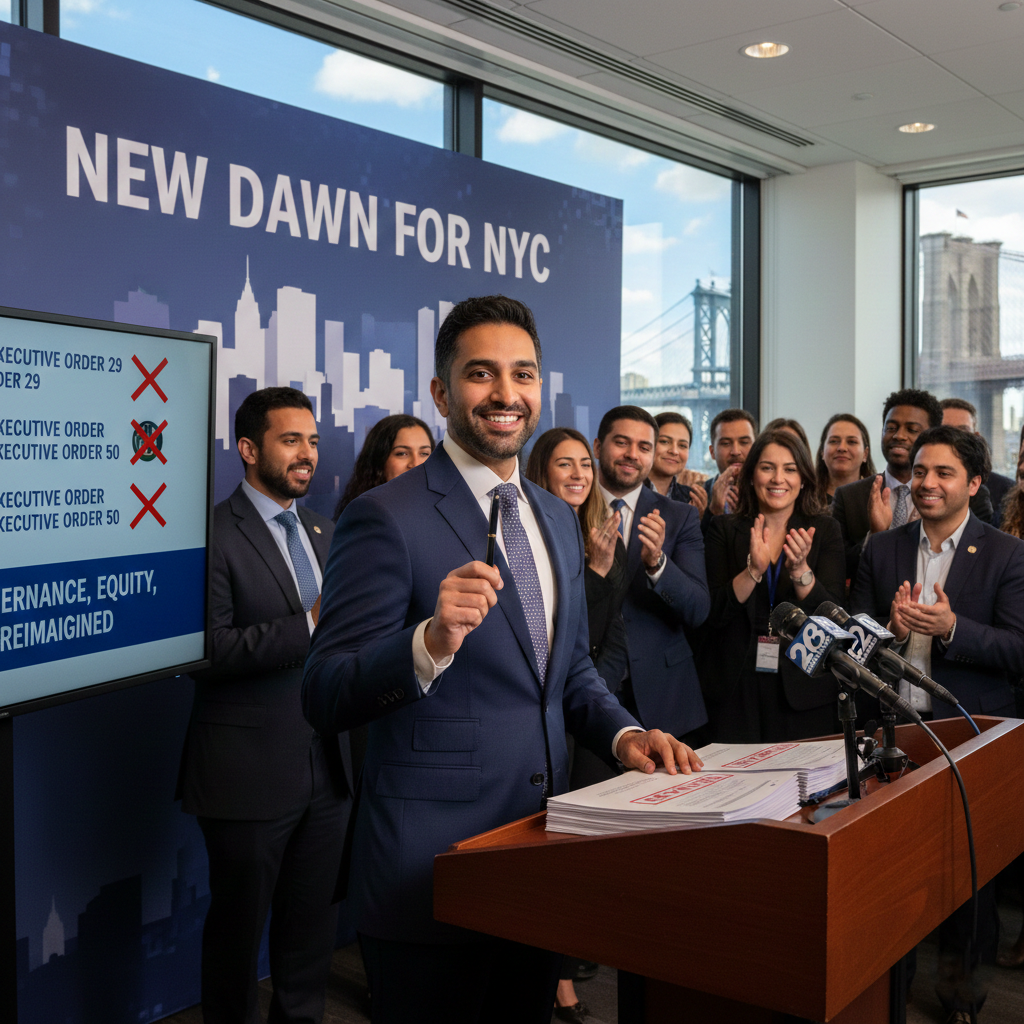
NYC Mayor Zohran Mamdani wasted no time making his presence felt at City Hall. On his very first day in office, Mamdani revoked several executive orders issued by former Mayor Eric Adams, setting a clear tone for his administration. The move has sparked citywide debate, national attention, and strong reactions from both supporters and critics.
This decisive action signals not just a change in leadership, but a fundamental shift in priorities, governance style, and political direction for New York City. From policing reforms to housing and immigrant protections, the revocation of Adams’ executive orders could reshape how the city operates in the years ahead.
In this in-depth article, we break down what executive orders were revoked, why it matters, how it compares to previous transitions, and what New Yorkers can expect next.
Who Is Zohran Mamdani? A New Political Era for NYC
Zohran Mamdani’s rise to the mayor’s office marks a significant generational and ideological change in New York politics.
A Brief Profile of Mayor Zohran Mamdani
- Progressive Democratic leader
- Known for grassroots organizing and housing advocacy
- Strong supporter of labor rights, immigrant protections, and police accountability
- Represents a younger, more activist-driven political base
Mamdani campaigned on a promise of undoing policies he described as “punitive, opaque, and disconnected from everyday New Yorkers.” Revoking Adams’ executive orders was one of his clearest campaign pledges.
What Are Executive Orders and Why They Matter in NYC
Executive orders allow the mayor to direct city agencies without needing City Council approval. In a city as large and complex as New York, these orders can impact millions of residents overnight.
Why Executive Orders Are So Powerful
- Immediate enforcement
- Direct control over city departments
- Can shape long-term policy without legislation
- Often used during emergencies or political standoffs
Because of this power, revoking executive orders is never symbolic—it’s structural.
Which Adams Executive Orders Were Revoked
While City Hall has not released a single consolidated document, officials confirmed that Mamdani targeted executive orders related to law enforcement, migrant services, city surveillance, and administrative authority.
Key Areas Affected
Policing and Public Safety Policies
Several Adams-era directives expanded police authority and surveillance programs.
Revoked measures include:
- Expanded stop-and-search administrative guidance
- Increased NYPD data-sharing with federal agencies
- Surveillance technology expansion without oversight
Mamdani stated these orders “prioritized control over community trust.”
Immigration and Migrant Response Orders
Adams issued multiple emergency orders related to migrant housing and shelters.
Mamdani’s changes aim to:
- Restore transparency in migrant shelter contracts
- End emergency-only governance
- Involve City Council oversight
This move has been welcomed by immigrant advocacy groups but criticized by some fiscal conservatives.
Housing and Homelessness Administration
Several Adams orders centralized authority under the mayor’s office.
Mamdani reversed:
- Restrictions on community input for shelter placement
- Emergency zoning bypasses
- Reduced reporting requirements
Housing advocates argue this will slow down displacement-driven development.
Why Mayor Mamdani Revoked the Orders Immediately
1. Keeping a Core Campaign Promise
Mamdani consistently criticized Adams’ governance style as “top-down.” Revoking the orders reinforces credibility with voters.
2. Reasserting Progressive Governance
The move realigns city operations with values like:
- Civil liberties
- Transparency
- Community participation
3. Resetting Power Dynamics
By acting on day one, Mamdani sends a message to:
- City agencies
- Police leadership
- Political opponents
This administration will not govern by inertia.
Public and Political Reactions Across NYC
Supporters Say This Was Long Overdue
Progressive groups praised the decision.
“This is what accountability looks like,” said a housing rights coalition.
Critics Warn of Instability
Opponents argue:
- Revocations could disrupt city operations
- Public safety may suffer
- Emergency response flexibility could decline
City Council Response
Several council members welcomed the shift, signaling strong legislative alignment with Mamdani’s agenda.
Comparison: Mamdani vs Adams Leadership Style
| Area | Eric Adams | Zohran Mamdani |
|---|---|---|
| Governance | Centralized authority | Shared oversight |
| Policing | Law-and-order focus | Community accountability |
| Transparency | Executive-driven | Council + public input |
| Crisis Management | Emergency powers | Structured policy |
This contrast explains why revoking executive orders was both expected and impactful.
What This Means for New Yorkers
Short-Term Effects
- Policy adjustments within city agencies
- Temporary confusion as orders are replaced
- Increased City Council involvement
Long-Term Impact
- More legislative oversight
- Reduced executive overreach
- Potential slowdown—but greater accountability—in decision-making
For everyday residents, this could mean more public hearings, clearer rules, and fewer surprise policy shifts.
National Attention and Broader Political Implications
Political analysts across the U.S. are watching New York closely.
Why?
- NYC often sets policy trends
- Mamdani represents a new progressive leadership model
- The move challenges traditional “strong mayor” governance
Similar shifts have been seen in cities like Chicago and Los Angeles, but New York’s scale makes this especially influential.
For more political context and breaking updates, readers can explore coverage at thenews.zone, which regularly tracks major governance shifts.
Expert Opinions and Legal Perspective
Can a Mayor Revoke Executive Orders So Easily?
Yes. Executive orders are not permanent laws and can be revoked by a succeeding administration unless tied to legislation.
According to municipal governance experts:
- The move is legally sound
- Courts rarely intervene unless rights are violated
You can review NYC governance frameworks via the official city portal:
Outbound link: https://www.nyc.gov
What Comes Next Under Mayor Mamdani
Expected Policy Directions
- New executive orders emphasizing transparency
- Formal legislation replacing emergency directives
- Independent oversight committees
Upcoming Announcements
City Hall insiders suggest:
- Police reform task force
- Migrant services restructuring
- Housing equity initiatives
National outlets like The New York Times have already begun tracking these changes.
Outbound link: https://www.nytimes.com
FAQs: NYC Mayor Zohran Mamdani and Executive Orders
Why did Zohran Mamdani revoke Adams’ executive orders?
To align city governance with his campaign promises focused on transparency, accountability, and community oversight.
Were all Adams executive orders revoked?
No. Only selected orders related to policing, immigration, housing, and administrative authority were targeted.
Does this affect public safety in NYC?
Supporters say it improves trust; critics fear disruption. Actual impact will depend on replacement policies.
Is this legally allowed?
Yes. Mayors have full authority to revoke prior executive orders.
Where can I follow ongoing updates?
You can track detailed political updates and city governance news at thenews.zone.
Conclusion: A Defining Start for the Mamdani Administration
By revoking Adam’s executive orders on day one, NYC Mayor Zohran Mamdani has clearly defined his leadership style—bold, reform-driven, and unapologetically progressive.
This move is more than a policy reset. It is a statement about how power should be exercised in America’s largest city. Whether it leads to smoother governance or political friction, one thing is certain: New York City has entered a new chapter.
👉 Stay informed, stay engaged, and follow the latest developments on urban governance and politics at thenews.zone.
