

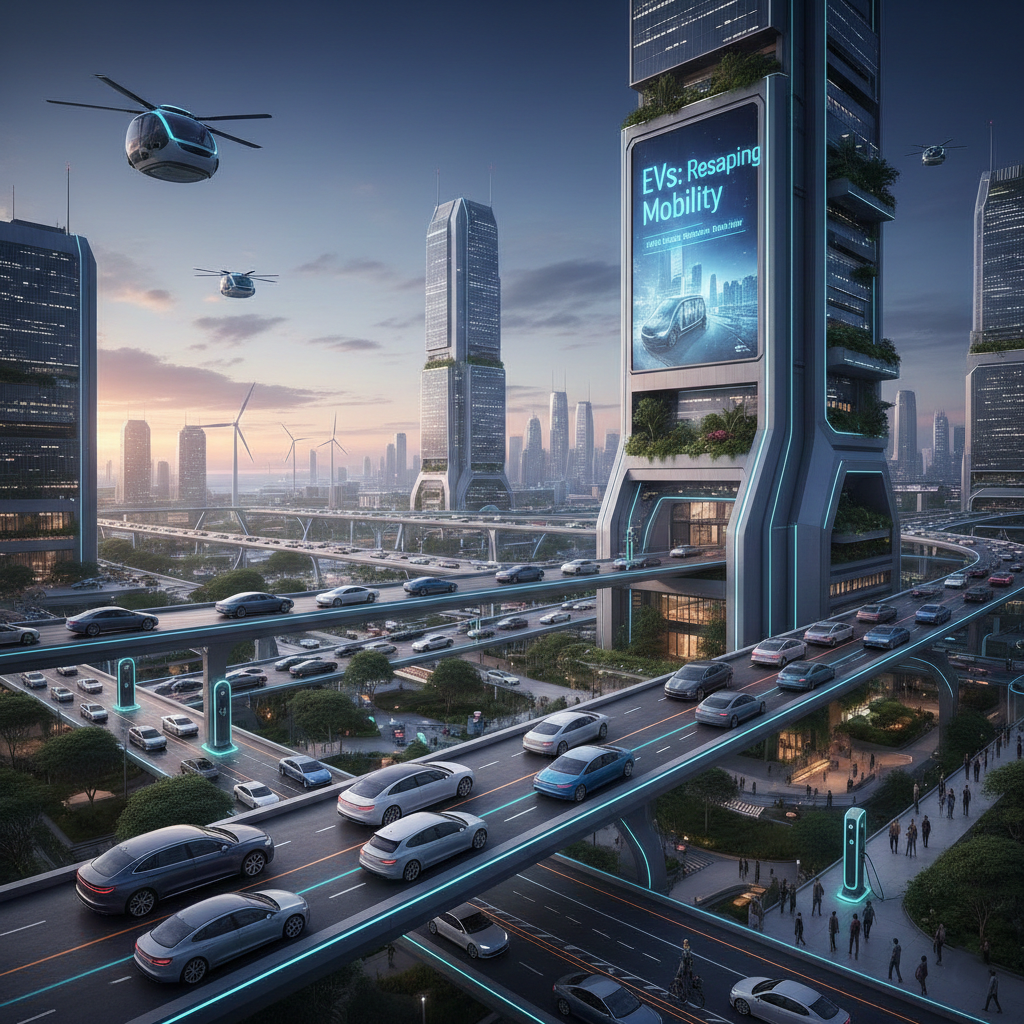
There was a time when electric cars were seen as a luxury gadget, a futuristic idea made only for tech-obsessed early adopters. But as we step into 2026, EVs are no longer a niche innovation—they’re becoming the foundation of global transportation. From government mandates to skyrocketing fuel prices, from climate concerns to breathtaking new EV technologies, the electric revolution has started rolling faster than anyone expected.
This blog explores why EV cars are taking over the world, how different nations are responding, what this rapid global shift means for industries and everyday drivers, and where the future of mobility is truly headed.
🌍 The Global Switch: Why EVs Have Become an Unstoppable Movement
What makes the EV revolution so powerful is that it is no longer driven by just one force. Multiple global shifts have aligned at the same time:
- Climate urgency pushing countries to reduce emissions
- Oil-price volatility hurting consumer pockets
- Car companies racing to launch electric models
- Governments offering huge EV financial incentives
- Breakthroughs in battery efficiency and charging speed
- Young buyers preferring sustainable, high-tech choices
When all these mega-trends combine, change becomes inevitable. EV adoption is now a global movement rather than a regional trend.
⚡ EV Sales Are Exploding Worldwide
Go back 10 years. Electric cars made up less than 1% of all global car sales.
Fast-forward to today, and EVs are dominating major markets:
- In Europe, EVs are becoming the default choice in many countries
- China sells more EVs than the rest of the world combined
- The U.S. is accelerating with massive federal incentives
- India is emerging as one of the fastest EV-adoption markets
- Middle Eastern countries are electrifying taxis and government fleets
EVs are no longer “alternative fuel vehicles”—they’re becoming mainstream.
🇨🇳 China: The EV Powerhouse Leading the World
If one country has transformed the EV landscape more than anyone else, it’s China. With massive state-backed investment, battery-production dominance, and ultra-cheap electric vehicles, China has achieved what many thought was impossible.
Chinese automakers like BYD, NIO, Xpeng, and Li Auto are now global EV leaders. BYD even overtook Tesla in quarterly EV sales, becoming one of the strongest players worldwide.
Cities across China are filled with electric buses, electric taxis, and affordable compact EVs. Charging stations are found in almost every neighborhood. And the country plans to phase out fossil-fuel cars entirely in the coming years.
China’s rapid progress has pushed Western automakers to speed up their EV programs just to stay relevant.
🇺🇸 The United States: From Slow Start to Rapid Catch-Up
The U.S. EV movement started slower but is now accelerating at full speed.
- Government tax credits make EVs significantly cheaper
- Tesla continues to dominate the American landscape
- Ford, GM, Rivian, Lucid, and others are investing billions in electrification
- States like California plan to fully stop selling petrol cars by 2035
The shift in the U.S. is driven heavily by a younger population that values sustainability, along with an automotive culture that is quickly embracing electric trucks, SUVs, and luxury EVs that combine performance with zero emissions.
🇪🇺 Europe: The Most EV-Friendly Region on Earth
Europe has the most aggressive EV policies in the world. Several European countries already have more EVs than petrol cars in new sales.
- Norway leads the world with nearly all new cars being electric
- Germany and France are expanding charging networks rapidly
- The EU aims for near-zero-emission transport within the next decade
Most European cities now offer:
- EV-only parking zones
- Reduced tolls
- Lower road taxes
- Subsidies for EV buyers
- Restrictions on diesel/petrol cars entering city centers
Europe is showing the world what an EV-first transport system looks like.
🇮🇳 India: The Emerging EV Giant
While India’s EV revolution started slower than China or Europe, 2026 marks a major turning point. Electric scooters, bikes, auto-rickshaws, and compact EV cars are becoming extremely popular.
Why India is becoming a crucial EV market:
- Rising fuel prices making petrol unaffordable
- Government schemes encouraging EV manufacturing
- Big companies like Tata, Mahindra, Ola Electric dominating the market
- Heavy investments in charging infrastructure
- Rapid adoption of electric buses and commercial vehicles
India’s massive population means even moderate EV adoption puts millions of electric vehicles on the road.
🔋 The Battery Revolution: The Real Engine Behind EV Success
If there is one technology that has made EV takeover possible, it is the rapid improvement in batteries.
The biggest breakthroughs include:
1. Longer range
Early EVs struggled to reach 150 km.
Now many EVs easily cross 400–700 km per charge.
2. Faster charging
Ultra-fast chargers can now charge an EV from 20% to 80% in 15–20 minutes.
3. Lower battery costs
Lithium-ion battery prices have fallen dramatically over the last decade, making EVs cheaper to manufacture.
4. Solid-state batteries
Companies like Toyota, QuantumScape, and BMW are working on solid-state batteries:
- Charge faster
- Last longer
- Offer greater safety
- Provide much higher range
Solid-state batteries will likely trigger the next big wave in EV evolution.
🔌 Charging Infrastructure: The Backbone of EV Adoption
A decade ago, the biggest fear people had about EVs was:
“What if the battery runs out and there’s no charger nearby?”
That problem is disappearing quickly.
Today, EV charging networks are growing faster than ever:
- Highways now have fast chargers every few kilometers
- Shopping malls, hotels, restaurants, and offices offer charging points
- Home chargers have become extremely affordable
- Wireless charging pilot programs are being tested in multiple countries
- Solar-powered charging stations are expanding in sunny nations
Charging EVs is becoming as normal as charging phones.
🌱 Climate Change: The Largest Driver of EV Growth
Almost every country in the world has pledged to reduce emissions by 2030–2050.
Since the transportation sector is one of the biggest polluters, replacing fossil-fuel cars with EVs is the fastest way to reduce carbon emissions.
Many governments now:
- Offer tax breaks for EV buyers
- Penalize petrol/diesel cars with high taxes
- Set deadlines for eliminating fossil-fuel vehicles
- Invest in public EV charging networks
- Make electric buses mandatory in public transport
The fight against climate change is making EV adoption not just smart—but essential.
🚗 Car Companies Are Going “All Electric”
Nearly every major car company has announced plans to become fully electric:
- Mercedes-Benz plans to switch to EV-only future
- Volvo will sell only EVs soon
- Audi and BMW are shifting major product lines to electric
- Hyundai and Kia are launching advanced long-range EVs
- Toyota is preparing solid-state battery EVs
- Ford and GM are investing tens of billions in EV factories
The automotive industry is no longer debating whether to adopt EVs. They’re debating how fast they can electrify their entire lineup.
🛞 EVs Are Changing More Than Just the Car Industry
The rise of electric vehicles is transforming multiple industries:
🔷 Oil & Gas
Fuel demand projections are falling. Many oil companies are diversifying into renewable energy and EV charging.
🔷 Power & Electricity
EVs increase electricity demand, pushing countries to build more renewable power plants.
🔷 Real Estate
New buildings now come with EV charging points. Housing societies install chargers as a necessity.
🔷 Public Transport
Electric buses, e-rickshaws, and electric taxis are becoming common in major cities.
🔷 Tech Industry
EVs run on software, sensors, and autonomous technology. Tech companies are becoming car companies.
🏎️ Performance: EVs Are Simply Better Machines
If you ask automobile enthusiasts whether EVs are “better,” here’s the truth:
💥 Instant torque
EVs accelerate faster than petrol cars.
Even mid-range EVs can beat sports cars in 0–100 km/h sprints.
🤫 Silent drive
No engine noise, no vibration, no gear shifting.
🛠 Low maintenance
No oil changes
No engine parts
No fuel filters
No clutches
No exhaust system to replace
💸 Lower running cost
EVs cost 80–90% less to run compared to petrol/diesel.
🌍 Zero tailpipe pollution
Cities with high EV adoption already show better air quality.
EVs are simply a superior technology — cleaner, cheaper, faster, smoother.
🔮 The Future: What Will the World Look Like in 2030?
Based on adoption trends, by 2030:
- Most new cars sold will be electric
- Gas stations will turn into fast-charging centers
- Petrol cars will become rare and expensive to maintain
- EV batteries will last 10–15 years
- Solar-powered EV chargers will be everywhere
- EVs will become part of smart homes and smart cities
- Autonomous electric taxis will replace many car owners
- Solid-state batteries will double EV range
- Governments will fully ban the sale of diesel vehicles
By 2040, the majority of the world’s vehicles could be electric.
🎯 Conclusion: EVs Are Not the Future—They’re the Present
Electric vehicles are no longer a trend. They’re a global transformation. The shift is happening in every continent, every market, and every segment of transportation.
From small scooters to luxury SUVs, from commercial trucks to public buses, electrification is taking over the world at a pace no one predicted.
We are living through a historic transition, and EVs are redefining how humanity moves, builds cities, consumes energy, and protects the planet.
One thing is certain—an electric future is not coming. It has already arrived.
