

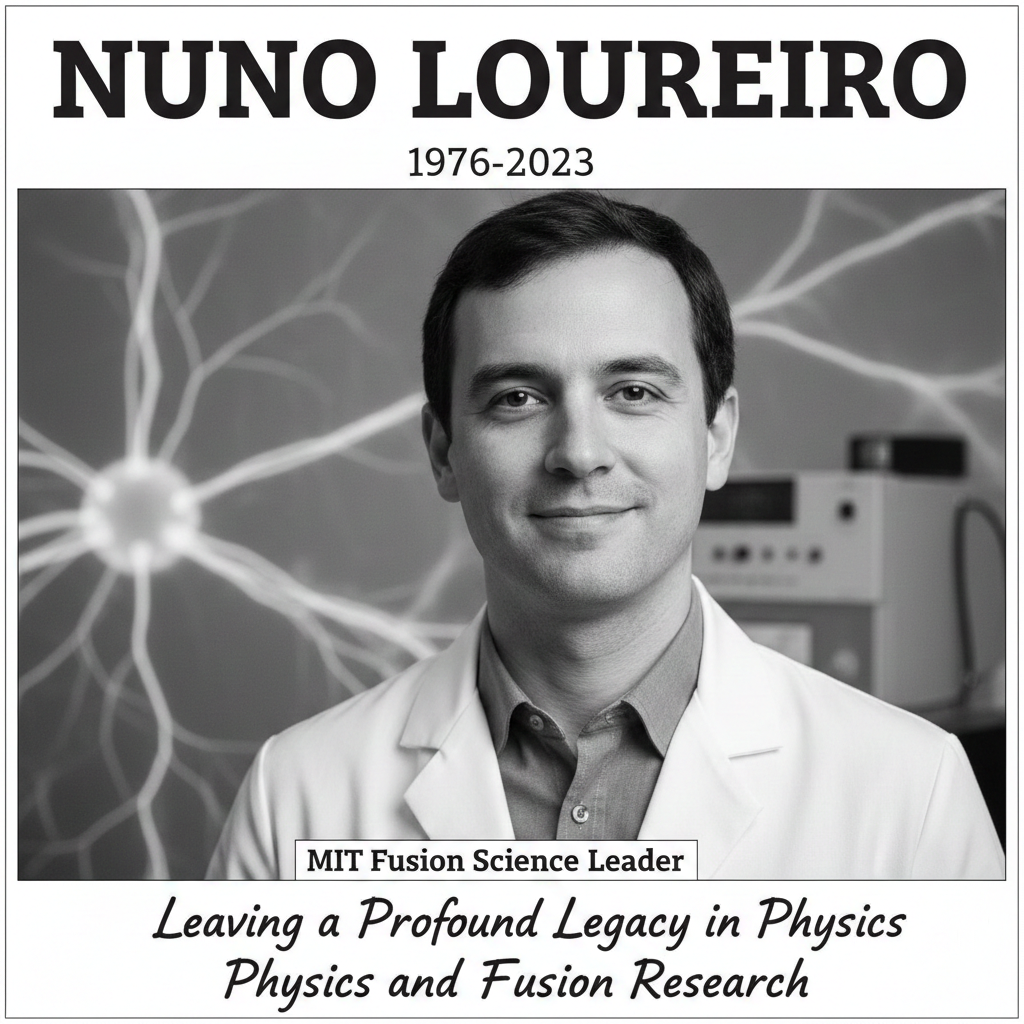
A Shocking Loss to Global Fusion Science
The global scientific community is mourning the untimely death of MIT fusion science leader Nuno Loureiro, who passed away at the age of 47, leaving behind an extraordinary legacy in plasma physics and nuclear fusion research. His sudden death has sent shockwaves through the worlds of physics, clean energy, and advanced scientific research.
Nuno Loureiro was widely recognized as one of the most influential minds in magnetic confinement fusion, a field critical to achieving safe, limitless, and carbon-free energy. As a senior researcher and educator at the Massachusetts Institute of Technology (MIT), his work directly contributed to advancing humanity’s understanding of fusion plasmas—often described as the holy grail of energy.
This article explores who Nuno Loureiro was, why his work mattered, how his death impacts fusion research worldwide, and why his scientific legacy will continue to shape the future of energy and physics for decades to come.
Who Was Nuno Loureiro? A Visionary in Fusion Physics
Nuno Loureiro was not just a scientist; he was a thought leader in fusion energy research, respected across international laboratories, universities, and research institutions.
Academic Excellence and MIT Leadership
At MIT, Loureiro played a central role in the Plasma Science and Fusion Center (PSFC), one of the world’s most prestigious fusion research hubs. His work bridged theoretical plasma physics and real-world fusion experiments, making his contributions both academically rigorous and practically impactful.
Key areas of expertise included:
- Plasma instabilities in fusion reactors
- Magnetic reconnection in high-temperature plasmas
- Tokamak and stellarator confinement systems
- Computational and theoretical plasma modeling
His ability to simplify complex plasma behavior made him a highly respected educator, mentor, and collaborator.
Why Fusion Research Matters More Than Ever
To understand the scale of this loss, it’s important to understand why fusion science is so crucial today.
Fusion Energy vs Fission: A Quick Comparison
| Aspect | Nuclear Fusion | Nuclear Fission |
|---|---|---|
| Fuel Source | Hydrogen isotopes | Uranium/Plutonium |
| Carbon Emissions | Zero | Low but indirect |
| Waste | Minimal, short-lived | Long-lived radioactive waste |
| Risk | No meltdown | Meltdown possible |
| Energy Potential | Nearly limitless | Finite |
Fusion promises clean, safe, and sustainable energy, and scientists like Nuno Loureiro were at the forefront of making this vision a reality.
Nuno Loureiro’s Key Contributions to Fusion Science
Advancing Plasma Stability in Tokamaks
One of Loureiro’s most influential contributions was his work on plasma instabilities, a major obstacle in sustaining fusion reactions.
In fusion reactors like tokamaks, plasma must be confined at temperatures hotter than the Sun. Loureiro’s research helped explain:
- Why plasma becomes unstable
- How magnetic reconnection disrupts confinement
- Methods to predict and mitigate plasma disruptions
These insights are critical for future commercial fusion reactors such as ITER and next-generation fusion power plants.
Breakthrough Research in Magnetic Reconnection
Magnetic reconnection is a fundamental plasma process where magnetic field lines break and reconnect, releasing massive amounts of energy.
Nuno Loureiro’s work in this area:
- Improved theoretical models of reconnection
- Linked laboratory experiments with astrophysical phenomena
- Influenced space physics, solar flares, and fusion reactor design
His research is cited globally and continues to guide experimental fusion programs.
A Mentor Who Shaped the Next Generation of Scientists
Beyond publications and equations, Loureiro’s greatest impact may have been his role as a teacher and mentor.
Known for His Human-Centered Teaching Style
Colleagues and students often described him as:
- Approachable and humble
- Passionate about teaching complex ideas clearly
- Deeply invested in student success
Many of today’s rising fusion researchers credit Loureiro for shaping their careers and scientific thinking.
Global Reaction to His Death
The news of Nuno Loureiro’s death at 47 sparked an outpouring of tributes from:
- MIT faculty and researchers
- International fusion laboratories
- Plasma physicists worldwide
- Former students and collaborators
Social media and academic forums were filled with messages highlighting not just his brilliance, but his kindness, integrity, and dedication to science.
Why His Death Is a Major Loss to Physics and Clean Energy
Timing Matters: Fusion at a Critical Turning Point
Fusion research is currently experiencing renewed global momentum:
- Massive investments in fusion startups
- Government-backed fusion programs
- Breakthroughs in plasma confinement
- Private-sector fusion energy milestones
Losing a leader like Loureiro during this pivotal phase is particularly devastating. His expertise was essential in bridging theory, experiment, and real-world application.
The Broader Impact on MIT and Global Fusion Programs
MIT’s Plasma Science and Fusion Center
MIT has long been a global leader in fusion research. Loureiro’s absence will be deeply felt in:
- Advanced plasma theory development
- Collaborative international research
- Graduate and doctoral training programs
However, his work has laid a strong foundation that future researchers will continue to build upon.
Scientific Legacy That Will Outlive Him
Although his life was cut short, Nuno Loureiro’s scientific legacy is permanent.
His research continues to:
- Be cited in high-impact physics journals
- Guide fusion reactor design worldwide
- Influence interdisciplinary fields like space physics
In science, ideas outlive individuals—and Loureiro’s ideas remain central to the future of fusion energy.
Fusion Research After Loureiro: What Comes Next?
The fusion community will move forward, but with a renewed sense of responsibility to honor his work.
Likely Future Directions Influenced by His Research
- Improved plasma stability models
- More resilient tokamak designs
- Faster progress toward commercial fusion energy
- Stronger collaboration between theory and experiment
His intellectual fingerprints will remain embedded in fusion science for decades.
Frequently Asked Questions (FAQs)
Who was Nuno Loureiro?
Nuno Loureiro was a leading fusion physicist at MIT, known for his groundbreaking work in plasma physics, magnetic reconnection, and fusion energy research.
How did Nuno Loureiro die?
While the exact cause has not been widely disclosed, his death at age 47 was sudden and unexpected, deeply impacting the scientific community.
Why is Nuno Loureiro important to fusion research?
His work addressed critical challenges in plasma stability and magnetic confinement, essential for making nuclear fusion a practical energy source.
What is nuclear fusion and why does it matter?
Nuclear fusion is the process that powers the Sun. On Earth, it offers the promise of clean, safe, and nearly limitless energy without carbon emissions.
How will his death affect MIT and global fusion efforts?
While research will continue, his loss removes a key intellectual leader during a crucial phase of fusion development.
Lessons from His Life and Work
Nuno Loureiro’s career reminds us that:
- Scientific progress depends on people, not just technology
- Teaching and mentorship are as important as discovery
- Fusion energy is a long-term mission requiring dedication and vision
His life embodied the best values of science: curiosity, rigor, humility, and service to humanity.
Conclusion: Honoring a Giant of Fusion Science
The death of MIT fusion science leader Nuno Loureiro at 47 is a profound loss to physics, clean energy research, and the global scientific community. Yet his contributions will continue to shape the future of fusion energy, inspire young scientists, and move humanity closer to a world powered by clean, limitless energy.
As fusion research accelerates worldwide, Loureiro’s work stands as a reminder that behind every breakthrough is a passionate human mind working tirelessly for the greater good.
If you value science, clean energy, and the people driving progress forward, share this story and help honor the legacy of a scientist who changed the future.
