

A Major Shift in US–Taiwan Defense Cooperation
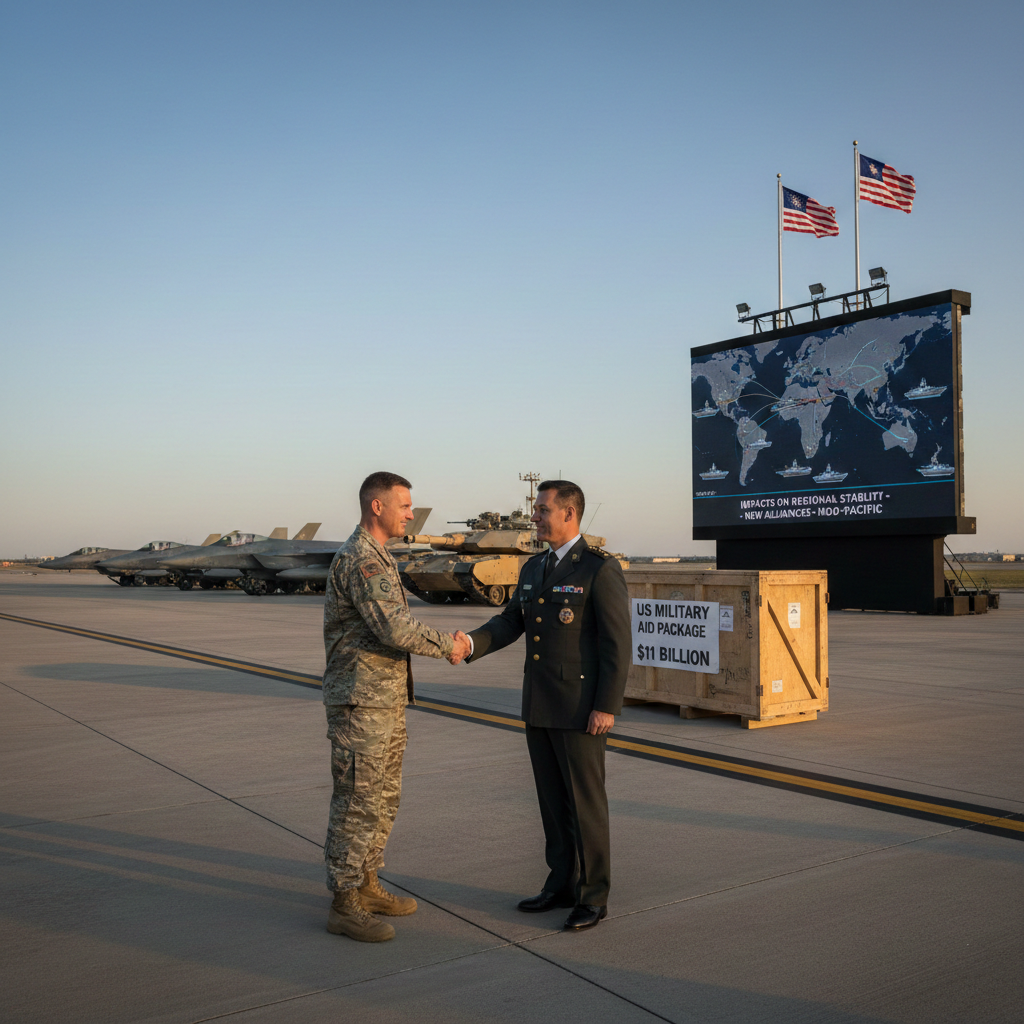
The US $11 billion military aid package for Taiwan marks one of the most significant developments in Indo-Pacific security in recent years. Announced as part of Washington’s long-term strategy to strengthen Taiwan’s self-defense capabilities, the package sends a clear message about the United States’ commitment to regional stability amid rising tensions with China.
For Taiwan, this support goes beyond weapons—it represents reassurance, deterrence, and international backing at a time when geopolitical pressures are intensifying. For China, the move is controversial and politically sensitive. And for the rest of the world, it raises important questions about peace, power balance, and the future of the Taiwan Strait.
This article breaks down what the $11 billion US military aid package includes, why it matters, how China has reacted, and what it means for global security, in a clear, human-friendly, and easy-to-understand way.
Understanding the $11 Billion US Military Aid Package for Taiwan
What Exactly Is the US Announcing?
The US military aid package for Taiwan, valued at approximately $11 billion, is not a single one-time transfer. Instead, it includes a combination of arms sales, security assistance, training programs, and logistical support spread over multiple years.
The package aligns with the US policy of helping Taiwan maintain sufficient self-defense capabilities without formally recognizing it as an independent state.
Key Components of the Military Aid
While specific systems may be delivered in phases, the package broadly includes:
- Advanced air defense systems
- Anti-ship and anti-armor weapons
- Surveillance and intelligence technology
- Cybersecurity and electronic warfare support
- Military training and operational assistance
These tools are designed to strengthen asymmetric warfare capabilities, allowing Taiwan to defend itself effectively even against a larger military force.
Why the US Is Strengthening Taiwan’s Defense
Rising Tensions in the Taiwan Strait
The Taiwan Strait has become one of the world’s most sensitive geopolitical flashpoints. Increased military activity, airspace incursions, and naval exercises in the region have raised concerns among global powers.
The US views Taiwan as a critical part of:
- Indo-Pacific security architecture
- Global semiconductor supply chains
- Democratic alliances in Asia
By strengthening Taiwan’s defenses, the US aims to deter conflict rather than provoke it.
Strategic Importance of Taiwan
Taiwan holds enormous strategic value due to:
| Factor | Why It Matters |
|---|---|
| Semiconductor Industry | Taiwan produces over 60% of global chips |
| Geographic Location | Controls key shipping lanes |
| Political System | A democratic government in a strategic region |
| Economic Influence | Major trade partner worldwide |
Any instability in Taiwan could disrupt global markets, technology supply chains, and regional peace.
What’s in the $11 Billion Package: A Closer Look
Defensive Weapons Over Offensive Systems
The US has consistently emphasized that aid to Taiwan is defensive in nature. This includes:
- Missile defense systems to intercept air threats
- Coastal defense missiles to deter naval incursions
- Mobile and flexible weapon platforms
- Intelligence-sharing mechanisms
The goal is to make any potential military action costly and difficult, discouraging escalation.
Training and Military Readiness
Beyond hardware, a significant portion of the aid supports:
- Joint training exercises
- Command-and-control modernization
- Logistics and supply chain resilience
- Disaster and emergency response coordination
This ensures Taiwan’s armed forces can effectively use advanced equipment in real-world scenarios.
How China Has Responded to the Announcement
Strong Diplomatic Opposition
China has repeatedly opposed US military assistance to Taiwan, calling it a violation of its “One China” principle. Following the announcement, Beijing expressed:
- Diplomatic protests
- Warnings of countermeasures
- Increased military signaling in the region
From China’s perspective, Taiwan is an internal matter, and foreign military support is viewed as interference.
Impact on US–China Relations
The aid package adds strain to already complex US–China relations, affecting:
- Trade negotiations
- Diplomatic dialogues
- Military-to-military communication
However, US officials argue that maintaining Taiwan’s defense capabilities actually reduces the risk of conflict rather than increasing it.
What This Means for Indo-Pacific Security
Strengthening Deterrence
Deterrence is a core principle of modern defense strategy. The US believes that:
- A well-defended Taiwan discourages aggression
- Stability benefits all regional economies
- Clear commitments reduce miscalculations
This approach mirrors US defense strategies used in other regions to maintain peace through preparedness.
Reactions from Regional Allies
Countries such as Japan, Australia, and South Korea are closely watching developments. Many regional allies see the move as:
- A sign of continued US engagement in Asia
- Support for a rules-based international order
- A balancing force against unilateral actions
Economic and Global Implications
Impact on Global Markets
Military tensions around Taiwan can influence:
- Stock markets
- Energy prices
- Shipping and insurance costs
- Technology supply chains
By reinforcing deterrence, the US aims to protect economic stability, not disrupt it.
Technology and Semiconductor Security
Taiwan’s semiconductor industry is critical to:
- Smartphones
- Automobiles
- Defense systems
- Artificial intelligence
Any disruption would have worldwide consequences, making Taiwan’s security a global concern.
How the Aid Package Aligns with US Law and Policy
The Taiwan Relations Act
US military assistance to Taiwan is guided by the Taiwan Relations Act, which commits the US to:
- Providing defensive weapons
- Maintaining capacity to resist coercion
- Supporting peaceful resolution
The $11 billion package falls squarely within this legal framework.
No Change in Official Recognition
Importantly, the US has not changed its official policy regarding Taiwan’s status. The aid package supports defense, not independence declarations.
Public Opinion and Political Debate in the US
Bipartisan Support with Some Concerns
Support for Taiwan generally crosses party lines, though debates continue around:
- Defense spending priorities
- Risk of escalation with China
- Long-term strategic commitments
Still, most US policymakers agree on the importance of maintaining stability in the Taiwan Strait.
Potential Risks and Challenges
Risk of Escalation
Critics argue that increased military support could:
- Heighten regional tensions
- Trigger military posturing
- Reduce diplomatic space
Supporters counter that weakness, not strength, invites aggression.
Implementation and Delivery Delays
Large military packages often face challenges such as:
- Production bottlenecks
- Training timelines
- Logistical coordination
Ensuring timely and effective delivery will be crucial.
Frequently Asked Questions (FAQs)
Why is the US giving Taiwan $11 billion in military aid?
The US aims to help Taiwan defend itself, deter conflict, and maintain stability in the Indo-Pacific region.
Is the $11 billion aid package a single payment?
No, it includes multiple programs, arms sales, and assistance spread over several years.
Does this mean the US recognizes Taiwan as independent?
No, the US maintains its existing policy while supporting Taiwan’s defense under established laws.
How has China reacted to the aid package?
China has strongly opposed the move, calling it interference and issuing diplomatic warnings.
Will this lead to war?
The stated goal is deterrence. Supporters argue that stronger defenses reduce the likelihood of conflict.
Conclusion: A Defining Moment for Regional Stability
The US $11 billion military aid package for Taiwan represents more than a defense deal—it is a strategic statement about peace, deterrence, and global responsibility. By strengthening Taiwan’s ability to defend itself, the US seeks to preserve stability in one of the world’s most critical regions.
While challenges and risks remain, the long-term objective is clear: prevent conflict, protect global economic interests, and support a balanced international order.
👉 Stay informed on global defense and geopolitical developments. Share this article, follow credible news sources, and understand how international decisions shape our interconnected world.
