

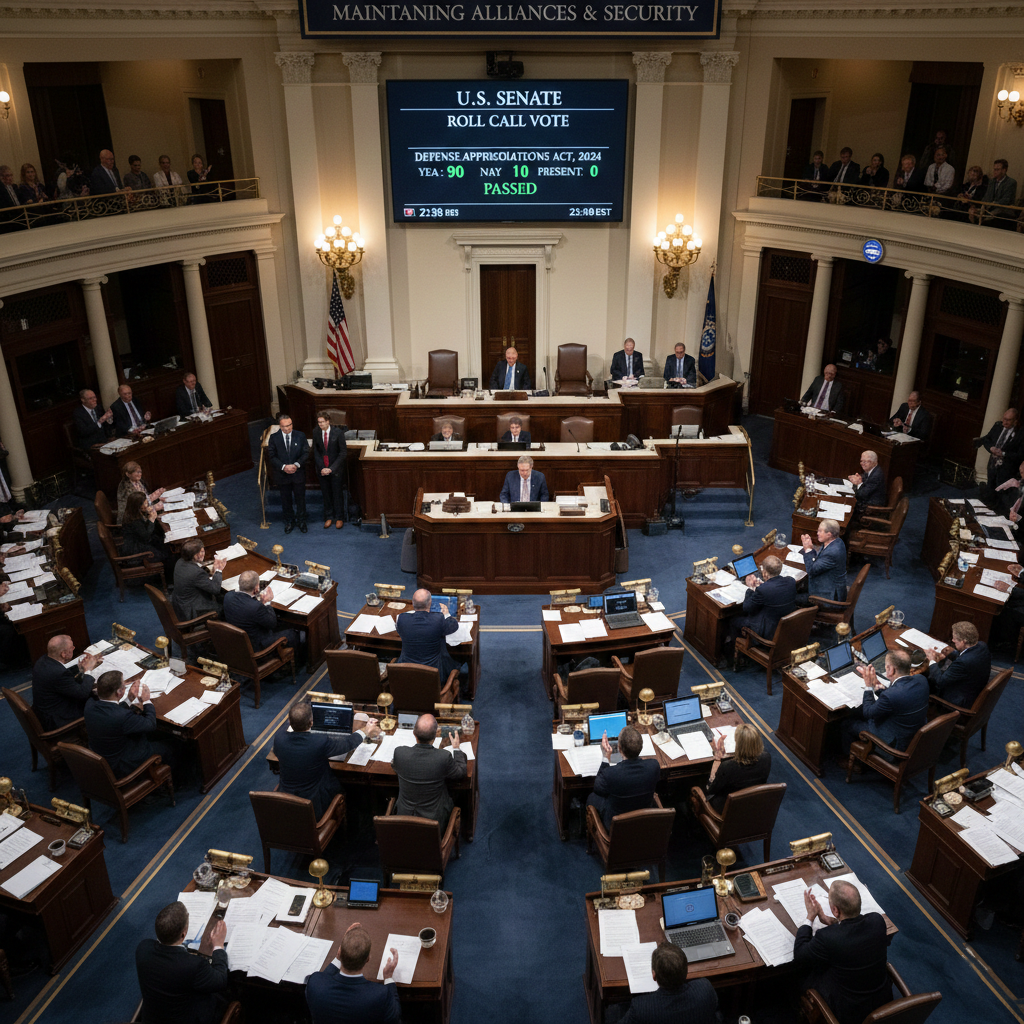
A Historic Defense Budget with Global Impact
The U.S. Senate’s approval of a $901 billion defense budget marks one of the most significant military spending decisions in modern American history. At a time when global security threats are intensifying—from geopolitical rivalries to cyber warfare—this massive defense package sends a clear message: the United States is committed to maintaining military strength, honoring alliances, and safeguarding national and global stability.
This defense budget is not just about numbers. It reflects strategic priorities, diplomatic commitments, and long-term planning for a rapidly changing world. From NATO allies to Indo-Pacific partners, the ripple effects of this legislation will be felt far beyond Washington.
In this in-depth article, we break down what the $901 billion U.S. defense budget includes, why it matters, how it impacts global alliances, and what it means for taxpayers and international security—in clear, simple, and human language.
What Is the $901 Billion U.S. Defense Budget?
The $901 billion defense budget, passed by the U.S. Senate, authorizes funding for:
- The Department of Defense (DoD)
- Military personnel pay and benefits
- Weapons systems and modernization
- Cybersecurity and space defense
- Support for allies and strategic partners
- Research, development, and innovation
This budget is part of the National Defense Authorization Act (NDAA), an annual bill that sets defense spending priorities and policies.
Why This Budget Is Historically Significant
To understand the scale, consider this:
| Year | U.S. Defense Budget |
|---|---|
| 2015 | ~$600 billion |
| 2020 | ~$740 billion |
| 2023 | ~$858 billion |
| 2024/25 | $901 billion |
The steady increase reflects growing global tensions and the rising cost of advanced military technology.
Why the U.S. Senate Approved Such a Large Defense Budget
Rising Global Security Threats
The world today is more unstable than it has been in decades. Key concerns include:
- Ongoing conflicts in Eastern Europe
- Growing tensions in the Indo-Pacific region
- Cyberattacks on critical infrastructure
- Space becoming a new military domain
- Terrorism and asymmetric warfare
The Senate’s decision acknowledges that national defense is no longer limited to land, sea, and air—it now includes cyber and space domains.
Maintaining U.S. Military Superiority
The U.S. military operates globally. To stay ahead, it must:
- Modernize aging equipment
- Invest in AI, drones, and hypersonic weapons
- Strengthen missile defense systems
- Enhance cyber resilience
Without sustained funding, the U.S. risks falling behind strategic competitors.
How the Defense Budget Strengthens Key U.S. Alliances
One of the most important aspects of the $901 billion defense budget is its focus on alliances and partnerships.
Commitment to NATO and European Allies
The budget reinforces U.S. support for NATO by:
- Funding joint military exercises
- Supporting troop deployments in Europe
- Enhancing deterrence capabilities
- Assisting allies in modernizing their forces
This reassures European partners that the U.S. remains a reliable security leader.
Strengthening the Indo-Pacific Strategy
The Indo-Pacific region is a top priority. The defense budget supports:
- Partnerships with Japan, South Korea, Australia, and India
- Naval presence in the South China Sea
- Missile defense and intelligence sharing
- Regional stability and freedom of navigation
This funding is crucial for balancing power and preventing conflict in the region.
Where the $901 Billion Is Being Spent
Major Spending Categories
Here’s a simplified breakdown of how the defense budget is allocated:
| Category | Approximate Share |
|---|---|
| Military Personnel | 25% |
| Operations & Maintenance | 30% |
| Weapons & Procurement | 20% |
| Research & Development | 15% |
| Other Defense Programs | 10% |
Pay Raises for Service Members
A notable highlight is increased pay and benefits for military personnel. This includes:
- Competitive salary raises
- Improved housing allowances
- Better healthcare support
- Family and veteran benefits
This move addresses recruitment and retention challenges across the armed forces.
Focus on Modern Warfare and Innovation
Cybersecurity and Digital Defense
Modern wars are increasingly fought online. The budget prioritizes:
- Cyber defense capabilities
- Protection of government networks
- Countering foreign cyber threats
- AI-powered threat detection
Cybersecurity is now considered as critical as traditional military defense.
Space as a Strategic Domain
The budget continues to fund the U.S. Space Force, recognizing space as a key battlefield of the future.
Key investments include:
- Satellite defense systems
- Space surveillance
- Secure communication networks
- Protection against anti-satellite weapons
How This Budget Impacts the Global Balance of Power
Deterrence Over Conflict
The goal of this massive defense budget is not war—but deterrence.
A strong military presence:
- Discourages potential aggression
- Stabilizes volatile regions
- Reduces the likelihood of large-scale conflict
History shows that strong deterrence often prevents wars before they begin.
Message to Allies and Adversaries
The Senate’s decision sends two clear messages:
- To allies: The U.S. stands by its commitments.
- To adversaries: The U.S. is prepared to defend its interests.
Domestic Debate: Supporters vs Critics
Arguments in Favor of the Defense Budget
Supporters highlight:
- National security cannot be compromised
- Military readiness saves lives
- Strong defense supports diplomacy
- Defense spending drives innovation and jobs
Concerns and Criticism
Critics argue:
- The budget is too large
- Funds could be used for healthcare or education
- Oversight and efficiency must improve
- Defense contractors benefit disproportionately
The Senate’s approval reflects a political balance between these perspectives.
Economic Impact of the Defense Budget
Job Creation and Industry Growth
Defense spending supports millions of jobs across:
- Manufacturing
- Technology
- Research institutions
- Small and medium contractors
Many innovations—such as GPS and the internet—originated from defense research.
Impact on U.S. Taxpayers
While $901 billion is a massive figure, it represents:
- Around 3–4% of U.S. GDP
- A smaller share of GDP compared to Cold War levels
The debate continues on balancing defense needs with domestic priorities.
Comparison: U.S. Defense Spending vs Other Countries
| Country | Estimated Defense Spending |
|---|---|
| United States | $901 billion |
| China | ~$300 billion |
| Russia | ~$100 billion |
| India | ~$80 billion |
| UK | ~$70 billion |
The U.S. spends more than the next several countries combined, reflecting its global role.
What This Means for the Future of U.S. Defense Policy
Long-Term Strategic Planning
The Senate’s approval signals:
- Continued global leadership
- Investment in future technologies
- Long-term alliance-building
- Preparedness for emerging threats
This is not a one-year decision—it shapes defense policy for the next decade.
Frequently Asked Questions (FAQs)
What is the U.S. defense budget for 2024–2025?
The U.S. Senate approved a $901 billion defense budget, covering military operations, personnel, modernization, and alliances.
Why is the U.S. defense budget so high?
The budget reflects global security challenges, advanced military technology costs, and the U.S. role in maintaining international stability.
Does this budget support U.S. allies?
Yes. A significant portion strengthens NATO, Indo-Pacific partnerships, and global security cooperation.
Will military personnel benefit from this budget?
Yes. The budget includes pay raises, improved benefits, and better support for service members and their families.
How does this budget affect global security?
It enhances deterrence, reassures allies, and reduces the risk of large-scale conflicts through military preparedness.
Conclusion: A Strategic Investment in Security and Stability
The U.S. Senate’s passage of the $901 billion defense budget is more than a financial decision—it’s a strategic statement about America’s role in the world. By maintaining strong alliances, investing in future-ready defense systems, and supporting military personnel, the U.S. is positioning itself to navigate an increasingly complex global security landscape.
While debates about spending priorities will continue, one thing is clear: this defense budget is designed to protect not just the United States, but the stability of the global order.
