

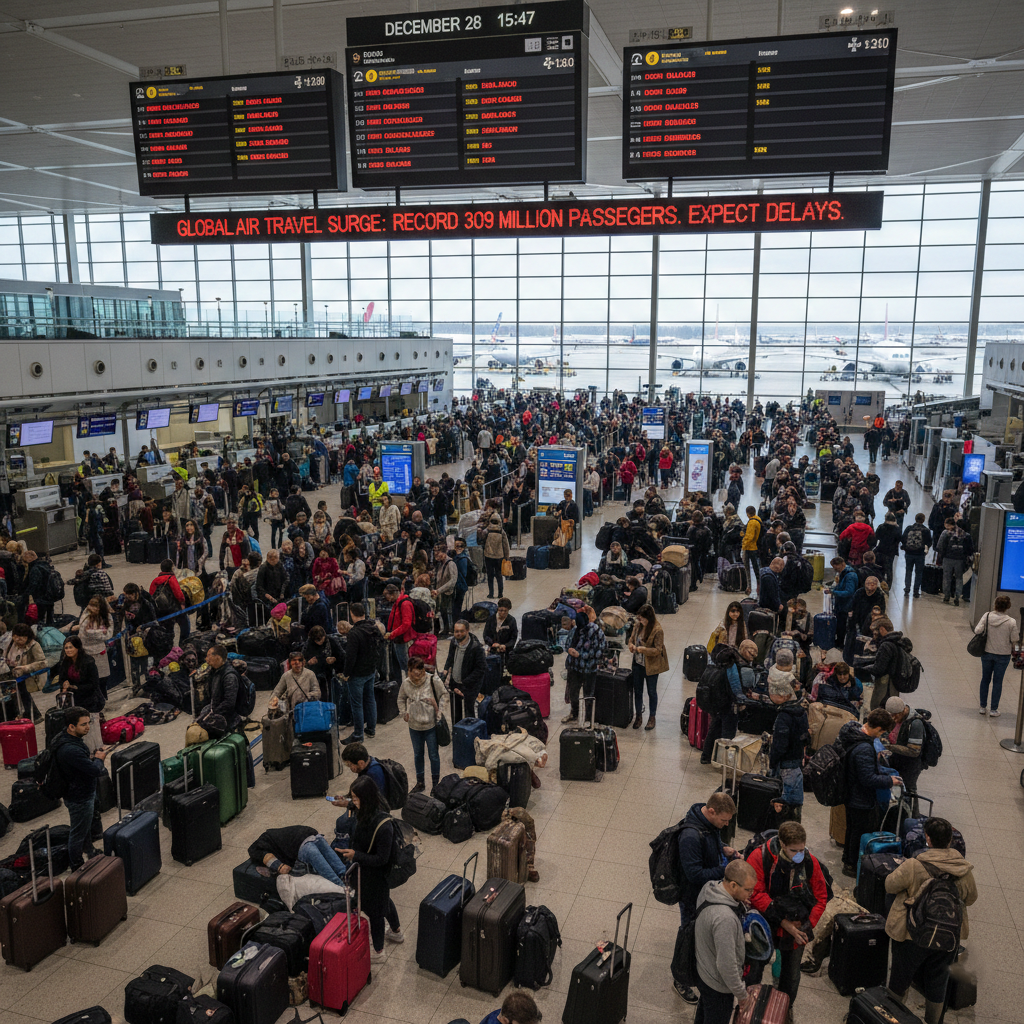
Holiday Air Travel Reaches Unprecedented Heights
Global air travel is surging this holiday season like never before. Between mid-December and early January, an estimated 309 million passengers are expected to take to the skies worldwide. This historic travel boom reflects strong post-pandemic demand, rising consumer confidence, and the return of traditional holiday journeys.
However, while packed airports and full flights signal a healthy aviation industry, they also raise serious concerns about flight delays, airport congestion, staffing shortages, and infrastructure limits. For travelers, airlines, and airport authorities alike, this holiday season is shaping up to be both a celebration and a stress test.
In this in-depth guide, we break down why air travel demand is exploding, what challenges the industry is facing, and how passengers can better prepare for a busy holiday flying period.
Why Global Air Travel Is Surging During the Holidays
Pent-Up Demand After Years of Disruption
One of the biggest drivers behind the holiday travel surge is pent-up demand. After years of pandemic-related restrictions, canceled trips, and uncertainty, travelers are prioritizing family reunions, vacations, and celebrations.
Key factors fueling demand include:
- Fully reopened international borders
- Fewer testing and visa restrictions
- Strong recovery in leisure travel
- Flexible work policies enabling longer trips
For many families, this holiday season represents the first “normal” travel experience in several years.
Rising Disposable Income and Travel Confidence
Despite inflation in some regions, travel spending remains resilient. Consumers are willing to spend more on experiences, especially during the holidays.
Airlines are reporting:
- Higher booking volumes than pre-pandemic years
- Increased demand for premium economy and business class
- Longer average trip durations
Travel is no longer seen as optional—it’s viewed as essential.
Growth in International and Long-Haul Flights
International routes are seeing the strongest rebound. Popular corridors include:
- North America to Europe
- Middle East to Asia-Pacific
- Europe to South Asia
- Domestic travel within the US, India, and China
This rise in long-haul travel adds pressure to already stretched airport infrastructure.
The Numbers Behind the Holiday Air Travel Boom
Global Passenger Forecast at a Glance
| Metric | Holiday Season Estimate |
|---|---|
| Total Passengers | ~309 million |
| Peak Travel Days | Dec 22–23 & Jan 2–3 |
| International Share | ~45% |
| Domestic Share | ~55% |
| Growth vs Last Year | 6–8% increase |
These figures highlight how close the industry is operating to full capacity.
Comparison With Pre-Pandemic Levels
Before 2020, holiday travel volumes averaged around 280–290 million passengers globally. Surpassing 309 million indicates not just recovery, but new record demand.
This rapid rebound has outpaced investments in airport expansion and staffing, creating bottlenecks.
Airport Capacity Under Pressure Worldwide
Major Hubs Facing Severe Congestion
Large international airports are bearing the brunt of the surge. Some of the most affected hubs include:
- London Heathrow
- New York JFK
- Dubai International
- Singapore Changi
- Frankfurt Airport
Issues reported at these airports include long security queues, baggage delays, and overcrowded terminals.
Why Airports Are Struggling to Keep Up
Airport capacity challenges stem from multiple factors:
- Infrastructure built for lower passenger volumes
- Delayed expansion projects
- Labor shortages in ground handling and security
- Increased aircraft turnaround times
Even well-managed airports are operating close to their limits.
Smaller Airports Also Feeling the Strain
Regional and secondary airports are not immune. In fact, many are less equipped to handle sudden surges, leading to:
- Limited parking bays
- Shortage of air traffic controllers
- Fewer alternative flights during disruptions
This makes delays harder to recover from once they start.
Flight Delays and Cancellations: What Travelers Should Expect
Why Holiday Flights Are More Likely to Be Delayed
Holiday travel is uniquely vulnerable to disruption. Common causes include:
- Winter weather in North America and Europe
- Fog and low visibility in parts of Asia
- Aircraft rotations tightly scheduled
- Crew duty time limitations
A single delayed flight can create a domino effect across the network.
Airlines Operating at Maximum Capacity
Most airlines are flying close to 100% utilization during peak holiday weeks. While this maximizes revenue, it leaves little room for recovery when something goes wrong.
Consequences include:
- Fewer standby aircraft
- Limited rebooking options
- Longer wait times for customer support
Passengers may experience delays not just in the air, but also in getting assistance.
Data on Holiday Flight Disruptions
Industry data shows that during peak holiday periods:
- Average delay times increase by 15–25%
- Cancellation rates rise by up to 10% on severe weather days
- Baggage mishandling incidents increase slightly
Preparation becomes key for stress-free travel.
Impact on Travelers: From Stress to Smart Planning
Common Pain Points for Passengers
Holiday flyers often face:
- Long security and immigration lines
- Overcrowded lounges and boarding gates
- Limited seat availability for last-minute changes
- Higher airfare prices
Knowing what to expect helps reduce anxiety.
Tips to Navigate the Holiday Travel Rush
Travelers can minimize disruption by following these strategies:
- Arrive at the airport earlier than usual
- Choose morning flights when possible
- Download airline apps for real-time updates
- Pack essentials in carry-on luggage
- Avoid tight connections
A little planning goes a long way.
How Airlines and Airports Are Responding
Short-Term Measures to Manage the Surge
To cope with record demand, airlines and airports are:
- Adding temporary staff
- Increasing security lanes during peak hours
- Using AI for passenger flow management
- Offering proactive rebooking options
While helpful, these measures are often stopgap solutions.
Long-Term Investments in Capacity Expansion
The current surge is accelerating long-term planning, including:
- Terminal expansions
- New runways and taxiways
- Automated baggage systems
- Digital immigration and biometric boarding
However, these projects take years to complete.
Economic Impact of the Holiday Travel Boom
Boost to Tourism and Local Economies
The surge in air travel benefits:
- Hotels and resorts
- Restaurants and retail
- Ground transportation providers
- Local tourism boards
Holiday travel is a major driver of seasonal economic activity.
Challenges for the Aviation Workforce
While demand is strong, staffing remains a concern:
- Training new staff takes time
- High stress during peak periods
- Increased burnout risk
Sustainable growth depends on workforce stability.
Future Outlook: Is This the New Normal for Air Travel?
Demand Expected to Stay Strong
Industry analysts predict that high holiday travel volumes will continue in coming years due to:
- Growing middle-class populations
- More affordable air travel
- Strong desire for global mobility
Peak seasons may become even busier.
Need for Smarter, Scalable Infrastructure
The current season highlights a clear message: global aviation infrastructure must evolve faster.
Key focus areas include:
- Technology-driven passenger processing
- Flexible airport design
- Better coordination between airlines and airports
Without these changes, congestion risks will persist.
Frequently Asked Questions (FAQs)
Why is global air travel so high this holiday season?
The surge is driven by pent-up demand, fewer travel restrictions, strong leisure travel, and increased confidence in flying after the pandemic.
How many people are expected to fly globally during the holidays?
Around 309 million passengers are expected to travel by air worldwide between mid-December and early January.
Will flight delays be worse during the holidays?
Yes, delays are more likely due to weather, congestion, and high aircraft utilization, especially at major hubs.
Which airports are most affected by holiday congestion?
Large international hubs like Heathrow, JFK, Dubai, and Frankfurt are among the most impacted.
How can travelers reduce holiday travel stress?
Arriving early, choosing morning flights, packing smart, and staying informed via airline apps can help reduce disruptions.
Conclusion: Planning Is the Key to a Smooth Holiday Journey
The global air travel surge this holiday season marks a powerful comeback for the aviation industry, with 309 million passengers taking flight worldwide. While this reflects economic resilience and a renewed love for travel, it also exposes real challenges around airport capacity and flight reliability.
For travelers, awareness and preparation are essential. For airlines and airports, the message is clear: investing in smarter infrastructure and better passenger experiences is no longer optional.
✈️ Planning a holiday trip? Stay informed, arrive early, and travel smart to make the most of this record-breaking season.
