

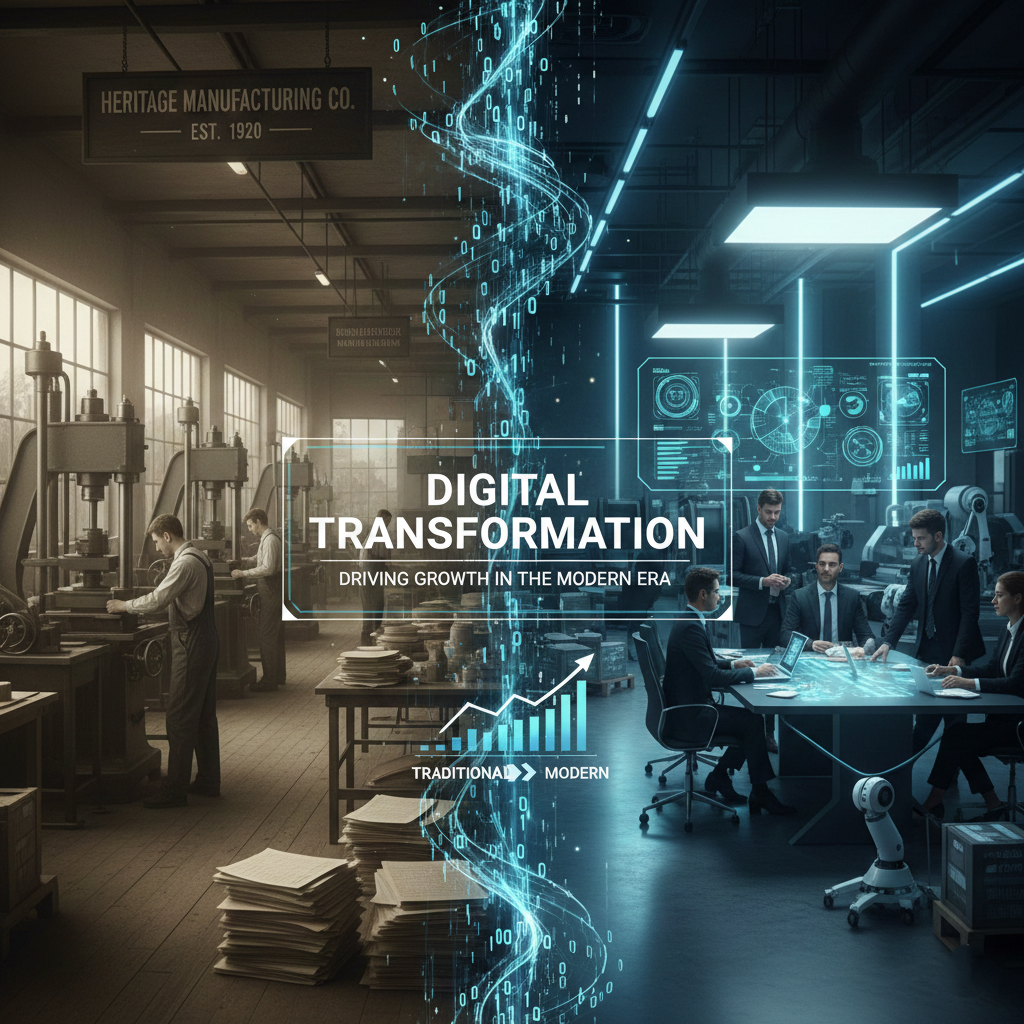
Embracing Digital Transformation in Traditional Businesses
In today’s fast-paced digital world, traditional businesses can no longer rely solely on legacy systems and manual processes. Digital transformation is no longer optional—it’s essential for survival and growth. From retail stores to manufacturing units, integrating digital technologies reshapes operations, enhances customer experiences, and opens new revenue streams.
Digital transformation in traditional businesses is more than adopting new software; it’s a cultural shift. Companies that embrace this change can achieve greater efficiency, smarter decision-making, and a stronger competitive edge.
In this article, we’ll explore why traditional businesses need digital transformation, the strategies that work best, and practical steps to implement it successfully.
Why Digital Transformation is Crucial for Traditional Businesses
Traditional businesses often face challenges like slow processes, high operational costs, and limited customer engagement. Digital transformation addresses these issues effectively:
Improved Efficiency and Productivity
- Automates repetitive tasks with AI and robotics
- Streamlines supply chain management using ERP systems
- Reduces human error and improves accuracy
Stat: According to a McKinsey report, companies that invest in digital transformation see productivity gains of up to 20–30%.
Enhanced Customer Experience
- Personalized marketing through data analytics
- Omnichannel customer engagement via apps, websites, and social media
- Faster response times with AI-powered chatbots
Data-Driven Decision Making
- Real-time insights from business intelligence tools
- Predictive analytics to anticipate market trends
- Improved forecasting and inventory management
Staying Competitive in the Market
- Agile operations allow faster adaptation to market changes
- Enables innovation in products and services
- Strengthens brand loyalty through digital engagement
Key Areas of Digital Transformation for Traditional Businesses
Digital transformation is not a one-size-fits-all approach. It involves multiple dimensions tailored to each business’s needs.
1. Digitizing Core Operations
Traditional businesses often rely on manual processes, which are prone to delays and errors. Digitizing operations includes:
- Implementing Enterprise Resource Planning (ERP) systems
- Using cloud-based platforms for data storage and collaboration
- Automating accounting, payroll, and inventory
2. Leveraging Customer-Centric Technologies
Modern customers expect seamless experiences. Traditional businesses can adopt:
- CRM software to manage customer interactions
- E-commerce platforms for online sales
- Mobile apps to improve accessibility and engagement
3. Data Analytics and Artificial Intelligence
Data is the backbone of digital transformation. Key applications include:
- Predictive analytics for inventory and demand forecasting
- AI-powered recommendations to personalize customer experiences
- Sentiment analysis to gauge brand perception
4. Modern Marketing Techniques
Traditional marketing strategies are no longer enough. Businesses must adopt digital channels:
- Social media marketing to reach wider audiences
- Content marketing to build authority and trust
- SEO optimization to improve online visibility
Steps to Implement Digital Transformation in Traditional Businesses
Implementing digital transformation requires a clear roadmap. Here’s a practical step-by-step guide:
| Step | Action | Benefit |
|---|---|---|
| 1 | Conduct a digital maturity assessment | Identify gaps and prioritize initiatives |
| 2 | Define clear goals and KPIs | Measure success and ROI |
| 3 | Invest in technology and infrastructure | Ensure scalability and efficiency |
| 4 | Train employees in digital skills | Foster a culture of innovation |
| 5 | Start with pilot projects | Minimize risk and optimize solutions |
| 6 | Monitor performance and iterate continuously | Improve processes and adapt to change |
Challenges in Digital Transformation
While the benefits are significant, traditional businesses face hurdles in the digital journey:
- Resistance to change: Employees accustomed to legacy systems may resist adopting new technology
- High initial investment: Digital transformation can require substantial upfront costs
- Cybersecurity risks: Increased digital exposure makes businesses vulnerable to cyber attacks
- Integration complexity: Combining legacy systems with modern technology can be challenging
Pro Tip: Start small with pilot programs and gradually scale digital initiatives to reduce risks and increase employee adoption.
Real-Life Examples of Successful Digital Transformation
1. Walmart
- Implemented IoT and AI for inventory management
- Adopted omnichannel strategies to integrate online and offline sales
- Enhanced supply chain efficiency, reducing operational costs
2. Domino’s Pizza
- Leveraged mobile apps and AI for personalized ordering
- Streamlined delivery processes with data analytics
- Boosted customer engagement and brand loyalty
3. General Electric (GE)
- Adopted predictive maintenance using IoT sensors
- Improved industrial operations efficiency
- Increased revenue through new digital services
FAQs on Digital Transformation in Traditional Businesses
Q1: What is digital transformation in simple terms?
A: Digital transformation is the integration of digital technologies into all aspects of a business to improve processes, enhance customer experiences, and create new growth opportunities.
Q2: Why is digital transformation important for traditional businesses?
A: It helps businesses stay competitive, reduce operational costs, improve customer satisfaction, and make data-driven decisions.
Q3: How can small traditional businesses start digital transformation?
A: Begin with digitizing core operations, adopting cloud-based tools, using CRM software, and focusing on online customer engagement.
Q4: What are the biggest challenges in digital transformation?
A: Resistance to change, high costs, cybersecurity risks, and difficulty integrating new technology with legacy systems.
Q5: How long does digital transformation take?
A: The timeline varies based on business size and complexity. Small businesses may see results in months, while larger enterprises may take 1–3 years.
Conclusion: Start Your Digital Transformation Today
Digital transformation is no longer a futuristic concept; it’s a necessity for traditional businesses aiming to thrive in a digital-first world. By embracing technology, focusing on customer experience, and fostering a culture of innovation, companies can unlock new opportunities and achieve sustainable growth.
Take the first step today—assess your digital readiness, adopt the right tools, and start transforming your business for the modern era. The future is digital, and the time to act is now.
