
A Chocolate Bar That Sparked a Mystery
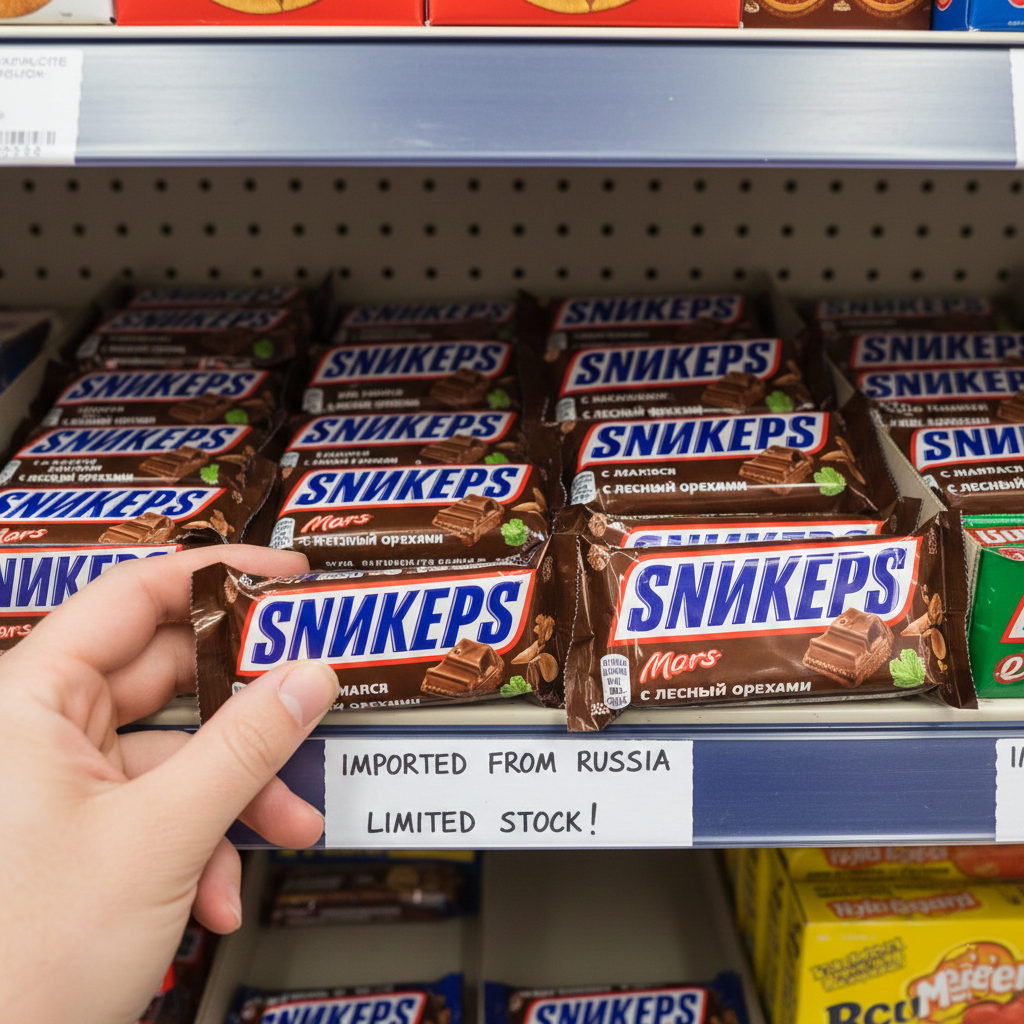
At first glance, it looks ordinary. A familiar brown wrapper. The bold white “Snickers” logo. But look closer—and something feels off. The ingredients aren’t in English. The nutrition label looks different. And at the back, in small print, it reads: Made in Russia.
Across parts of the U.K., shoppers have started spotting Russian-manufactured Snickers bars in convenience shops, sparking confusion, curiosity, and controversy. In a country where major brands follow strict import rules—especially after sanctions on Russia—how is a Russian Snickers ending up on British shelves?
This isn’t just about chocolate. It’s a story that touches on global supply chains, sanctions loopholes, parallel imports, food safety laws, and ethical consumer choices.
Let’s unpack the full story behind the strange case of the Russian Snickers in U.K. convenience shops.
Why Are Russian Snickers Bars Appearing in the U.K.?
Understanding Parallel Imports in Simple Terms
The most common explanation is parallel importing, also known as grey market trading.
Parallel imports happen when:
- A genuine branded product is bought in one country
- Resold in another without the brand owner’s permission
- Sold legally, but outside official distribution channels
In this case:
- Snickers is owned by Mars Incorporated
- Russian Snickers are produced for the Russian market
- Independent wholesalers buy surplus stock
- Products are routed through third countries
- They end up in U.K. convenience stores
⚠️ Important: These products are not counterfeit. They are real Snickers—but not intended for the U.K. market.
The Role of Sanctions and How Goods Slip Through
Are Russian Food Products Banned in the U.K.?
After Russia’s invasion of Ukraine, the U.K. imposed wide-ranging sanctions. However, food products like confectionery fall into a legal grey area.
Key points:
- Sanctions focus on energy, finance, defense, and luxury goods
- Basic food items are often excluded
- If routed via non-sanctioned countries, enforcement becomes complex
This creates a loophole where:
- Russian-made goods are re-exported
- Country-of-origin labeling still shows Russia
- But import paperwork may list an intermediary nation
How Russian Snickers Differ From U.K. Snickers
Ingredient and Labeling Differences
Russian Snickers bars are formulated for local tastes and regulations. That leads to noticeable differences.
| Feature | U.K. Snickers | Russian Snickers |
|---|---|---|
| Language | English | Russian |
| Sweetness | Moderate | Slightly sweeter |
| Fats Used | Cocoa butter standards | May include alternative fats |
| Nutrition Label | U.K./EU format | Russian GOST format |
| Allergen Warnings | Clear & standardized | Often incomplete for U.K. law |
This raises questions about compliance with U.K. food labeling regulations.
Are These Russian Snickers Legal to Sell?
The Regulatory Reality for U.K. Retailers
Technically, selling parallel imports is not illegal—but it comes with strict conditions.
Retailers must ensure:
- English ingredient lists are provided
- All allergens are clearly labeled
- Products meet U.K. food safety standards
- Import documentation is valid
⚠️ Many small convenience shops fail to meet these requirements.
This puts:
- Retailers at risk of fines
- Consumers at risk of unclear allergen exposure
What Does Mars (Snickers’ Owner) Say About This?
Mars has publicly stated:
- It stopped investing and advertising in Russia
- Production continued to supply existing markets
- It does not authorize Russian Snickers for U.K. sale
In simple terms:
These products are real, but Mars does not support or control their sale in Britain.
That creates a disconnect between brand responsibility and retail reality.
Why Convenience Shops Are Stocking Them Anyway
Economics at the Corner-Shop Level
For independent retailers, Russian Snickers offer:
- Lower wholesale prices
- Higher profit margins
- Familiar branding that sells fast
Typical price difference:
- U.K. Snickers wholesale: Higher due to logistics
- Russian Snickers wholesale: 15–30% cheaper
In a cost-of-living crisis, cheaper stock can be tempting—even risky.
Consumer Reactions: Curiosity, Concern, and Confusion
Shoppers across the U.K. have shared mixed reactions:
Common responses include:
- “It tastes slightly different”
- “Why is this even allowed?”
- “I didn’t know until I read the label”
- “I wouldn’t buy it if I knew”
For many consumers, the issue isn’t taste—it’s transparency and ethics.
Ethical Questions: Should You Buy Russian-Made Products?
The Moral Dilemma for Consumers
Some shoppers actively avoid Russian goods as a form of protest. Others argue:
- Workers shouldn’t suffer
- Food is not politics
- The product is already made
There’s no single right answer—but clear labeling empowers choice.
Food Safety and Allergy Risks You Should Know
This is where things get serious.
Potential risks include:
- Missing allergen translations
- Different manufacturing standards
- No U.K. customer support or recall system
If a product recall happens in Russia, U.K. consumers may never be notified.
How to Spot a Russian Snickers Instantly
Before buying, check:
- Language on the wrapper (Cyrillic text)
- Country of origin near the barcode
- Nutrition panel format
- Import stickers added by the retailer
If information is unclear, you have the right to ask.
What Trading Standards Say About It
U.K. Trading Standards advise:
- Products must meet U.K. labeling laws
- Retailers are responsible—not wholesalers
- Consumers should report unclear labeling
If you spot a product with no English allergen info, report it.
Will Russian Snickers Be Removed From Shelves?
Possible outcomes include:
- Increased inspections
- Fines for non-compliant shops
- Voluntary withdrawal by retailers
- Stronger enforcement of labeling laws
But as long as grey imports remain profitable, they are unlikely to disappear completely.
FAQs: Russian Snickers in the U.K.
Are Russian Snickers fake?
No. They are genuine products made by Mars, but not intended for the U.K. market.
Is it illegal to buy them?
No. Buying is legal, but selling without proper labeling may not be.
Do they taste different?
Many consumers report slight differences in sweetness and texture.
Should I avoid them?
If you have allergies or ethical concerns, it’s safer to avoid them.
Can I report a shop selling them?
Yes. Contact your local Trading Standards office.
What This Story Really Tells Us
The appearance of Russian Snickers in U.K. convenience shops is not just a quirky news story. It reveals deeper truths about:
- Global trade complexity
- Enforcement gaps
- Consumer trust
- Ethical consumption in a connected world
In an era where supply chains stretch across borders, even a chocolate bar can carry geopolitical weight.
Conclusion: Stay Informed, Shop Smart
The strange case of the Russian Snickers is a reminder to read labels, ask questions, and make informed choices. Convenience should never come at the cost of transparency or safety.
👉 Next time you pick up a familiar brand, take a second look.
Your awareness matters more than you think.
