
Why Staying Updated on the Economy Matters More Than Ever
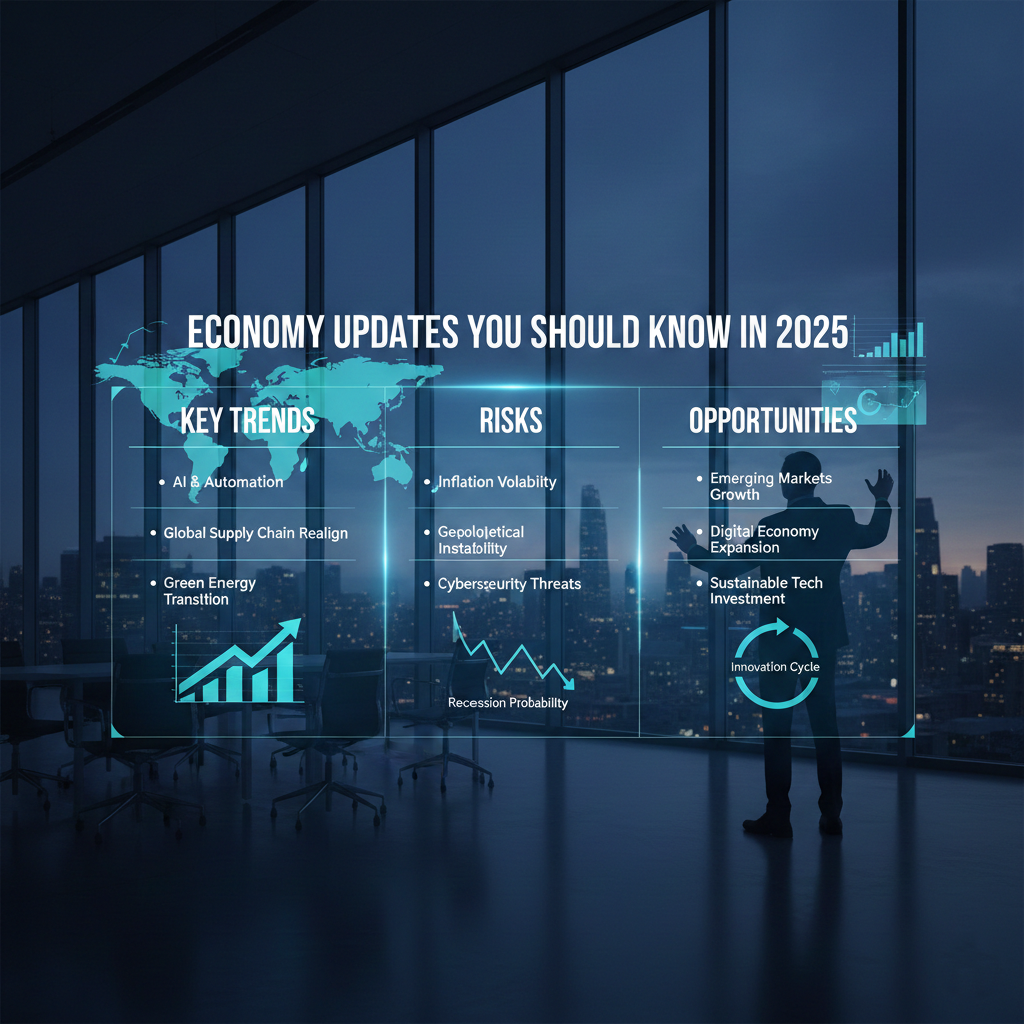
The global economy is changing faster than at any point in recent history. Inflation cycles, interest rate shifts, geopolitical tensions, digital currencies, and climate-driven policies are reshaping how money moves across the world. Whether you are a business owner, investor, salaried professional, student, or policymaker, staying informed about economy updates you should know is no longer optional—it’s essential.
Economic decisions made today directly impact your savings, job security, business growth, and future opportunities. From rising living costs to changing trade policies, every update carries real-world consequences. This article breaks down the most important economic updates in a clear, human, and practical way—without jargon, fluff, or confusion.
Global Economy Overview: Where the World Stands Today
The world economy in 2025 is navigating a delicate balance between recovery and restraint. After years of pandemic disruptions and supply-chain shocks, growth has stabilized—but not without challenges.
Key Global Economic Indicators at a Glance
| Indicator | Current Trend | What It Means |
|---|---|---|
| Global GDP Growth | Moderate (2.5–3%) | Slower but stable expansion |
| Inflation | Cooling but uneven | Prices rising slower, not falling |
| Interest Rates | High but peaking | Borrowing still expensive |
| Trade Growth | Fragmented | More regional than global |
| Employment | Resilient | Labor markets still strong |
Many economies are transitioning from emergency stimulus to long-term structural reforms. This shift defines most of today’s economic updates.
Inflation Update: Is the Cost of Living Finally Under Control?
Inflation remains one of the most searched and discussed economic topics worldwide—and for good reason.
What’s Happening With Inflation?
- Inflation has cooled from its peak, but prices are still higher than pre-2020 levels
- Food, housing, healthcare, and energy remain key pressure points
- Wage growth is improving, but not always keeping pace with living costs
Why Inflation Feels Worse Than It Looks on Paper
Even when inflation rates slow, prices don’t fall—they rise more slowly. This creates a perception gap where people feel financial pressure despite “positive” inflation data.
Key Takeaway
Inflation is no longer exploding, but it’s structurally higher than before, making budgeting and long-term planning more important than ever.
Interest Rates and Central Bank Policies Explained Simply
Interest rates are the backbone of modern economies. They affect everything—from home loans to startup funding.
Current Interest Rate Trends
- Central banks have paused aggressive rate hikes
- Rate cuts are expected, but slow and cautious
- Focus has shifted from inflation control to growth stability
How High Interest Rates Affect You
- Loans and EMIs stay expensive
- Savings accounts offer better returns
- Businesses delay expansion
- Stock markets remain volatile
Why Central Banks Are Being Careful
Cutting rates too early could reignite inflation. Cutting too late could slow economic growth. This balancing act defines today’s monetary policy decisions.
Employment and Job Market Updates You Should Know
Despite economic uncertainty, job markets have remained surprisingly resilient.
Key Job Market Trends
- Demand remains strong in tech, healthcare, green energy, and AI
- Remote and hybrid work are now permanent features
- Skill-based hiring is replacing degree-only requirements
Industries Creating the Most Jobs
- Artificial Intelligence and Data Science
- Renewable Energy and Sustainability
- Healthcare and Biotechnology
- Logistics and Supply Chain Management
What This Means for Workers
Upskilling and adaptability matter more than ever. Lifelong learning is no longer optional—it’s economic survival.
Economic Growth: Are We Heading for a Recession or Recovery?
Recession fears dominated headlines in recent years, but the reality is more nuanced.
Current Growth Outlook
- Major economies are growing slowly but steadily
- Emerging markets are outperforming developed ones
- Consumer spending remains cautious but active
Why Growth Is Slower Now
- Aging populations
- High debt levels
- Geopolitical uncertainties
- Climate transition costs
The Big Picture
This is not a collapse—it’s a restructuring phase of the global economy.
Stock Market and Investment Trends
Markets are no longer driven by cheap money but by fundamentals.
Key Market Trends to Watch
- Value stocks outperforming growth stocks
- AI-driven companies attracting long-term capital
- Increased focus on dividends and profitability
Investment Behavior Shift
Investors are now prioritizing:
- Cash flow
- Risk management
- Long-term value
Speculation is giving way to strategy.
Government Spending, Debt, and Fiscal Policy
Governments worldwide are walking a fiscal tightrope.
Rising Public Debt: Should You Be Concerned?
- Debt levels are historically high
- Servicing debt is more expensive due to interest rates
- Governments are prioritizing efficiency over expansion
Where Governments Are Spending Money
- Infrastructure development
- Digital public services
- Defense and national security
- Climate adaptation and clean energy
Fiscal discipline is now a major policy theme.
Trade, Supply Chains, and Globalization Changes
Global trade is evolving, not disappearing.
Major Trade Shifts
- “China +1” supply chain strategy
- Regional trade blocs gaining strength
- Focus on supply security over cost
What Businesses Are Doing Differently
- Diversifying suppliers
- Investing in local manufacturing
- Using automation to reduce dependency risks
This marks a shift from globalization to strategic regionalization.
Technology, AI, and the Economy
Technology is no longer just a sector—it’s the economy itself.
How AI Is Reshaping Economic Growth
- Productivity gains across industries
- Automation of repetitive tasks
- Creation of new high-skill roles
Economic Risks of Rapid Tech Adoption
- Job displacement without reskilling
- Data and privacy challenges
- Market concentration
Balanced regulation is becoming a top economic priority.
Climate Economy and Green Finance Updates
Climate change is now an economic issue, not just an environmental one.
Key Green Economy Trends
- Massive investment in renewable energy
- Carbon pricing mechanisms expanding
- ESG reporting becoming mandatory
Why This Matters Economically
Climate risks affect:
- Insurance costs
- Food prices
- Infrastructure planning
- Long-term national growth
Sustainability is now directly linked to economic resilience.
What These Economy Updates Mean for Individuals
You don’t need to be an economist to benefit from these updates.
Smart Personal Finance Moves in 2025
- Avoid high-interest debt
- Build an emergency fund
- Invest with a long-term mindset
- Focus on skill development
Economic awareness equals financial empowerment.
FAQs: Economy Updates You Should Know
Is the global economy improving or slowing down?
The economy is stabilizing at a slower growth pace. It’s not booming, but it’s not collapsing either.
Will inflation go back to pre-2020 levels?
Unlikely. Inflation is expected to remain moderately higher due to structural changes.
Are interest rates going to fall soon?
Gradually, yes—but not sharply. Central banks will move cautiously.
Is this a good time to invest?
For long-term investors, volatility creates opportunity—but diversification is key.
How can individuals protect themselves from economic uncertainty?
By reducing debt, increasing skills, saving consistently, and staying informed.
Conclusion: Stay Informed, Stay Ahead
Understanding the economy updates you should know isn’t about predicting the future—it’s about preparing for it. The economic landscape in 2025 rewards informed decision-makers, adaptable professionals, and disciplined investors.
Change is inevitable. Opportunity lies in awareness.
👉 Stay updated, invest wisely, upgrade your skills, and make informed financial choices.
If you found this guide helpful, share it with your network and bookmark it for future reference.
