

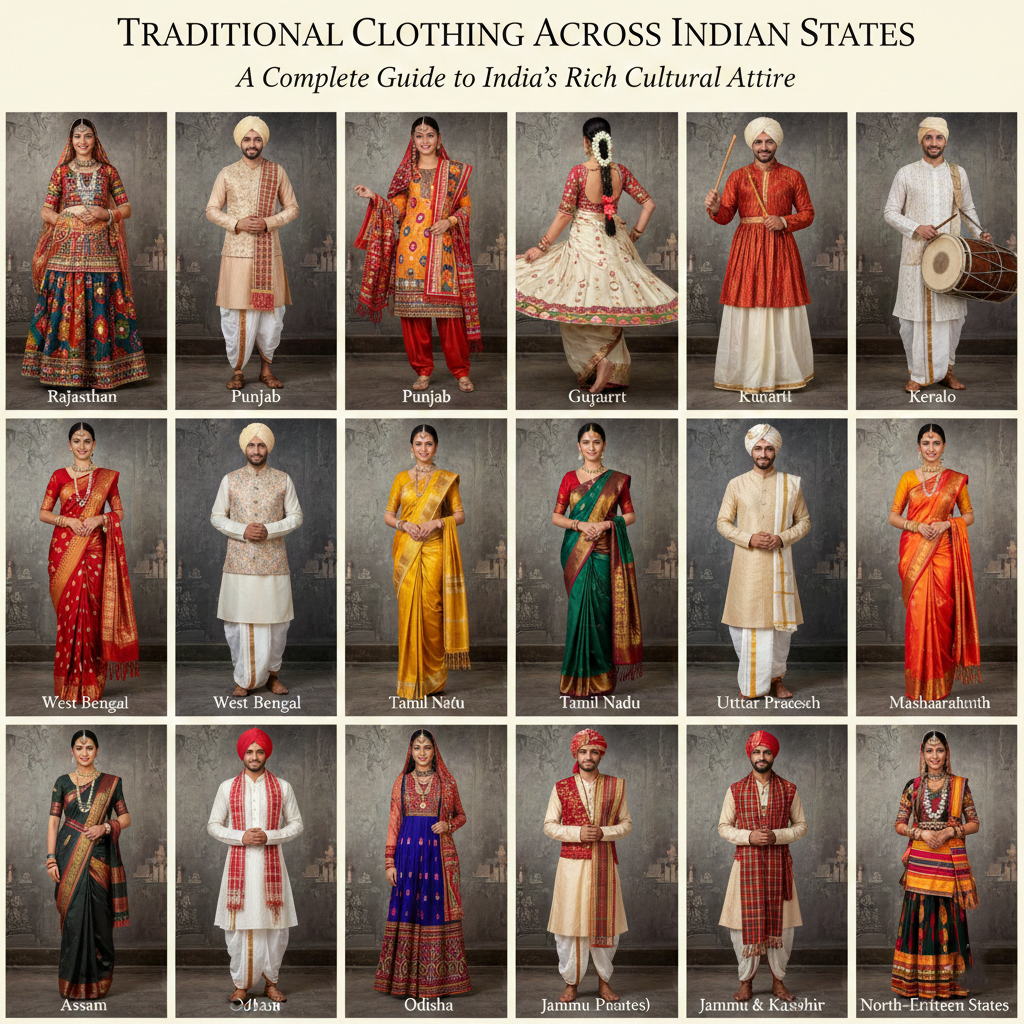
Why Traditional Indian Clothing Is More Than Just Fashion
India is not just a country; it is a living museum of cultures, languages, and traditions. One of the most visible and beautiful expressions of this diversity is traditional clothing across Indian states. Every region of India has its own unique attire, shaped by geography, climate, history, festivals, and local craftsmanship.
From the graceful sarees of the south to the vibrant turbans of Rajasthan, Indian traditional dress reflects centuries of heritage. These clothes are not merely garments—they represent identity, social status, rituals, and pride passed down through generations.
In this detailed guide, we explore state-wise traditional clothing of India, highlighting what men and women wear, the fabrics used, and why these outfits still matter in modern times.
How Geography and Culture Shape Indian Traditional Wear
India’s clothing styles evolved naturally based on regional conditions:
- Climate: Cotton dominates hot regions; wool is common in colder states
- Lifestyle: Farming, royal courts, tribal life influenced designs
- Religion & rituals: Many outfits are linked to ceremonies and festivals
- Trade routes: Silk, brocade, and embroidery spread through ancient trade
This is why no two states dress alike, yet all Indian traditional attire shares elegance and functionality.
Traditional Clothing of North Indian States
Punjab: Comfort Meets Culture
Punjab’s traditional clothing reflects its agricultural roots and energetic lifestyle.
Women’s attire:
- Salwar Kameez with Patiala salwar
- Phulkari dupatta (hand-embroidered floral work)
Men’s attire:
- Kurta-pajama
- Turban (Pagri), a symbol of honor
Punjabi outfits are designed for ease of movement, making them perfect for folk dances like Bhangra and Gidda.
Rajasthan: Royal Colors and Desert Elegance
Rajasthan’s traditional clothing is bold, vibrant, and practical for desert life.
Women wear:
- Ghagra Choli
- Bandhani (tie-dye) fabrics
- Odani (veil)
Men wear:
- Dhoti or pajama
- Angrakha
- Colorful turbans (each color holds meaning)
Mirror work and heavy embroidery are key features, reflecting royal heritage.
Uttar Pradesh: Grace Rooted in History
Uttar Pradesh showcases elegance influenced by Mughal culture.
Popular attire:
- Sarees like Banarasi silk
- Kurta-pajama and sherwani for men
Banarasi sarees, known for gold and silver zari work, are among the most prized textiles in India.
Traditional Clothing of Western India
Gujarat: Vibrant and Festive
Gujarat’s clothing bursts with color and movement.
Women:
- Chaniya Choli
- Bandhani dupattas
Men:
- Kediyu (short kurta)
- Dhoti
These outfits are especially worn during Navratri and Garba dances.
Maharashtra: Simplicity with Strength
Maharashtrian attire reflects dignity and tradition.
Women wear:
- Nauvari saree (9-yard saree worn like a dhoti)
Men wear:
- Dhoti-kurta
- Pheta (traditional turban)
The Nauvari saree symbolizes independence and mobility for women.
Traditional Clothing of Eastern India
West Bengal: Timeless Elegance
West Bengal is known for subtle beauty and handloom excellence.
Women:
- Tant saree (cotton)
- Baluchari saree (silk with mythological designs)
Men:
- Dhoti and panjabi (kurta)
White sarees with red borders are iconic during Durga Puja.
Odisha: Heritage Woven in Fabric
Odisha’s textiles are deeply rooted in temple traditions.
Famous attire:
- Sambalpuri saree
- Bomkai saree
These sarees use traditional motifs like conch shells and wheels.
Assam: Simplicity and Pride
Assamese clothing reflects natural elegance.
Women:
- Mekhela Chador
Men:
- Dhoti and Gamosa
Muga silk, unique to Assam, is considered one of the world’s finest silks.
Traditional Clothing of South India
Tamil Nadu: Classical and Graceful
Traditional clothing here is simple yet majestic.
Women:
- Kanchipuram silk sarees
Men:
- Veshti (dhoti) with angavastram
Kanchipuram sarees are famous worldwide for durability and rich zari work.
Kerala: Minimalism with Meaning
Kerala’s attire reflects purity and simplicity.
Women:
- Kasavu saree (white with gold border)
Men:
- Mundu
White symbolizes peace and is worn during festivals like Onam.
Karnataka: Royal Weaves
Traditional attire includes:
- Mysore silk sarees
- Dhoti and kurta
Mysore silk is known for its smooth texture and natural sheen.
Andhra Pradesh & Telangana: Artistic Excellence
Popular outfits:
- Pochampally ikat sarees
- Gadwal sarees
These sarees combine cotton and silk, offering comfort and luxury together.
Traditional Clothing of Central India
Madhya Pradesh: Tribal Influence
Clothing reflects tribal heritage.
Women:
- Lehenga-style sarees
- Handwoven cotton fabrics
Men:
- Dhoti and turbans
Traditional designs often include nature-inspired motifs.
Chhattisgarh: Earthy and Practical
Simple cotton sarees and dhotis dominate due to the warm climate and rural lifestyle.
Traditional Clothing of North-East India
Meghalaya, Nagaland, Mizoram, Manipur
North-East India has some of the most distinctive traditional clothing styles.
Common features:
- Handwoven shawls
- Wrap-around skirts
- Bright tribal patterns
Each tribe has unique colors and designs that signify social status and community identity.
Quick Comparison Table: Indian Traditional Clothing by Region
| Region | Women’s Attire | Men’s Attire | Famous Fabric |
|---|---|---|---|
| North India | Salwar, Ghagra | Kurta, Dhoti | Phulkari, Silk |
| West India | Chaniya Choli | Kediyu | Bandhani |
| East India | Saree | Dhoti | Cotton, Silk |
| South India | Silk Saree | Veshti | Kanchipuram |
| North-East | Wrap Skirts | Shawls | Handwoven Wool |
Why Traditional Clothing Still Matters Today
Despite western fashion trends, traditional Indian attire remains relevant because:
- It preserves cultural identity
- Supports local artisans and weavers
- Is sustainable and eco-friendly
- Enhances elegance during festivals and ceremonies
According to textile industry reports, India’s handloom sector employs over 35 million people, making traditional clothing economically significant as well.
FAQs: Traditional Clothing Across Indian States
What is the most common traditional clothing in India?
The saree for women and dhoti-kurta for men are among the most widely worn traditional outfits across states.
Which Indian state has the most diverse traditional clothing?
States like Rajasthan, Assam, and Nagaland show immense diversity due to tribal and regional variations.
Why are Indian traditional clothes so colorful?
Bright colors represent joy, prosperity, religion, and climatic suitability, especially in festivals and ceremonies.
Are traditional Indian clothes still worn daily?
In many rural areas and during religious events, traditional clothing is still part of daily life.
Which fabric is uniquely Indian?
Muga silk from Assam and Kanchipuram silk from Tamil Nadu are globally unique to India.
Conclusion: Celebrating India Through Its Traditional Clothing
Traditional clothing across Indian states tells the story of a nation rooted in heritage yet evolving with time. Every drape, stitch, and weave reflects history, climate, and community values. Preserving and wearing these outfits is not just about fashion—it is about honoring India’s cultural soul.
If you appreciate craftsmanship, sustainability, and timeless elegance, embracing traditional Indian attire is a step toward keeping this legacy alive.
Explore. Wear. Preserve India’s cultural heritage.
