

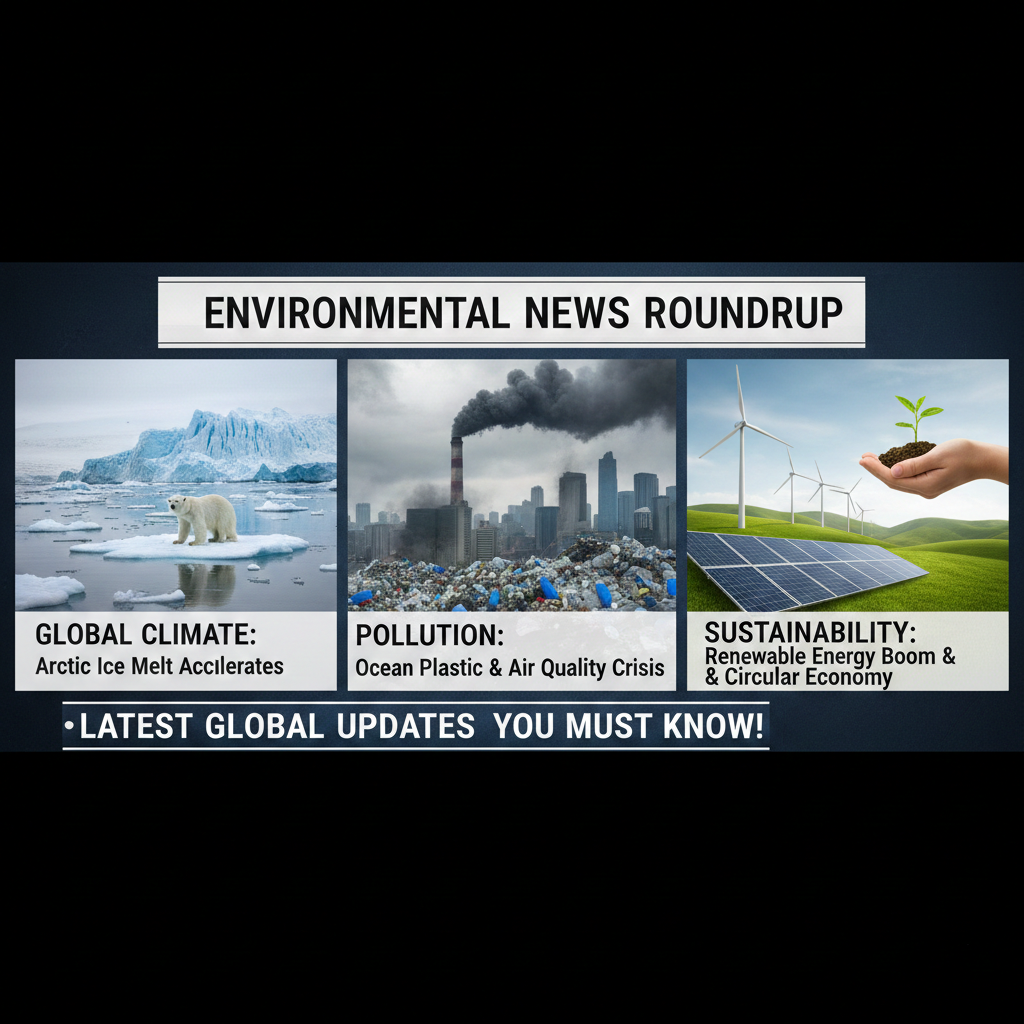
The environment is no longer a distant concern—it’s part of our daily lives. From record-breaking heatwaves to groundbreaking renewable energy projects, environmental developments are shaping economies, policies, and human health worldwide. This Environmental News Roundup brings together the most important, recent, and impactful environmental stories, explained in a clear and human-friendly way.
Whether you are a student, policymaker, business owner, or simply someone who cares about the planet, staying informed helps you make smarter choices. In this roundup, we cover climate change updates, pollution control efforts, wildlife conservation news, renewable energy growth, and global sustainability initiatives—all in one comprehensive guide.
Climate Change Updates Shaping the World
Rising Global Temperatures Continue to Break Records
According to recent global climate monitoring agencies, the past year ranked among the hottest years ever recorded. Average global temperatures have risen approximately 1.2°C above pre-industrial levels, edging dangerously close to the 1.5°C threshold outlined in international climate agreements.
Key impacts observed:
- Increased frequency of extreme heatwaves
- Melting glaciers and rising sea levels
- Longer and more destructive wildfire seasons
- Severe droughts affecting agriculture and water supply
Climate scientists warn that without rapid emission cuts, these impacts will intensify, affecting food security and public health worldwide.
Extreme Weather Events Are Becoming the New Normal
Floods, hurricanes, cyclones, and heatwaves are no longer rare events. Countries across Asia, Europe, and the Americas have experienced unprecedented weather extremes in recent months.
| Event Type | Increase Observed | Major Impact |
|---|---|---|
| Heatwaves | +40% frequency | Health risks, power shortages |
| Floods | +30% intensity | Infrastructure damage |
| Wildfires | +25% spread | Air pollution, biodiversity loss |
Experts emphasize that climate adaptation is now as critical as climate mitigation.
Air, Water, and Plastic Pollution: Current Environmental Challenges
Air Pollution Remains a Silent Killer
Despite increased awareness, air pollution continues to pose a serious health threat. Urban areas in developing and developed nations alike report rising levels of fine particulate matter (PM2.5).
Major sources include:
- Vehicle emissions
- Coal-based power plants
- Industrial manufacturing
- Construction dust
The World Health Organization estimates that over 7 million premature deaths annually are linked to air pollution, making it one of the world’s largest environmental health risks.
Plastic Pollution Crisis in Oceans and Rivers
Plastic waste continues to choke marine ecosystems. Every year, nearly 11 million tons of plastic enter oceans, harming marine life and entering the human food chain as microplastics.
Recent environmental efforts include:
- Global negotiations for a plastic pollution treaty
- Single-use plastic bans in multiple countries
- Increased focus on biodegradable alternatives
- Corporate responsibility programs for waste reduction
However, experts stress that recycling alone is not enough—reduction and redesign are essential.
Water Pollution and Drinking Water Safety
Industrial waste, agricultural runoff, and untreated sewage continue to contaminate rivers and groundwater. Several regions have reported alarming levels of chemical pollutants in drinking water sources.
Common water pollutants:
- Heavy metals (lead, mercury)
- Pesticides and fertilizers
- Industrial chemicals
- Microplastics
Governments are now prioritizing stricter water quality standards and wastewater treatment upgrades.
Renewable Energy and Clean Technology Breakthroughs
Solar and Wind Power Growth Hits New Milestones
Renewable energy adoption is accelerating faster than expected. Solar and wind energy now account for a significant share of new electricity generation worldwide.
Key trends driving growth:
- Falling solar panel and battery costs
- Government subsidies and tax incentives
- Corporate commitments to net-zero emissions
- Improved energy storage technology
Some countries have achieved days where nearly 100% of electricity demand was met through renewable sources alone.
Green Hydrogen Gains Global Attention
Green hydrogen—produced using renewable energy—has emerged as a promising solution for decarbonizing heavy industries such as steel, shipping, and aviation.
Advantages of green hydrogen:
- Zero carbon emissions at point of use
- Suitable for energy-intensive industries
- Long-term energy storage potential
Major economies are investing billions in hydrogen infrastructure, signaling a shift toward cleaner industrial systems.
Wildlife Conservation and Biodiversity Protection
Species Under Threat: A Global Reality
Biodiversity loss is accelerating due to habitat destruction, climate change, and illegal wildlife trade. Scientists warn that one million species face the risk of extinction in the coming decades.
Threatened ecosystems include:
- Tropical rainforests
- Coral reefs
- Wetlands
- Grasslands
Protecting biodiversity is not just about wildlife—it ensures ecosystem services like clean air, water, and food security.
Conservation Success Stories Offer Hope
Despite challenges, there are positive developments. Several endangered species populations have shown signs of recovery due to focused conservation efforts.
Examples include:
- Reforestation projects restoring degraded lands
- Marine protected areas allowing fish populations to recover
- Community-led conservation initiatives
- Stronger enforcement against poaching
These success stories prove that timely action can reverse environmental damage.
Environmental Policies and Global Agreements
Governments Strengthen Climate Policies
Many countries are updating their climate commitments with stricter emission targets and renewable energy goals.
Policy measures gaining traction:
- Carbon pricing and emissions trading systems
- Fossil fuel subsidy reductions
- Mandatory corporate climate disclosures
- Green infrastructure investments
While progress varies, public pressure and climate activism are accelerating political action.
Corporate Sustainability and ESG Trends
Environmental, Social, and Governance (ESG) standards are becoming mainstream in business decision-making. Investors increasingly favor companies with strong environmental performance.
Corporate sustainability actions include:
- Net-zero pledges
- Sustainable supply chain practices
- Waste reduction commitments
- Transparent environmental reporting
Businesses failing to adapt risk financial and reputational losses.
Technology, Innovation, and the Environment
AI and Data in Environmental Monitoring
Artificial intelligence and satellite data are transforming environmental monitoring. These tools help track deforestation, predict extreme weather, and monitor pollution levels in real time.
Benefits of tech-driven environmental solutions:
- Faster response to disasters
- Improved policy decision-making
- Better enforcement of environmental laws
Technology is not a replacement for action, but a powerful enabler.
What Individuals Can Learn from This Environmental News Roundup
Environmental responsibility is not limited to governments and corporations. Individuals play a crucial role in driving change.
Simple actions with real impact:
- Reducing energy and water consumption
- Choosing public transport or electric vehicles
- Supporting sustainable brands
- Minimizing plastic use
- Staying informed and spreading awareness
Small changes, multiplied across millions of people, create measurable impact.
Frequently Asked Questions (FAQs)
What is an Environmental News Roundup?
An Environmental News Roundup is a curated summary of recent and important environmental developments, including climate change, pollution, renewable energy, and conservation updates.
Why is environmental news important?
Environmental news helps people understand how ecological changes affect health, economy, and future sustainability, enabling informed decisions and policy support.
How often should I follow environmental news?
Weekly or daily updates are ideal, as environmental conditions and policies change rapidly and can have immediate impacts.
Can environmental news influence government policies?
Yes. Public awareness and media coverage often pressure governments to introduce or strengthen environmental regulations.
How can businesses benefit from environmental awareness?
Businesses that adopt sustainable practices often gain customer trust, reduce long-term costs, and attract environmentally conscious investors.
Conclusion: Why Staying Updated on Environmental News Matters
The environment is at a critical crossroads. This Environmental News Roundup highlights both the challenges we face and the progress being made across the globe. Climate change, pollution, and biodiversity loss are serious threats—but innovation, policy reforms, and collective action offer hope.
Staying informed is the first step toward meaningful change. Whether you are influencing policy, running a business, or making daily lifestyle choices, environmental awareness empowers you to be part of the solution.
👉 Stay connected, stay informed, and share this Environmental News Roundup to spread awareness and drive positive environmental action.
