

A Date That Changed Modern Warfare Forever
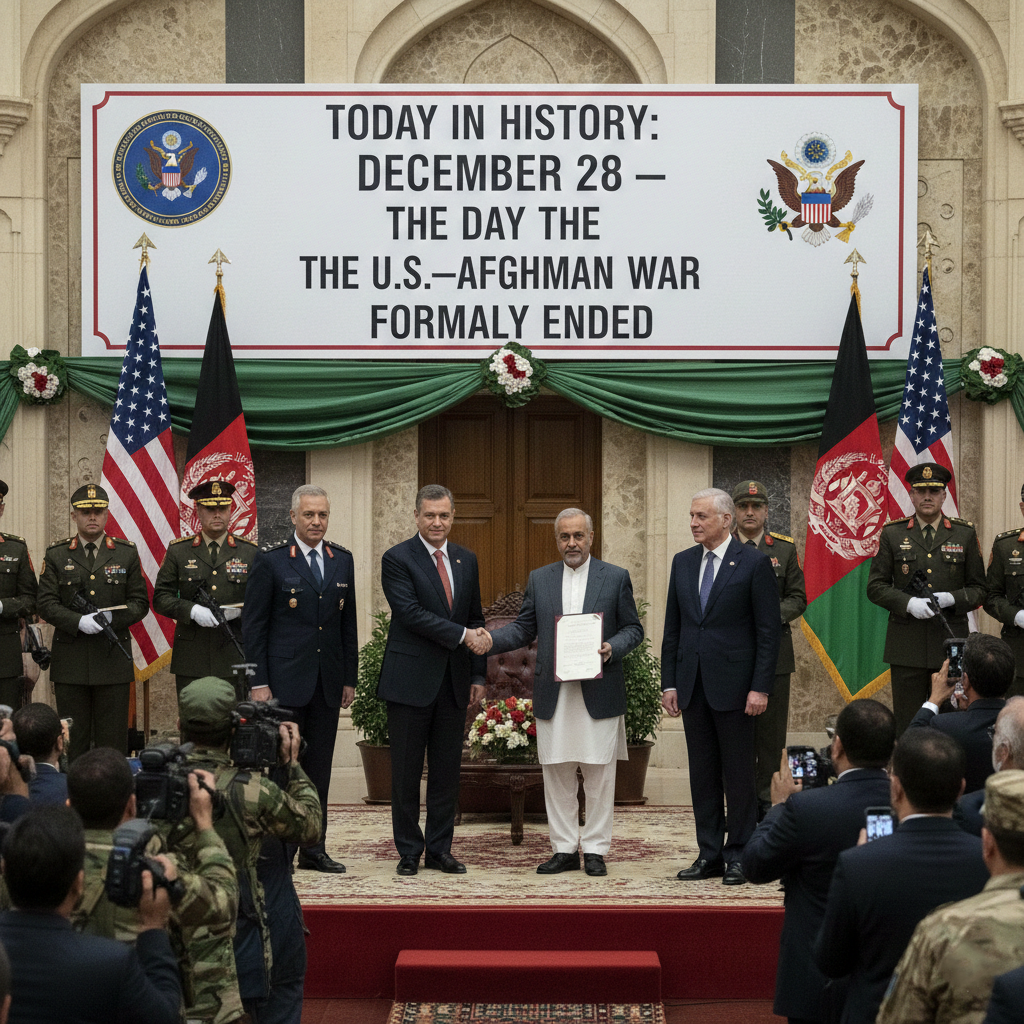
Today in history, December 28, stands as a defining moment in global politics and modern warfare. On this day, the United States officially declared an end to its combat mission in Afghanistan, bringing closure to nearly 20 years of war, sacrifice, and geopolitical transformation.
What began as a swift military response after the September 11, 2001 attacks evolved into the longest war in U.S. history. December 28 symbolizes more than a military announcement—it represents a turning point in foreign policy, counterterrorism strategy, and international relations.
This article explores the full story behind the U.S.–Afghan War, why December 28 matters, what officially ended, and how this historic decision reshaped the world.
How the U.S.–Afghan War Began After 9/11
The U.S. war in Afghanistan was launched in response to the September 11 terrorist attacks, which killed nearly 3,000 people on American soil.
Key Reasons the War Started
- Al-Qaeda was responsible for the 9/11 attacks
- The Taliban government in Afghanistan harbored Osama bin Laden
- Diplomatic demands to surrender terrorist leaders were rejected
Within weeks, the U.S., supported by NATO allies, launched Operation Enduring Freedom in October 2001.
🔗 Reference:
Learn more about the 9/11 attacks on Wikipedia:
https://en.wikipedia.org/wiki/September_11_attacks
What Happened on December 28? Why This Date Matters
December 28 marks the official declaration by the U.S. Department of Defense that the combat mission in Afghanistan had formally ended.
This announcement confirmed:
- The conclusion of Operation Enduring Freedom
- Transition to advisory and support roles
- Transfer of security responsibility to Afghan forces
Although U.S. troops remained in reduced numbers, their role shifted from active combat to training, counterterrorism support, and advisory operations.
Operation Enduring Freedom Comes to an End
What Was Operation Enduring Freedom?
Operation Enduring Freedom (OEF) was the primary U.S.-led combat operation in Afghanistan from 2001 to 2014.
Mission goals included:
- Eliminating Al-Qaeda networks
- Removing the Taliban from power
- Preventing Afghanistan from becoming a terrorist safe haven
On December 28, the Pentagon officially confirmed OEF’s conclusion, signaling the end of America’s longest active combat operation.
From Combat to Support: A Strategic Shift
After December 28, the mission transitioned into:
- Operation Freedom’s Sentinel
- NATO’s Resolute Support Mission
New Focus Areas
- Training Afghan National Defense and Security Forces
- Intelligence sharing
- Counterterrorism operations
- Diplomatic and reconstruction support
This shift reflected a broader change in U.S. military strategy—from large-scale ground wars to targeted, limited engagements.
U.S.–Afghan War by the Numbers
| Metric | Data |
|---|---|
| Duration | 2001–2021 |
| Length | Nearly 20 years |
| U.S. Troops Deployed | Over 775,000 |
| U.S. Military Deaths | ~2,400 |
| Afghan Civilian Deaths | 46,000+ |
| Total Cost | $2+ trillion |
📊 Source: Brown University’s Costs of War Project
Human Cost of the Afghanistan War
Beyond statistics, the war deeply affected millions of lives.
Impact on Afghanistan
- Thousands of civilian casualties
- Displacement of families
- Infrastructure destruction
- Generational trauma
Impact on the United States
- Loss of soldiers and veterans
- Long-term medical and mental health challenges
- Economic burden on taxpayers
The formal end on December 28 did not erase these costs—but it acknowledged them.
Global Reaction to the War’s End
The international response to the December 28 announcement was mixed.
Supportive Reactions
- NATO allies welcomed the transition
- War-weary nations saw it as overdue
- Humanitarian groups hoped for stability
Critical Voices
- Concerns over Afghan government readiness
- Fear of Taliban resurgence
- Questions about long-term regional security
Comparison: Afghanistan vs Other U.S. Wars
| War | Duration |
|---|---|
| World War II | 4 years |
| Vietnam War | 19 years |
| Korean War | 3 years |
| Afghanistan War | 20 years |
The Afghanistan conflict surpassed Vietnam, making it America’s longest war.
What December 28 Means for U.S. Foreign Policy
The formal end of the Afghan combat mission marked a strategic reset.
Key Policy Shifts
- Reduced reliance on long-term occupations
- Increased focus on diplomacy
- Emphasis on intelligence-led operations
- Pivot toward Asia-Pacific priorities
This moment reshaped how the U.S. approaches future conflicts.
Afghanistan After the U.S. Combat Exit
While December 28 ended the formal combat role, Afghanistan’s challenges continued.
Post-War Realities
- Political instability
- Economic uncertainty
- Ongoing security threats
- Humanitarian crises
The date remains a reminder that ending a war militarily does not instantly bring peace.
Why “Today in History” Matters for Readers
Understanding dates like December 28 helps readers:
- Learn from global conflicts
- Understand policy decisions
- Appreciate the human cost of war
- Stay informed as global citizens
If you enjoy historical insights, explore more stories on our Daily History section:
🔗 link: https://thenews.zone
Lessons Learned from the U.S.–Afghan War
Major Takeaways
- Military power alone cannot rebuild nations
- Long-term wars carry massive human and economic costs
- Local governance and stability are crucial
- Clear exit strategies matter
These lessons continue to shape military doctrine worldwide.
Frequently Asked Questions (FAQs)
Why is December 28 important in U.S. history?
December 28 marks the formal end of the U.S. combat mission in Afghanistan, concluding Operation Enduring Freedom.
Did all U.S. troops leave Afghanistan on December 28?
No. Combat operations ended, but some troops remained for advisory and counterterrorism roles.
How long did the U.S.–Afghan War last?
The war lasted nearly 20 years, from October 2001 to 2021.
Was December 28 the final withdrawal?
No. The final troop withdrawal occurred later, but December 28 marked the official end of combat operations.
Why is the Afghanistan War considered historic?
It became the longest war in U.S. history and reshaped global military strategy.
Conclusion: Remembering December 28 as a Turning Point
Today in history, December 28, stands as a powerful reminder of the cost, complexity, and consequences of modern warfare. The formal end of the U.S.–Afghan combat mission closed one chapter of history—but its lessons continue to influence global politics, military strategy, and international relations.
As we reflect on this date, it’s essential to honor those affected and learn from the past to build a more stable future.
Stay informed. Explore more “Today in History” stories on our website and never miss a moment that shaped the world.
