

The Global Rise of Esports
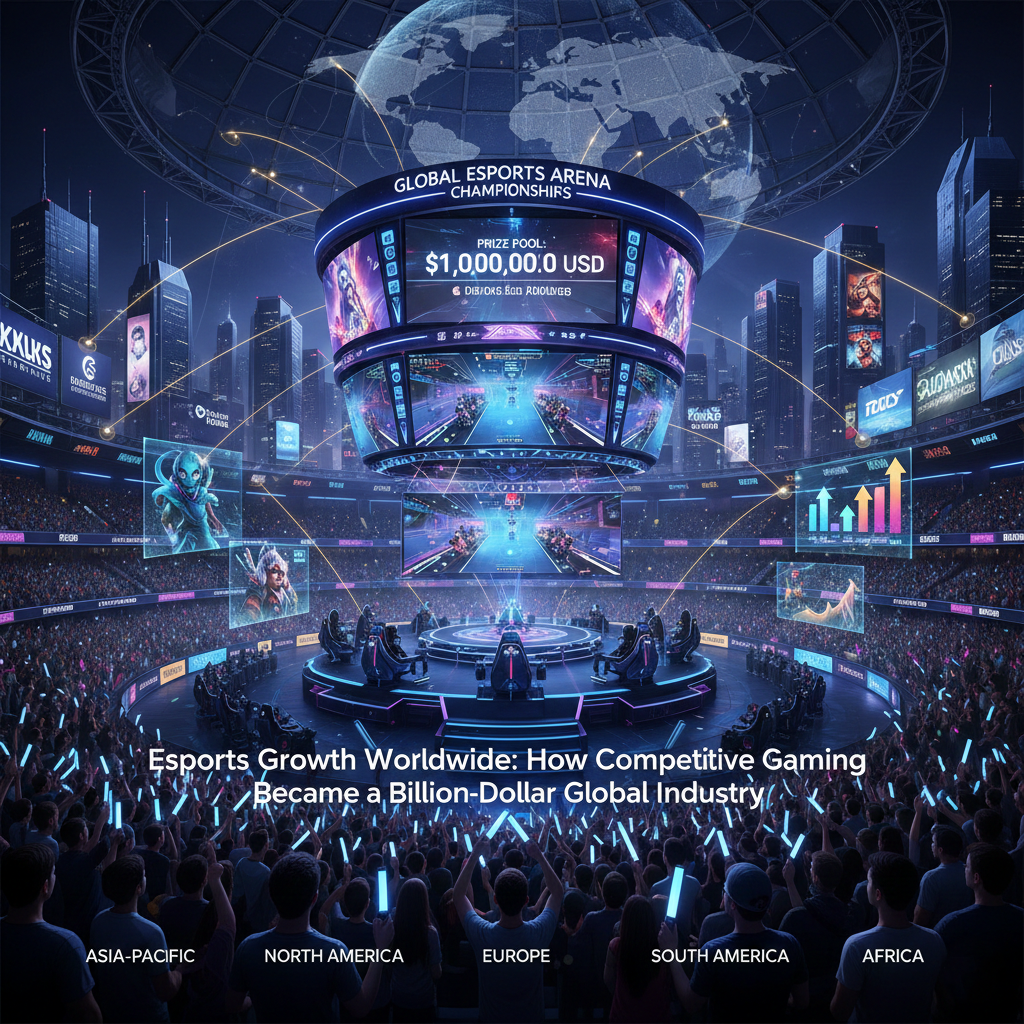
Esports growth worldwide is no longer a prediction—it’s a reality reshaping entertainment, sports, and digital culture. What once started as casual LAN competitions has evolved into a multibillion-dollar industry with packed arenas, global sponsors, and millions of daily viewers.
Today, esports rivals traditional sports in audience engagement, digital reach, and commercial value. From Asia and North America to Europe, the Middle East, and emerging African markets, competitive gaming has become a truly global phenomenon.
In this in-depth guide, we’ll explore how esports grew so fast, which regions are leading the charge, the business behind the boom, and what the future holds for players, fans, and investors.
What Is Esports? A Quick Overview
Esports, short for electronic sports, refers to organized, competitive video gaming where professional players or teams compete in structured tournaments.
Popular esports genres include:
- Multiplayer Online Battle Arena (MOBA)
- First-Person Shooters (FPS)
- Battle Royale
- Sports simulation games
- Real-time strategy games
Unlike traditional gaming, esports emphasizes:
- Skill-based competition
- Professional teams and leagues
- Live streaming and global audiences
- Sponsorships, salaries, and prize pools
Global Esports Market Size and Revenue Growth
Esports Industry Revenue at a Glance
The esports industry has seen exponential financial growth over the past decade.
| Year | Global Revenue (USD) |
|---|---|
| 2015 | $325 million |
| 2020 | $950 million |
| 2023 | $1.6+ billion |
| 2025 (Projected) | $2.5+ billion |
Key revenue streams include:
- Sponsorships and advertising
- Media and broadcasting rights
- Game publisher fees
- Merchandise and ticket sales
- Streaming platforms
According to industry reports from Newzoo and Statista, sponsorship alone accounts for nearly 40% of total esports revenue.
Outbound reference: Statista, Newzoo (global esports market data)
Esports Viewership Growth Worldwide
How Many People Watch Esports Globally?
Esports viewership has grown faster than most traditional sports, driven by mobile access and streaming platforms.
- Global esports audience (2024): 540+ million
- Expected viewers by 2027: 650+ million
- Average viewer age: 18–34 years
Streaming platforms powering this growth:
- Twitch
- YouTube Gaming
- Facebook Gaming
- Kick
Major tournaments often attract viewership comparable to the Super Bowl or FIFA finals.
Regional Breakdown: Esports Growth by Region
Asia-Pacific: The Global Esports Powerhouse
Asia dominates the global esports ecosystem.
Key leaders:
- China
- South Korea
- Japan
- India
- Southeast Asia
Why Asia leads:
- Strong gaming culture
- Government recognition of esports as a sport
- Massive mobile gaming adoption
- Dedicated esports arenas and training academies
South Korea, in particular, treats esports athletes like celebrities, with structured leagues and national support.
North America: Commercial and Streaming Hub
North America excels in:
- Sponsorship deals
- Franchise-based leagues
- Content creation
- Streaming innovation
Popular leagues include:
- Overwatch League
- Call of Duty League
- LCS (League of Legends Championship Series)
Major brands such as Coca-Cola, Intel, Red Bull, and Nike actively invest in esports teams and events.
Europe: Strong Competitive Ecosystem
Europe boasts:
- Highly competitive teams
- Cross-border tournaments
- Strong grassroots esports communities
Countries like Germany, Sweden, France, and the UK lead in:
- Player development
- Tournament organization
- Esports education programs
Middle East and Africa: Emerging Esports Markets
The Middle East and Africa are experiencing rapid esports growth due to:
- Government-backed initiatives
- Youth population dominance
- Investment in gaming infrastructure
Saudi Arabia and the UAE are emerging as global esports hosts, with multimillion-dollar tournaments and gaming cities.
Most Popular Esports Games Worldwide
Top Esports Titles by Global Popularity
| Game | Genre | Key Regions |
|---|---|---|
| League of Legends | MOBA | Global |
| Counter-Strike 2 | FPS | Europe, NA |
| Dota 2 | MOBA | Asia, Europe |
| Valorant | FPS | Global |
| PUBG / BGMI | Battle Royale | Asia |
| Fortnite | Battle Royale | NA, EU |
These titles drive consistent engagement through seasonal leagues, world championships, and creator-led content.
Technology Driving Esports Growth
Streaming Platforms and Social Media
The rise of esports would not be possible without:
- Low-latency live streaming
- Interactive chat and fan engagement
- Influencer-driven promotion
Short-form content on TikTok, Instagram Reels, and YouTube Shorts has introduced esports to non-traditional audiences.
5G, Cloud Gaming, and AI
Technological advancements fueling esports growth:
- 5G networks enabling low-lag competitive play
- Cloud gaming reducing hardware barriers
- AI-powered analytics improving performance
- VR and AR enhancing spectator experiences
Careers and Opportunities in Esports
Beyond Professional Players
Esports has created a full employment ecosystem.
Popular esports career paths:
- Professional player
- Coach or analyst
- Caster/commentator
- Event manager
- Game developer
- Esports journalist
- Content creator
- Team manager
Many educational institutions now offer esports management and game design courses.
Esports vs Traditional Sports: A Quick Comparison
| Aspect | Esports | Traditional Sports |
|---|---|---|
| Entry cost | Low | High |
| Global access | Digital-first | Location-based |
| Audience age | Younger | Mixed |
| Growth rate | Rapid | Stable |
| Streaming reach | Massive | Limited |
Esports complements traditional sports rather than replacing them, attracting a digital-native generation.
Challenges Facing Esports Worldwide
Despite rapid growth, esports faces challenges:
- Player burnout
- Mental health concerns
- Cheating and match-fixing
- Monetization consistency
- Regulatory uncertainty
Addressing these issues is essential for long-term sustainability.
Future of Esports: What Lies Ahead
Key Esports Trends to Watch
- Olympic recognition discussions
- University-level esports expansion
- Increased female participation
- Metaverse-based esports events
- AI-driven training and analytics
- Greater focus on player welfare
Experts predict esports will become a mainstream entertainment pillar alongside movies, music, and traditional sports.
FAQs: Esports Growth Worldwide
What is driving esports growth worldwide?
Esports growth is driven by digital streaming, mobile gaming, global internet access, sponsorship investments, and youth engagement.
Is esports bigger than traditional sports?
While not bigger in revenue yet, esports is growing faster and dominates younger demographics.
Which country leads in esports?
China and South Korea are global leaders, followed closely by the US and European nations.
Can esports be a career?
Yes. Esports offers careers in playing, coaching, management, content creation, and technology.
Is esports recognized as a real sport?
Many countries officially recognize esports, and discussions about Olympic inclusion are ongoing.
Outbound reference: International Olympic Committee (IOC)
Internal reference: Read more gaming and technology insights on thenews.zone
Conclusion: Why Esports Is the Future of Global Entertainment
Esports growth worldwide reflects a fundamental shift in how people compete, consume entertainment, and build communities. With expanding audiences, technological innovation, and increasing legitimacy, esports is no longer “the future”—it is the present.
Whether you’re a gamer, investor, marketer, or curious reader, now is the perfect time to understand and engage with the esports revolution.
👉 Stay updated with the latest esports, gaming, and tech trends—visit thenews.zone today and explore the future of digital competition.
