

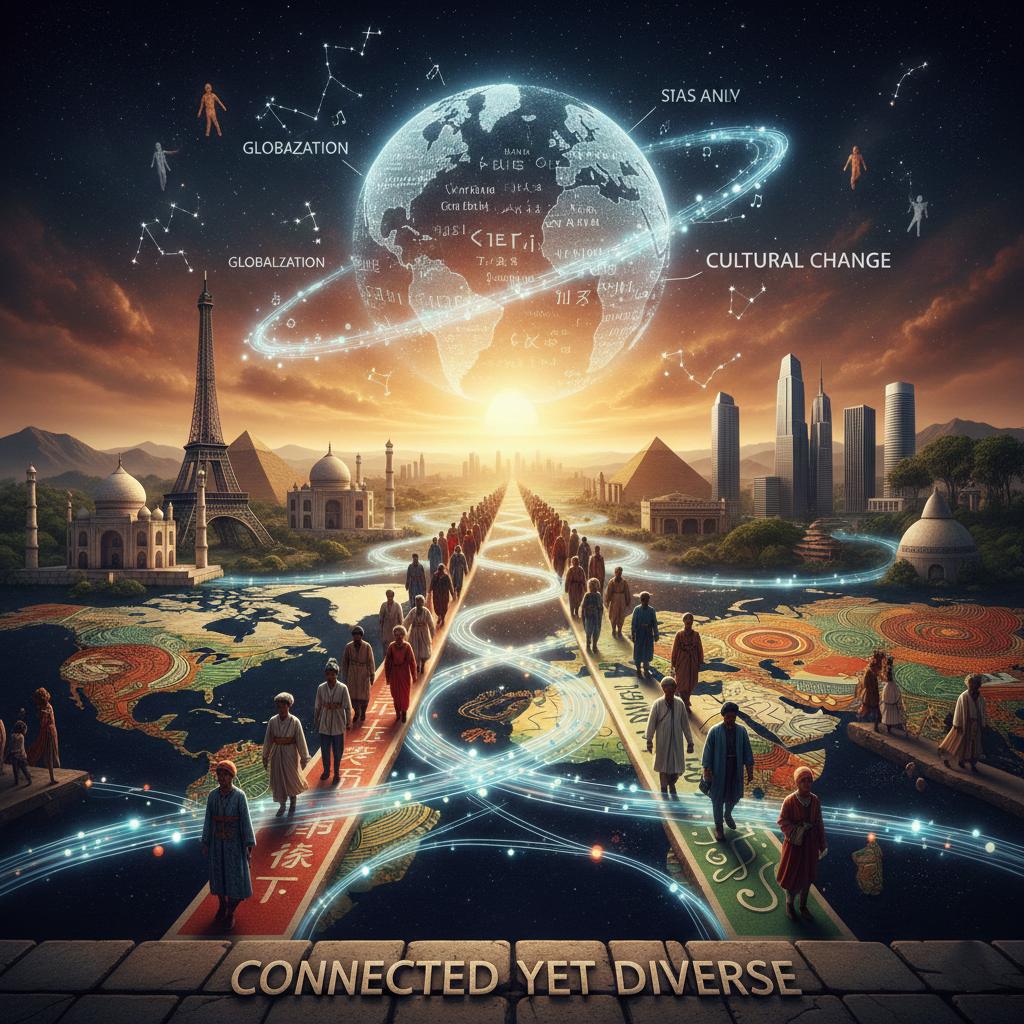
Globalization and Cultural Change in the Modern World
Globalization and cultural change are two forces shaping how people live, communicate, and understand the world today. From the food we eat and the clothes we wear to the movies we watch and the values we share, globalization has transformed cultures across borders at an unprecedented pace.
Thanks to faster transportation, digital technology, international trade, and global media, cultures are no longer isolated. Instead, they interact, blend, and sometimes clash. While some fear cultural homogenization, others see globalization as a powerful driver of cultural exchange, innovation, and mutual understanding.
In this in-depth guide, we explore how globalization influences cultural change, its benefits and challenges, real-world examples, and what the future holds for global cultures—all explained in a clear, human-friendly way.
Understanding Globalization and Its Cultural Impact
What Is Globalization?
Globalization refers to the increasing interconnectedness of countries through:
- International trade and business
- Migration and travel
- Digital communication and social media
- Global media and entertainment
- Shared political, economic, and social systems
These connections allow ideas, values, traditions, and lifestyles to cross borders more easily than ever before.
👉 For more global trend insights, explore internal analysis articles at thenews.zone
What Do We Mean by Cultural Change?
Cultural change happens when beliefs, customs, behaviors, language, or social norms evolve over time. This can occur due to:
- Technological advancement
- Economic development
- Education and exposure to new ideas
- Interaction with other cultures
When globalization accelerates these interactions, cultural change becomes faster and more visible.
How Globalization Drives Cultural Change Worldwide
Cultural Exchange and Hybrid Cultures
One of the most visible effects of globalization is cultural exchange. When cultures interact, they influence one another, often creating hybrid cultures.
Examples include:
- Fusion cuisines like Indo-Chinese food
- Global fashion blending Western and traditional styles
- Music genres combining local sounds with global beats
These hybrids show that globalization doesn’t just replace cultures—it often reshapes them.
The Global Spread of Language
English has emerged as a global lingua franca due to globalization. It dominates:
- International business
- Higher education
- Technology and science
- Entertainment and media
However, this has raised concerns about the decline of indigenous and minority languages.
Comparison Table: Language Impact of Globalization
| Aspect | Positive Impact | Negative Impact |
|---|---|---|
| Communication | Easier global interaction | Language dominance |
| Education | Access to global knowledge | Local languages neglected |
| Employment | More global opportunities | Cultural identity erosion |
📚 According to UNESCO, nearly 40% of the world’s languages are endangered due to cultural and economic globalization.
(Source: UNESCO – )
Global Media, Pop Culture, and Identity
Influence of Movies, Music, and Social Media
Hollywood films, K-pop, Netflix series, and global sports leagues influence fashion, language, and social behavior worldwide.
Popular platforms like YouTube, Instagram, and TikTok accelerate cultural diffusion by:
- Making trends global within hours
- Giving local creators international audiences
- Shaping youth culture across continents
🔗 Outbound reference: World Economic Forum research on cultural globalization highlights media as a key driver of shared .
Cultural Homogenization vs Cultural Diversity
A major debate around globalization and cultural change is whether cultures are becoming too similar.
Cultural Homogenization argues:
- Global brands replace local traditions
- Western values dominate global narratives
Cultural Diversity supporters say:
- Global exposure helps preserve culture digitally
- Local traditions gain global appreciation
Reality lies somewhere in between.
Economic Globalization and Lifestyle Changes
Consumer Culture and Global Brands
Global companies like McDonald’s, Apple, Nike, and Starbucks influence daily habits worldwide.
Lifestyle shifts include:
- Fast food replacing traditional meals
- Global fashion trends influencing local dress
- Standardized work cultures and schedules
Yet many brands adapt to local cultures, a process known as glocalization.
Example:
McDonald’s offering vegetarian menus in India shows how globalization adapts rather than erases culture.
Urbanization and Changing Social Structures
Global economic integration encourages urban migration, which reshapes:
- Family structures
- Gender roles
- Community relationships
Traditional joint families are increasingly replaced by nuclear households in many developing economies.
Technology as a Catalyst for Cultural Transformation
Digital Globalization and Online Communities
The internet has created borderless communities where culture is shared instantly.
Benefits include:
- Preservation of culture through digital archives
- Global awareness of local traditions
- Cultural activism and storytelling
Challenges include:
- Online cultural appropriation
- Loss of traditional interpersonal communication
📊 Stat Insight: Over 5.3 billion people use the internet globally, making digital culture a dominant force in shaping modern identities.
Migration, Multiculturalism, and Identity
How Migration Shapes Cultural Landscapes
Global migration brings diverse cultures into daily contact.
This results in:
- Multicultural cities
- New cuisines, festivals, and traditions
- Broader worldviews and tolerance
Countries like Canada, the UK, and Australia are prime examples of multicultural societies shaped by globalization.
Identity in a Globalized World
People today often balance:
- Local traditions
- National identity
- Global cultural influences
This creates fluid identities, especially among younger generations.
Challenges of Globalization and Cultural Change
Loss of Cultural Heritage
Some traditions struggle to survive in a global economy focused on efficiency and profit.
Threats include:
- Decline of folk arts and crafts
- Reduced use of native languages
- Commercialization of sacred traditions
Cultural Appropriation Concerns
Global exposure can sometimes lead to misuse or disrespect of cultural symbols.
Responsible cultural exchange requires:
- Respect for origins
- Proper representation
- Inclusion of local voices
Opportunities Created by Cultural Globalization
Despite challenges, globalization offers powerful opportunities:
- Revival of interest in traditional culture
- Global platforms for local artists
- Cross-cultural collaboration and innovation
Many indigenous creators now use global platforms to share and monetize their culture ethically.
Future of Globalization and Cultural Change
The future will likely see:
- Greater emphasis on cultural sustainability
- Digital preservation of endangered cultures
- Balanced coexistence of global and local identities
Governments, educators, and media platforms will play a crucial role in protecting cultural diversity.
For ongoing cultural and global affairs coverage, regularly visit thenews.zone.
Frequently Asked Questions (FAQs)
How does globalization affect culture positively?
Globalization promotes cultural exchange, awareness, innovation, and mutual understanding by connecting people across borders.
Does globalization destroy local cultures?
Not entirely. While some traditions decline, others adapt, evolve, or gain global recognition through digital platforms.
What is cultural homogenization?
Cultural homogenization refers to cultures becoming similar due to global influences, especially Western media and consumer brands.
Can globalization help preserve culture?
Yes. Technology enables digital documentation, global storytelling, and international support for endangered cultures.
Where can I read more about cultural and global issues?
You can explore in-depth cultural, political, and global trend articles at thenews.zone.
Conclusion: Embracing Globalization Without Losing Cultural Roots
Globalization and cultural change are deeply interconnected forces shaping the modern world. While globalization introduces challenges like cultural loss and identity confusion, it also offers powerful opportunities for exchange, understanding, and growth.
The key lies in balance—embracing global connections while protecting cultural heritage. When handled responsibly, globalization can enrich cultures rather than erase them.
👉 Want more insightful articles on global trends, culture, and society?
Visit thenews.zone today and stay informed with high-quality, human-centered journalism.
