

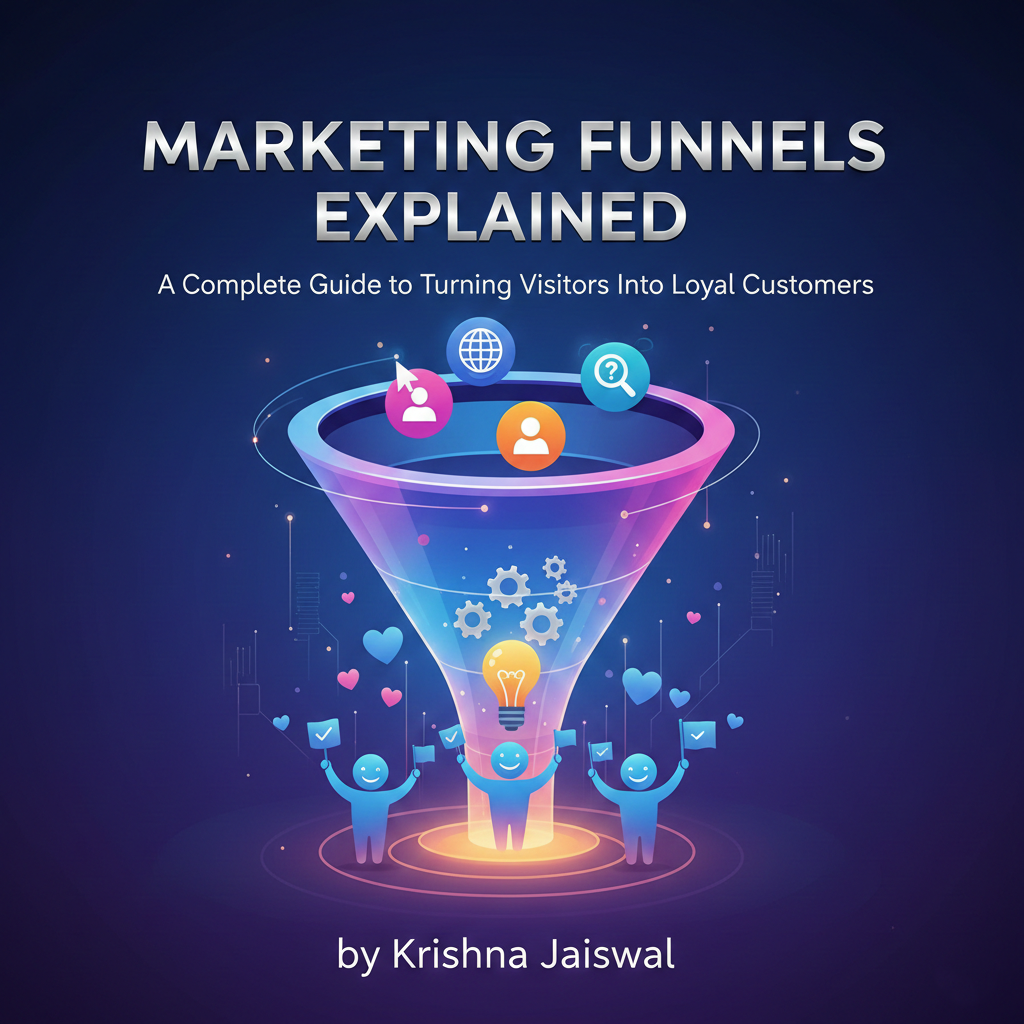
What Are Marketing Funnels and Why They Matter
Marketing funnels are the backbone of every successful digital marketing strategy. Whether you run a blog, an eCommerce store, a SaaS startup, or a local business, understanding marketing funnels helps you guide potential customers from their first interaction to final purchase—and beyond.
In simple words, a marketing funnel shows how people discover your brand, build trust, make decisions, and become customers. Businesses that optimize their funnels generate higher conversions, lower ad costs, and long-term customer loyalty.
In this in-depth guide, you’ll learn:
- What a marketing funnel is
- How each funnel stage works
- Real-world funnel examples
- Proven funnel strategies
- Tools, metrics, and mistakes to avoid
This article is written for humans, not algorithms—clear, practical, and easy to apply.
What Is a Marketing Funnel? (Simple Explanation)
A marketing funnel is a visual framework that maps the customer journey from awareness to conversion and retention.
Think of it like a real funnel:
- At the top, many people enter
- In the middle, fewer stay engaged
- At the bottom, only the most qualified convert
Why Businesses Use Marketing Funnels
- To understand buyer behavior
- To personalize marketing messages
- To increase conversion rates
- To reduce wasted ad spend
According to HubSpot, companies with optimized funnels see up to 50% more sales-ready leads at a lower cost.
👉 For more marketing insights, check related articles on thenews.zone .
The Core Stages of a Marketing Funnel
Most marketing funnels are divided into four main stages.
Awareness Stage: Attracting the Right Audience
This is where potential customers first discover your brand.
Common Awareness Channels
- Search engines (SEO)
- Social media platforms
- Paid ads (Google Ads, Meta Ads)
- Blog posts
- YouTube videos
- Influencer marketing
Best Content for Awareness
- Educational blog posts
- How-to guides
- Explainer videos
- Infographics
- Social media reels
Goal: Get attention, not sales.
📊 Stat: 81% of shoppers research online before making a purchase (Google).
Outbound Resource:
Learn more about buyer discovery behavior from Google’s official marketing insights
Interest Stage: Building Trust and Engagement
Once users know you exist, the next step is building interest.
What Happens at This Stage
- Visitors explore your website
- They read blog posts or watch videos
- They follow your brand on social media
High-Performing Interest Content
- Email newsletters
- Free resources (ebooks, PDFs)
- Case studies
- Webinars
- Comparison articles
Goal: Educate and nurture, not push.
Consideration Stage: Helping Prospects Decide
At this stage, users are comparing options and evaluating solutions.
What Prospects Want
- Proof
- Social validation
- Clear benefits
- Transparent pricing
Best Consideration Assets
- Product demos
- Free trials
- Testimonials
- Reviews
- Feature comparisons
| Content Type | Conversion Impact |
|---|---|
| Testimonials | High |
| Case Studies | Very High |
| Free Trials | Extremely High |
Decision Stage: Turning Leads Into Customers
This is where conversion happens.
Effective Conversion Triggers
- Limited-time offers
- Discounts or bonuses
- Strong calls-to-action
- Risk-free guarantees
Examples of Decision CTAs
- “Start Your Free Trial”
- “Get Instant Access”
- “Book a Demo Today”
💡 Even small changes like button color or CTA wording can improve conversions by 20–30%.
Post-Purchase Stage: Retention and Loyalty (Often Ignored)
Modern marketing funnels don’t end at the sale.
Why Retention Matters
- Acquiring a new customer costs 5x more than retaining one
- Loyal customers spend more over time
Retention Strategies
- Email follow-ups
- Loyalty programs
- Exclusive content
- Referral rewards
- Personalized offers
This is where brands turn customers into brand advocates.
Types of Marketing Funnels Explained
Different businesses use different funnel models.
Traditional AIDA Funnel
AIDA stands for:
- Awareness
- Interest
- Desire
- Action
Best for: Advertising and branding campaigns
Digital Marketing Funnel
Designed for online businesses.
Stages include:
- Traffic generation
- Lead capture
- Lead nurturing
- Conversion
- Upsell
Sales Funnel vs Marketing Funnel
| Marketing Funnel | Sales Funnel |
|---|---|
| Focuses on awareness | Focuses on closing |
| Broad audience | Qualified leads |
| Content-driven | Sales-driven |
Both funnels work best together.
How to Build a High-Converting Marketing Funnel
Follow these proven steps.
Step 1: Know Your Target Audience
Ask:
- Who are they?
- What problems do they have?
- Where do they spend time online?
Creating buyer personas improves targeting accuracy.
Step 2: Create Content for Each Funnel Stage
Avoid using the same content everywhere.
| Funnel Stage | Content Type |
|---|---|
| Awareness | Blogs, videos |
| Interest | Guides, emails |
| Consideration | Demos, case studies |
| Decision | Offers, CTAs |
Step 3: Capture Leads Effectively
Use:
- Landing pages
- Lead magnets
- Pop-ups (used responsibly)
👉 Learn more about conversion-focused landing pages on thenews.zone.
Step 4: Automate Funnel Processes
Marketing automation tools help you:
- Send personalized emails
- Track user behavior
- Score leads
Popular tools include:
- HubSpot
- Mailchimp
- ActiveCampaign
Outbound Authority Link:
HubSpot’s funnel automation guide
Key Metrics to Measure Marketing Funnel Performance
Tracking metrics ensures your funnel is working.
Important Funnel KPIs
- Traffic sources
- Conversion rate
- Cost per lead
- Customer acquisition cost (CAC)
- Customer lifetime value (CLV)
📈 Data-driven funnel optimization leads to higher ROI.
Common Marketing Funnel Mistakes to Avoid
Even strong businesses make these mistakes.
- Focusing only on traffic, not conversions
- Ignoring email nurturing
- Weak or unclear CTAs
- No retargeting strategy
- Not testing funnel elements
Avoiding these mistakes alone can dramatically improve results.
Marketing Funnel Examples (Real-World Scenarios)
Example 1: Blogging Funnel
- SEO blog attracts traffic
- Free ebook collects emails
- Email series builds trust
- Paid course offer converts
Example 2: eCommerce Funnel
- Social ad → product page
- Retargeting ads → cart
- Discount email → purchase
- Loyalty offer → repeat sale
FAQs About Marketing Funnels
What is a marketing funnel in simple terms?
A marketing funnel is a step-by-step process that guides users from discovering a brand to becoming paying customers.
Are marketing funnels still relevant in 2025?
Yes. Funnels are more important than ever due to rising ad costs and increased competition.
What is the best funnel for beginners?
A simple funnel with a blog, lead magnet, email nurturing, and a single offer works best.
Do small businesses need marketing funnels?
Absolutely. Funnels help small businesses compete with larger brands efficiently.
Where can I learn more about digital marketing strategies?
Authoritative platforms like HubSpot, Google Marketing Platform, and industry blogs provide reliable insights .
Conclusion: Why Every Business Needs a Marketing Funnel
Marketing funnels are not just a buzzword—they are a proven system for predictable growth. From attracting the right audience to nurturing trust and driving conversions, a well-structured funnel creates clarity, consistency, and results.
If you want to:
- Increase conversions
- Reduce marketing waste
- Build long-term customer relationships
Then investing time in building and optimizing your marketing funnel is essential.
👉 Take action today: Start by mapping your current funnel, identifying gaps, and improving one stage at a time.
For more expert insights, updates, and digital marketing guides, visit thenews.zone now.
