

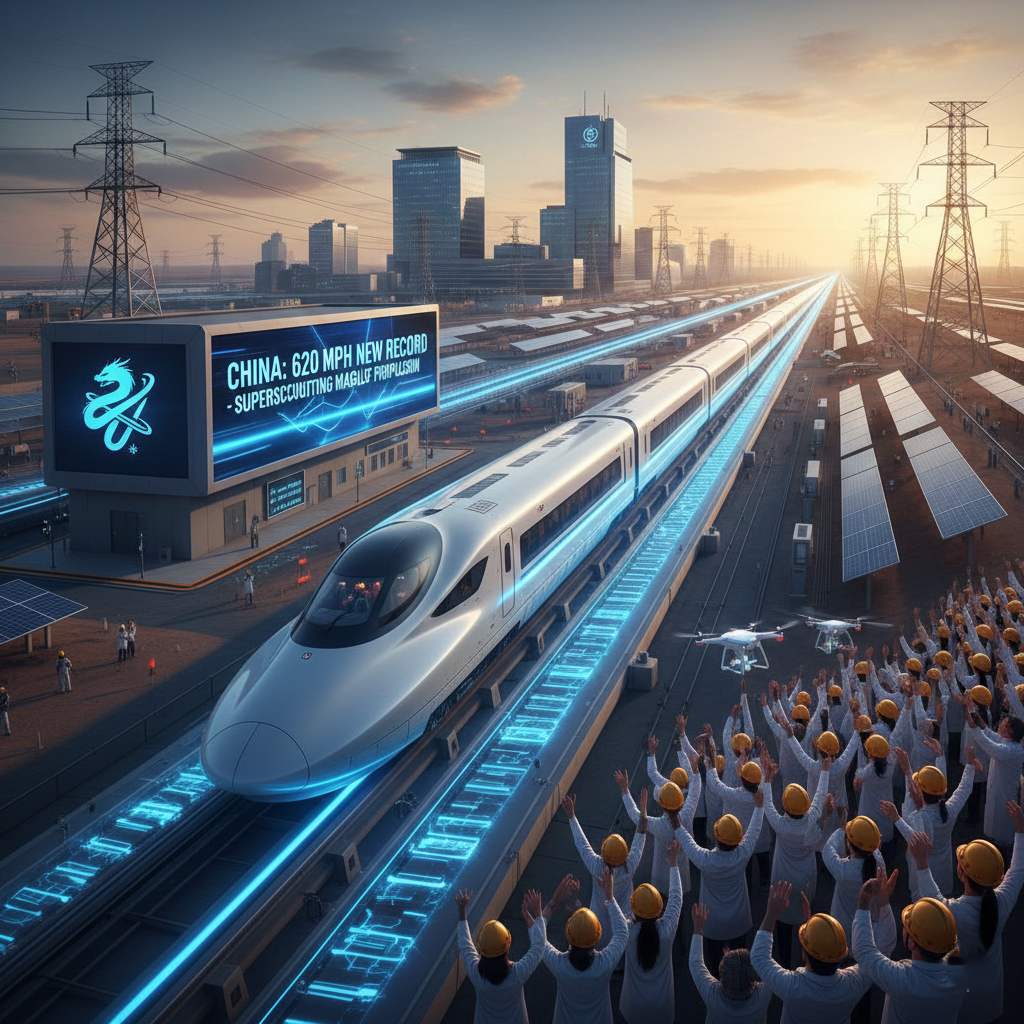
China has once again captured global attention by setting a new record in superconducting maglev propulsion, marking a major leap forward in next-generation transportation technology. This breakthrough is not just about speed—it represents a shift in how countries may move people and goods in the future.
Superconducting maglev systems promise near-zero friction, ultra-high speeds, energy efficiency, and reduced environmental impact. With this latest achievement, China strengthens its position as a global leader in advanced rail innovation, potentially reshaping international transport infrastructure in the coming decades.
In this article, we break down what the record means, how superconducting maglev works, how it compares with existing systems, and why this milestone matters for the world.
What Is Superconducting Maglev Technology?
Superconducting maglev (magnetic levitation) is an advanced rail system where trains float above the track using powerful magnetic forces, eliminating physical contact between wheels and rails.
How Superconducting Maglev Works
Unlike conventional trains or even standard maglev systems, superconducting maglev uses superconducting magnets cooled to extremely low temperatures. These magnets generate intense magnetic fields that allow the train to:
- Levitate several centimeters above the guideway
- Eliminate rolling resistance
- Achieve exceptionally high speeds with lower energy loss
Key Components of Superconducting Maglev
- Superconducting magnets: Produce strong, stable magnetic fields
- Cryogenic cooling systems: Maintain superconductivity
- Precision guideways: Ensure stability at extreme speeds
- Advanced propulsion control: Synchronizes acceleration and braking
This technology has long been considered the “holy grail” of rail transport due to its complexity and cost—until now.
China’s New Record in Superconducting Maglev Propulsion
China’s latest test achieved a record-breaking propulsion performance under controlled laboratory conditions, demonstrating unprecedented stability and thrust efficiency.
What Makes This Record Significant
According to reports, the test involved a high-temperature superconducting maglev system operating inside a low-vacuum environment—an approach similar to future hyperloop-style transport.
Key Highlights of the Achievement
- Record-setting propulsion efficiency
- Enhanced levitation stability at higher speeds
- Reduced energy loss compared to earlier designs
- Improved control during acceleration and deceleration
This milestone proves that superconducting maglev is no longer theoretical—it is rapidly becoming commercially viable.
For more details, you can read the original report from a leading global news source here:
👉 Outbound Link: Times of India – China’s superconducting maglev breakthrough
http://timesofindia.indiatimes.com/articleshow/126204276.cms
Why China Is Leading the Maglev Race
China’s dominance in high-speed rail did not happen overnight. It is the result of long-term planning, massive investment, and coordinated research between government, academia, and industry.
Strong Government Backing
China treats transportation innovation as a strategic priority:
- Billions invested in rail R&D
- National laboratories focused on superconductivity
- Direct support for pilot projects and testing facilities
Experience with High-Speed Rail
China already operates the world’s largest high-speed rail network, including commercial maglev lines like the Shanghai Maglev.
This experience gives China an advantage in:
- Infrastructure deployment
- Safety testing
- Public adoption
- Cost optimization
Superconducting Maglev vs Conventional High-Speed Rail
To understand the importance of this record, let’s compare superconducting maglev with existing transport systems.
Comparison Table: Rail Technologies
| Feature | Conventional Rail | Standard Maglev | Superconducting Maglev |
|---|---|---|---|
| Top Speed | ~350 km/h | ~600 km/h | 800–1,000+ km/h (potential) |
| Wheel Contact | Yes | No | No |
| Friction | High | Low | Near zero |
| Energy Efficiency | Moderate | High | Very high |
| Maintenance | High | Medium | Low (long-term) |
| Noise | High | Lower | Minimal |
This comparison shows why superconducting maglev is considered the future of ultra-high-speed travel.
Environmental Benefits of Superconducting Maglev
One of the most overlooked aspects of this technology is its environmental impact.
Lower Carbon Footprint
- Reduced energy loss due to frictionless motion
- Potential integration with renewable energy sources
- Lower emissions per passenger-kilometer
Noise and Vibration Reduction
- No wheel-track contact means less noise
- Ideal for urban and intercity routes
- Reduced structural wear on infrastructure
As countries seek sustainable transport solutions, superconducting maglev offers a compelling alternative to short-haul flights.
Economic and Strategic Implications
China’s new record is not just a technological win—it has economic and geopolitical implications.
Impact on Global Transportation Markets
- Export potential for maglev technology
- Infrastructure partnerships with developing nations
- Competitive pressure on aviation for mid-range travel
Boost to Domestic Innovation
This breakthrough strengthens China’s ecosystem in:
- Advanced materials
- Cryogenic engineering
- AI-driven transport control systems
Such innovations often spill over into other industries, accelerating overall economic growth.
Challenges Still Facing Superconducting Maglev
Despite the excitement, several hurdles remain before widespread adoption.
High Initial Costs
- Specialized infrastructure
- Advanced cooling systems
- Precision construction requirements
Technical Complexity
- Maintaining superconductivity
- Safety systems at extreme speeds
- Long-term reliability testing
However, China’s latest achievement suggests these challenges are being systematically addressed.
What This Means for the Future of Travel
Superconducting maglev could fundamentally change how people think about distance.
Possible Real-World Applications
- City-to-city travel in under an hour
- Airport-to-city express corridors
- Cargo transport for high-value goods
Imagine traveling between major metropolitan areas faster than flying, with fewer delays and lower emissions.
Global Response to China’s Breakthrough
Countries like Japan, Germany, and the United States have also invested in maglev research, but China’s pace stands out.
Will Other Nations Catch Up?
- Japan continues to develop its SCMaglev
- Europe focuses on sustainability and integration
- The U.S. remains cautious due to infrastructure costs
China’s record may push other nations to accelerate their own programs.
FAQs: China’s Superconducting Maglev Record
What is superconducting maglev propulsion?
It is a rail technology that uses superconducting magnets to levitate and propel trains without physical contact, enabling ultra-high speeds.
How fast can superconducting maglev trains go?
In theory, they can exceed 1,000 km/h, especially in low-vacuum environments.
Is this technology already in public use?
Not yet at full scale. China’s latest record comes from advanced testing, but commercial deployment is being planned.
How is it different from China’s current maglev trains?
Current maglev systems use conventional electromagnets, while superconducting maglev uses more powerful, energy-efficient superconductors.
Where can I read more technology news like this?
You can explore more in-depth science and innovation coverage on
👉 https://thenews.zone
Conclusion: A Turning Point in Global Transport Innovation
China’s new record in superconducting maglev propulsion marks a historic turning point in transportation technology. It signals that ultra-high-speed, low-emission travel is moving from experimental labs toward real-world application.
As nations rethink mobility, sustainability, and infrastructure, superconducting maglev could become a defining technology of the 21st century.
