

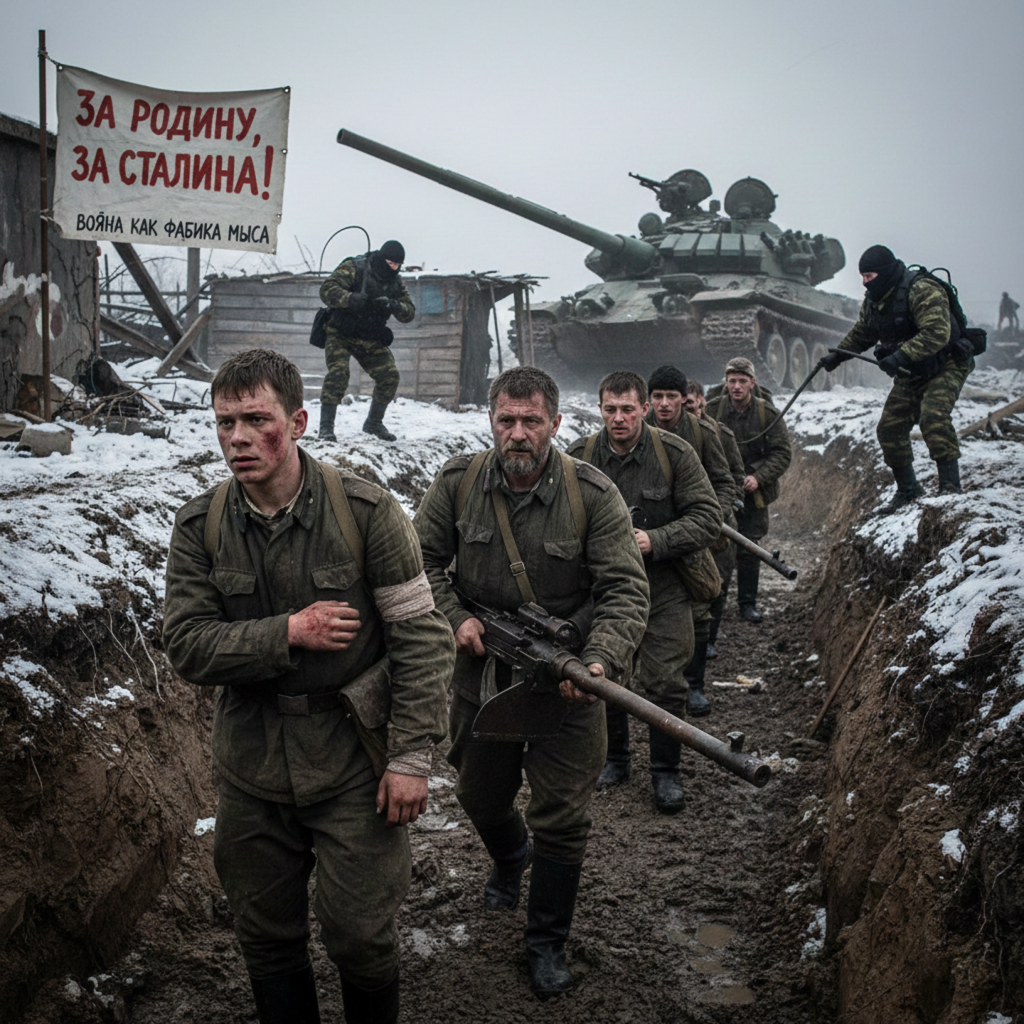
In modern conflicts, attention is often focused on weapons, strategies, and territorial gains. However, far less scrutiny is given to how armies treat their own soldiers. This is precisely where the uncomfortable truth emerges when examining how Russia’s war machine brutalizes and exploits its own soldiers.
While official narratives emphasize patriotism and duty, the lived experiences of many Russian troops tell a different story. In reality, countless soldiers face forced mobilization, poor training, psychological abuse, and systemic neglect. As a result, the Russian military often consumes its own manpower at an alarming human cost.
This article offers a clear, human-focused, and evidence-based analysis of the internal workings of Russia’s war system—without propaganda, exaggeration, or sensationalism.
For continued geopolitical coverage and deep-dive analysis, visit thenews.zone.
Inside Russia’s War Machine: A System Built on Control
To understand the exploitation of soldiers, it is essential to first examine how the system operates internally.
Command Over Care
At its core, Russia’s military structure prioritizes control above all else. Consequently, soldier welfare often becomes a secondary concern. Orders flow downward, while accountability rarely travels upward.
Key characteristics include:
- Rigid hierarchy
- Limited transparency
- Severe punishment for dissent
As a result, soldiers are discouraged from reporting problems, even when their lives are at risk.
A Legacy of Internal Abuse
Moreover, internal brutality is not a recent phenomenon. The long-standing practice known as Dedovshchina—a culture of hazing and violence—has shaped military life for decades.
This practice commonly involves:
- Physical assault by senior soldiers
- Psychological humiliation
- Forced labor unrelated to military service
Although officially banned, numerous independent reports confirm that these abuses persist, especially during wartime.
Forced Mobilization and Coercive Recruitment
Perhaps the most visible sign of exploitation appears in how soldiers are recruited.
Mobilization Without Consent
Since the escalation of conflict, mobilization has increasingly relied on pressure rather than choice. In many cases, individuals were summoned with little warning and minimal explanation.
Common coercive tactics include:
- Threats of imprisonment
- Loss of employment
- Social and legal pressure on families
Therefore, refusal is often not a realistic option.
Who Bears the Greatest Burden
Notably, mobilization does not affect all communities equally. Instead, recruitment disproportionately targets vulnerable populations.
| Targeted Group | Reason |
|---|---|
| Rural communities | Limited media visibility |
| Ethnic minorities | Political marginalization |
| Prison inmates | Coerced through sentence reductions |
As a result, public resistance remains muted, while the human toll quietly rises.
Inadequate Training and Battlefield Unpreparedness
Even after recruitment, the problems do not stop.
Training Rushed at the Expense of Lives
Due to urgency and manpower shortages, many soldiers undergo extremely condensed training programs. In some cases, preparation lasts only days.
This typically includes:
- Limited weapons handling
- No tactical simulations
- Minimal survival training
Consequently, soldiers enter combat zones dangerously unprepared.
Comparison with Professional Military Standards
In contrast, professional armies invest heavily in long-term preparation.
| Category | Russian Forces | NATO Forces |
|---|---|---|
| Training duration | Days or weeks | Months to years |
| Equipment familiarity | Basic | Advanced |
| Mental readiness | Largely ignored | Structured programs |
Therefore, the disparity directly contributes to higher casualties and lower morale.
Equipment Shortages and Logistical Failures
Alongside poor training, equipment failures further endanger soldiers.
Outdated Gear and Insufficient Supplies
Numerous frontline accounts describe:
- Obsolete weapons
- Shortages of body armor
- Expired medical kits
In some cases, families were asked to supply basic necessities. As a result, soldiers often feel abandoned before even reaching the battlefield.
Food, Shelter, and Survival Issues
Meanwhile, living conditions remain dire:
- Inadequate rations
- Exposure to harsh weather
- Unsafe or improvised shelters
According to Human Rights Watch, these conditions violate basic military welfare standards.
Outbound reference: https://www.hrw.org
Fear-Based Discipline and Psychological Abuse
Rather than fostering leadership, fear is frequently used as a management tool.
Punishment as Motivation
Commanders often rely on:
- Threats of imprisonment
- Public humiliation
- Severe penalties for retreat
As a consequence, soldiers prioritize survival through silence rather than honesty.
The Growing Mental Health Crisis
Unsurprisingly, psychological strain is widespread. Soldiers report:
- Untreated PTSD
- Chronic anxiety
- Rising suicide rates
However, mental health services remain severely underdeveloped.
For broader context, similar issues are documented by BBC News:
https://www.bbc.com
Denial of Medical Care and Battlefield Abandonment
When soldiers are wounded, systemic neglect becomes even more evident.
Delayed Evacuations and Lack of Treatment
Many wounded soldiers describe:
- Long delays before evacuation
- Shortages of field medics
- Orders to return to combat despite injuries
As a result, injuries that could have been survivable often turn fatal.
Families Left Without Answers
At the same time, families face:
- Missing or incomplete casualty reports
- Bodies returned without explanation
- Soldiers labeled as deserters to avoid compensation
Therefore, the emotional toll extends far beyond the battlefield.
Information Control and Silencing Soldiers
In order to maintain control, information is tightly restricted.
Criminalizing Dissent
Soldiers who speak publicly risk:
- Arrest or detention
- Media censorship
- Pressure on relatives
Consequently, fear ensures silence.
Propaganda Versus Reality
While state media emphasizes morale and success, leaked communications tell another story. Independent outlets such as Reuters have repeatedly exposed these contradictions:
https://www.reuters.com
Economic Exploitation of Military Personnel
Beyond physical danger, soldiers also face financial injustice.
Unpaid Salaries and Broken Promises
Many report:
- Delayed wages
- Reduced benefits
- Unpaid death compensation to families
Therefore, economic hardship becomes another weapon of control.
Who Profits from Prolonged War
Meanwhile, extended conflict benefits:
- Defense contractors
- Political elites
- Centralized power structures
Soldiers, however, pay the price with their lives.
Why Soldiers Are Treated as Disposable Assets
Ultimately, the answer lies in system design.
Centralization Without Accountability
Decisions are made far from the frontlines. Failures are blamed downward, while leadership remains protected. As a result, human life becomes a replaceable resource rather than a responsibility.
International Reactions and Legal Implications
Globally, concerns continue to grow regarding:
- Forced mobilization
- Treatment of wounded soldiers
- Denial of basic rights
Over time, these practices may carry serious legal consequences under international law.
For continued global conflict reporting, explore thenews.zone.
Frequently Asked Questions (FAQs)
Why does Russia exploit its own soldiers?
Because the system prioritizes obedience and political survival over human welfare.
Are Russian soldiers forced to fight?
In many cases, yes. Legal and economic pressure often removes genuine choice.
Is training adequate for combat conditions?
No. Training is frequently rushed and insufficient.
Are these claims verified?
Yes. Independent organizations and international media confirm these findings.
Where can I find more unbiased analysis?
Visit thenews.zone for ongoing coverage and expert insights.
Conclusion: The Hidden Victims of War
How Russia’s war machine brutalizes and exploits its own soldiers is not merely a military failure—it is a humanitarian crisis. Behind every uniform is a human being subjected to neglect, fear, and disposability.
Understanding this reality matters. Because only awareness leads to accountability—and accountability is the first step toward change.
👉 Stay informed. Read more in-depth global conflict analysis at thenews.zone and share this article to support truth and transparency.
