

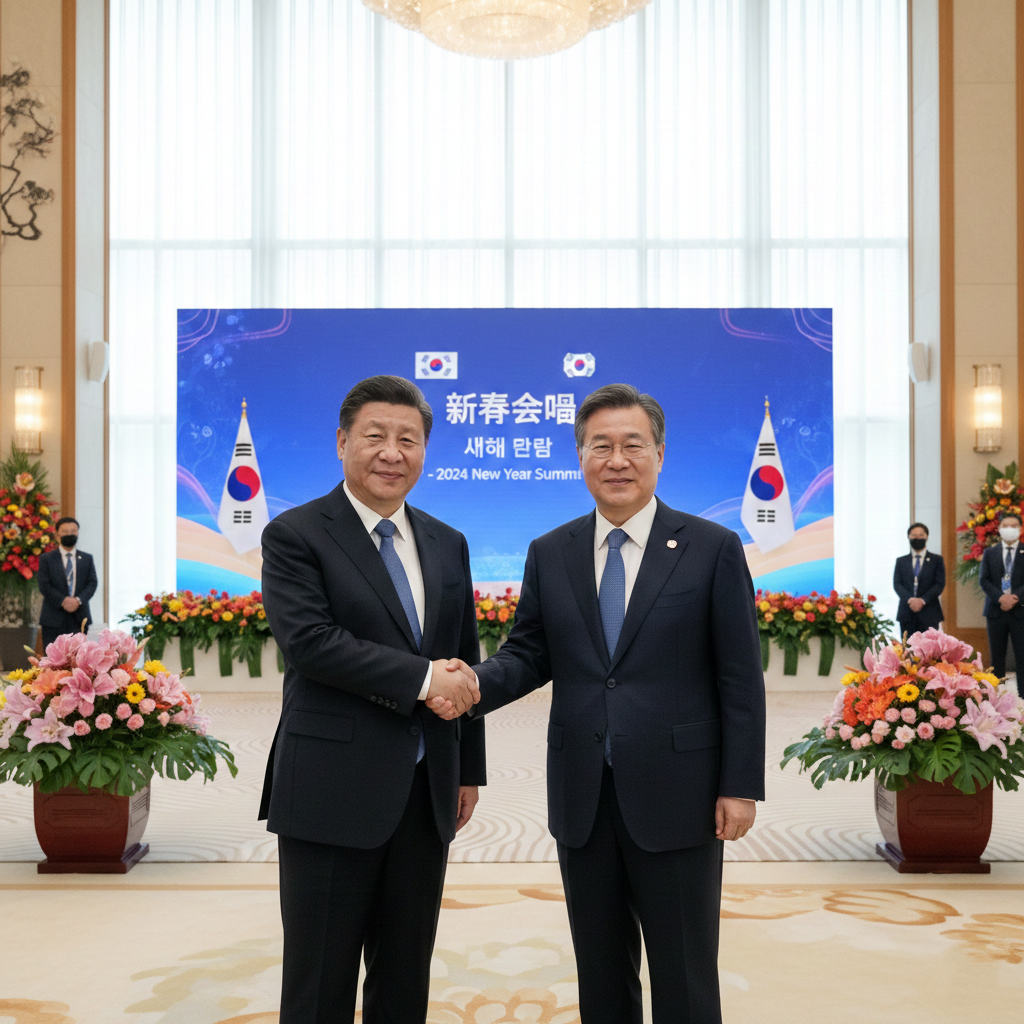
In a pivotal diplomatic move to start 2026, China’s President Xi Jinping is set to host South Korean President Lee Jae Myung on a state visit — a high-profile meeting coming against the backdrop of increasing China–Japan tensions and evolving East Asian geopolitics. This summit signals a strategic effort by Beijing to deepen cooperation with Seoul, address regional security concerns, and rebalance diplomatic dynamics in Northeast Asia.
This article breaks down the key motivations, regional impacts, economic and security implications, and the broader geopolitical context shaping this important visit.
Internal link for context: thenews.zone
Why This Meeting Matters: China, South Korea & Japan in Focus
Strategic Timing of the Xi-Lee Summit
- Second meeting in short span: The upcoming state visit marks the second summit between Xi and Lee in just two months — a rare frequency that underscores Beijing’s urgency to reinforce bilateral cooperation.
- Pre-Japan visit diplomacy: China’s timing — before Lee’s scheduled summit in Japan — is seen by analysts as a strategic attempt to elevate China’s role in Seoul’s diplomatic calculus while Tokyo–Beijing relations remain tense.
“China wants to emphasize South Korea’s importance slightly more than before,” says Professor Kang Jun-young, noting the strategic intent behind the visit.
Context: Rising China-Japan Tensions and Regional Security
What Sparked the Current Strain?
The backdrop against which this visit takes place involves increased friction between Beijing and Tokyo, largely over Taiwan:
| Issue | China’s Take | Japan’s Position |
|---|---|---|
| Taiwan Security | China views Taiwan as its core priority and rejects any foreign interference. | Japanese leaders suggested possible military support if China attacks Taiwan, triggering strong Chinese rebukes. |
| Military Posturing | China rejects Tokyo’s remarks and has responded diplomatically and rhetorically. | Japan’s defense discourse has shifted toward readiness amid regional uncertainty. |
Tensions with Japan have been at their worst in recent years, leading Beijing to court Seoul’s support on key regional issues — including Taiwan policy and economic cooperation.
What’s on the Summit Agenda?
Key Areas of Focus
This visit is expected to cover a wide range of pressing issues:
1. Economic Cooperation and Trade
- China and South Korea are exploring 10+ bilateral agreements spanning business, energy, climate, and economic partnerships.
- South Korea’s dependence on China for rare earth elements and semiconductor supply chains is significant, making dialogue crucial.
2. Regional Security and North Korea
- Lee may seek China’s support in facilitating dialogue with North Korea as part of broader security cooperation.
- Discussions may include managing the South Korea–US alliance and China’s role in stabilizing the Korean Peninsula.
3. Technology and Innovation
- Cooperation in key technologies like artificial intelligence and supply chains for advanced industries could receive attention. .
4. Tourism and Cultural Exchange
- Boosting tourism and easing cultural exchanges remain on the agenda, following prior talks to stabilize ties.
China–South Korea Diplomatic Dynamics: Balancing Powers
South Korea is delicately balancing its relations between China and the United States:
- Security Ally: South Korea relies heavily on the US alliance, especially to deter North Korean threats. archive.vn
- Economic Partner: China remains Seoul’s largest trading partner and a critical market. The Jakarta Post
- Neutral Stance: Lee has stated that South Korea will not take sides in the China–Japan dispute. archive.vn
This balancing act reflects Seoul’s broader foreign policy challenge: promoting economic growth while safeguarding national security. Internal link recommendation: thenews.zone
What Analysts Are Saying
Expert Perspectives
- Strategic outreach: Analysts suggest China is deliberately reinforcing ties with South Korea before Seoul’s scheduled meetings with Japan.
- Regional leadership bid: Beijing’s diplomatic timing signals a broader bid for leadership in East Asian affairs, particularly as tensions with Tokyo escalate.
Potential Outcomes
Positive Scenarios
- Enhanced economic cooperation agreements
- Improved security dialogue with China
Challenges Ahead
- Managing South Korea’s ties with US and Japan
- Navigating public opinion in Seoul on China’s regional ambitions
FAQs: China’s Xi to Host South Korea’s Lee — Explained
Q1: Why is Xi hosting Lee at the start of 2026?
A: To strengthen bilateral ties and address strategic issues amid regional tensions with Japan and broader East Asian security concerns. Reuters
Q2: Does this visit signal worsening China–Japan relations?
A: Yes, recent remarks from Japanese leadership over Taiwan have heightened tensions, making this meeting more geopolitically significant. Reuters
Q3: What agreements might come out of the summit?
A: Talks are expected on trade, business, climate cooperation, and possibly technology and AI partnerships.
Q4: How does this visit affect South Korea’s alliance with the US?
A: While Seoul maintains strong ties with Washington, it aims to balance security cooperation with economic engagement with China.
Q5: Will this impact a future three-way summit with Japan?
A: The visit could influence trilateral diplomatic dynamics, with China seeking to shape Seoul’s stance before a potential Japan summit. For info on broader trilateral talks, see this overview of past summits.
External link: China–Japan–South Korea trilateral summit — Wikipedia
Conclusion
China’s decision to host South Korea’s President Lee Jae Myung in the New Year of 2026 marks a decisive moment in regional diplomacy. As Beijing navigates heightened tensions with Japan and seeks to reposition relationships across East Asia, this summit with Seoul could chart a new path for shared economic opportunities, strategic cooperation, and diplomatic balance.
Call to Action: Stay updated with nuanced geopolitical analysis and expert insights on East Asian diplomacy at thenews.zone — your source for authoritative global affairs coverage.
