
The Hidden Side of Modern Global Diplomacy
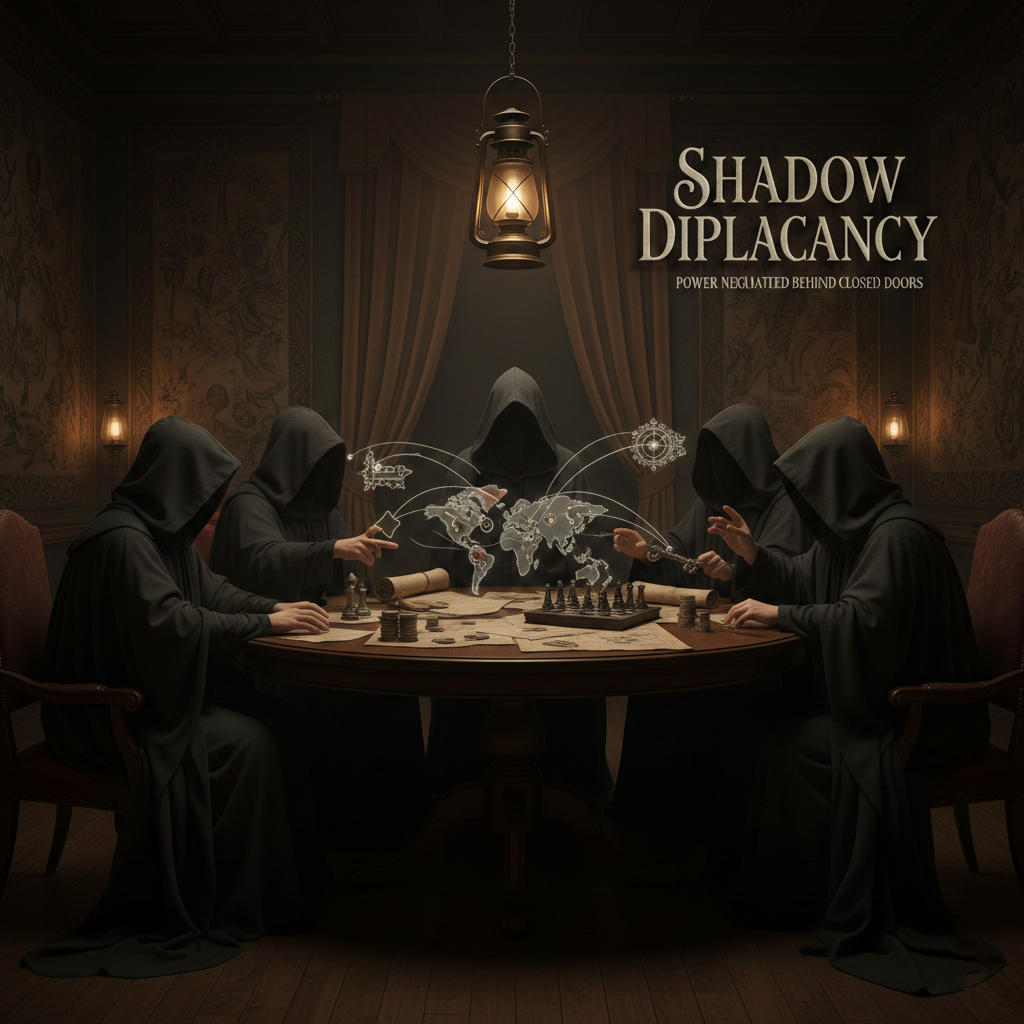
In today’s complex world order, not all diplomacy happens under bright lights or televised summits. Shadow diplomacy—a quiet, informal, and often secret form of negotiation—has become a decisive force in global conflicts.
While official leaders deliver speeches and sign agreements publicly, real decisions are increasingly shaped through backchannel talks, unofficial envoys, intelligence intermediaries, and non-state actors operating behind the scenes.
From ceasefire negotiations to hostage releases and proxy wars, shadow diplomacy now plays a critical role in shaping outcomes that affect millions. Understanding this hidden layer of global politics is no longer optional—it’s essential.
What Is Shadow Diplomacy? (Simple Definition)
Shadow diplomacy refers to informal, secret, or unofficial diplomatic engagements conducted outside traditional government-to-government frameworks.
Key Characteristics of Shadow Diplomacy
- Conducted quietly and often denied publicly
- Uses intermediaries rather than official diplomats
- Operates parallel to formal diplomacy
- Allows deniability and flexibility
- Often involves intelligence agencies, NGOs, or trusted individuals
Unlike traditional diplomacy governed by protocols and treaties, shadow diplomacy thrives in ambiguity.
Why Shadow Diplomacy Is Rising in Global Conflicts
1. Traditional Diplomacy Is Too Slow
Modern conflicts evolve rapidly. Formal diplomatic processes often cannot keep pace with:
- Escalating violence
- Cyber warfare
- Proxy conflicts
- Terrorism and insurgencies
Shadow channels allow faster, more adaptable negotiations.
2. Political Plausible Deniability
Leaders can explore options without public backlash. If talks fail, governments can deny involvement.
3. Fragmented Power Structures
Conflicts today involve:
- Militias
- Rebel groups
- Private military contractors
- Multinational coalitions
Many of these actors don’t fit into official diplomatic frameworks.
4. High Domestic Political Pressure
Public opinion, elections, and media scrutiny limit what leaders can say openly—shadow diplomacy bypasses these constraints.
Shadow Diplomacy vs Traditional Diplomacy (Comparison Table)
| Aspect | Traditional Diplomacy | Shadow Diplomacy |
|---|---|---|
| Visibility | Public & official | Secret & informal |
| Speed | Slow | Fast |
| Accountability | High | Low |
| Flexibility | Limited | High |
| Risk | Politically risky | Politically insulated |
Who Conducts Shadow Diplomacy?
Intelligence Agencies
Intelligence services often act as unofficial diplomats, especially in hostile or denied environments.
Former Officials & Trusted Envoys
Retired diplomats, military officers, or political advisors with deep networks often act as intermediaries.
Non-State Actors
- NGOs
- Religious leaders
- Business elites
- Tribal elders
These actors can access groups governments cannot.
Third-Party States
Neutral or strategically positioned countries frequently host or facilitate backchannel talks.
Real-World Examples of Shadow Diplomacy
Backchannel Talks in the Middle East
Several ceasefires and hostage negotiations in the Middle East have been achieved through unofficial mediators rather than public summits.
Cold War Lessons Still Apply
During the Cold War, secret communication channels helped avoid nuclear escalation. The same logic applies today, especially between rival powers.
Ukraine Conflict & Quiet Negotiations
Despite public confrontation, multiple reports indicate ongoing backchannel communications aimed at escalation control and humanitarian corridors.
(For deeper geopolitical analysis, visit thenews.zone, a growing platform for global affairs insights.)
The Strategic Advantages of Shadow Diplomacy
1. Prevents Escalation
Silent negotiations can stop conflicts from spiraling into full-scale wars.
2. Facilitates Humanitarian Outcomes
Prisoner exchanges, ceasefires, and aid corridors often emerge from quiet talks.
3. Builds Trust Gradually
Trust is easier to establish without cameras and political pressure.
4. Allows Creative Compromises
Unofficial talks enable ideas that would be politically impossible in public.
The Dark Side of Shadow Diplomacy
While effective, shadow diplomacy raises serious concerns.
Lack of Transparency
Citizens rarely know what is negotiated in their name.
Democratic Accountability Issues
Unelected actors may shape national policy.
Risk of Manipulation
Powerful interests can exploit secret talks for personal or political gain.
Undermining International Law
Backchannel deals may bypass international institutions and norms.
According to experts at the Council on Foreign Relations, informal diplomacy can weaken global governance if left unchecked.
(Source: Council on Foreign Relations – CFR)
Shadow Diplomacy in the Digital Age
Cyber Backchannels
Encrypted messaging platforms now host sensitive diplomatic exchanges.
AI & Data-Driven Negotiation
Data analytics and intelligence tools influence negotiation strategies silently.
Media Leaks & Exposure Risks
Even shadow diplomacy faces exposure through leaks, hacks, and investigative journalism.
The digital era has made shadow diplomacy both more powerful—and more fragile.
Role of Shadow Diplomacy in Proxy Wars
Proxy conflicts rely heavily on indirect communication.
Common Features
- Arms negotiations via intermediaries
- Ceasefire coordination without recognition
- Resource and territory bargaining
These wars are rarely resolved through official treaties alone.
Global Institutions and Shadow Diplomacy
United Nations: Official Face, Informal Reality
Even within institutions like the UN, informal discussions often shape resolutions before public votes.
(Source: United Nations – un.org)
Regional Blocs
Organizations like the EU and ASEAN rely heavily on behind-the-scenes consensus-building.
Is Shadow Diplomacy the Future of Global Conflict Resolution?
The answer is nuanced.
Why It’s Here to Stay
- Increasing geopolitical complexity
- Multipolar world order
- Non-state actors gaining influence
Why It Needs Oversight
- Democratic legitimacy
- Ethical governance
- International law compliance
The challenge is balancing effectiveness with accountability.
FAQs: Shadow Diplomacy Explained
What is shadow diplomacy in simple terms?
It is secret or informal negotiation conducted outside official diplomatic channels to manage conflicts or crises.
Is shadow diplomacy legal?
It exists in a gray area. While not illegal, it often operates beyond formal legal frameworks.
Why do governments use shadow diplomacy?
To explore solutions quietly, reduce political risk, and negotiate with actors they cannot officially engage.
Can shadow diplomacy stop wars?
Yes, it has helped prevent escalation and enabled ceasefires in many conflicts.
Where can I read more analysis on global diplomacy?
You can explore in-depth geopolitical coverage on thenews.zone, alongside trusted international sources like CFR and the UN.
Conclusion: The Power You Rarely See but Always Feel
Shadow diplomacy may be invisible to the public eye, but its impact on global conflicts is undeniable. It shapes wars, peace deals, alliances, and humanitarian outcomes—often more decisively than official summits.
As global conflicts grow more complex, understanding this hidden diplomatic layer becomes essential for citizens, analysts, and policymakers alike.
👉 Want deeper insights into global power, diplomacy, and world affairs?
Visit thenews.zone for expert-driven analysis, real-world context, and sharp global reporting.
Because what happens in the shadows often decides what happens next.
