

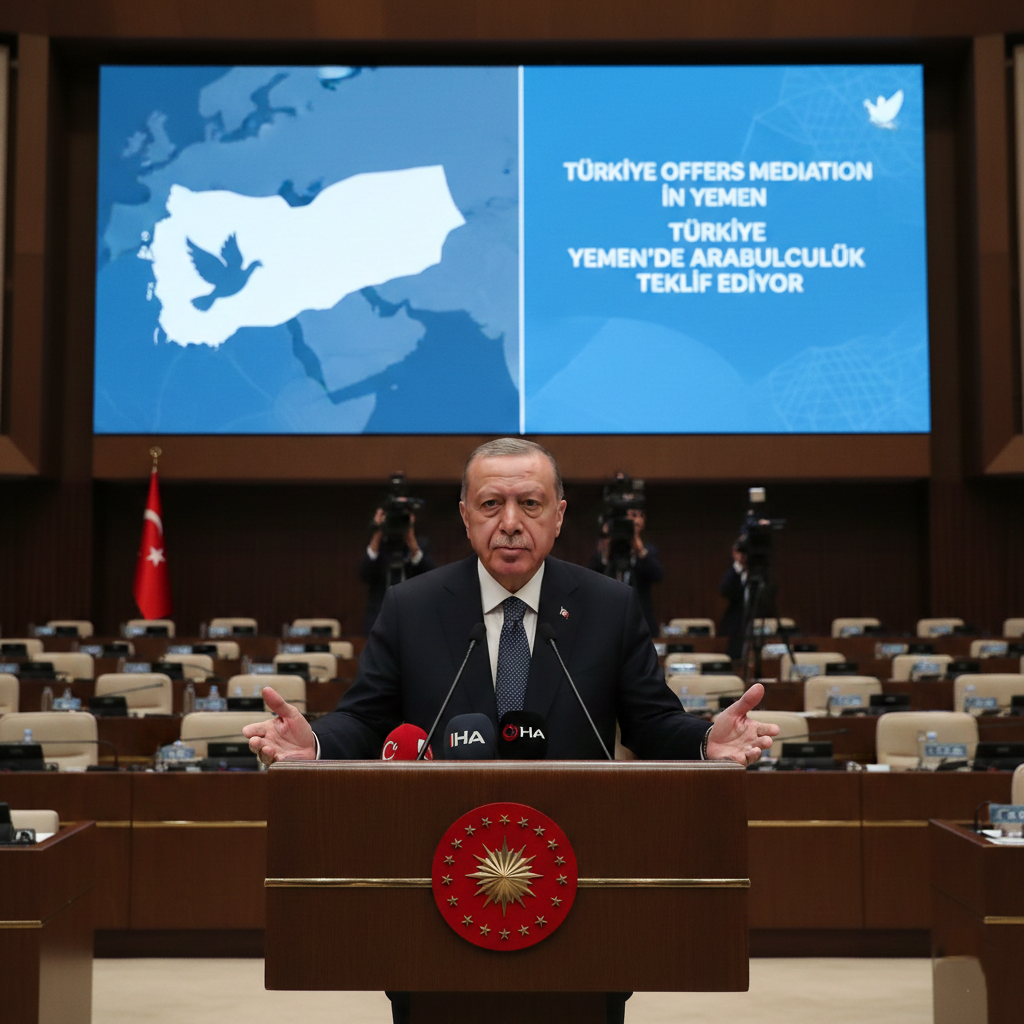
Erdoğan’s Yemen Mediation Offer Signals Fresh Diplomatic Momentum
Turkish President Recep Tayyip Erdoğan’s offer to help mediate the conflict in Yemen has sparked fresh discussions across diplomatic circles in the Middle East and beyond. As Yemen’s war enters its second decade, the humanitarian toll continues to rise, while political solutions remain fragile. Erdoğan’s statement signals potential diplomatic engagement in the region, positioning Turkey as a possible bridge between rival factions and regional powers.
This move comes at a time when the international community is actively searching for credible mediators who can balance regional interests, maintain dialogue with all sides, and push toward a sustainable ceasefire. With Turkey’s growing diplomatic footprint in the Middle East, Ankara’s involvement could reshape conversations around Yemen’s future.
In this article, we explore what Erdoğan’s offer means, why Yemen needs mediation now more than ever, Turkey’s motivations, regional reactions, and whether this initiative can realistically contribute to peace.
Understanding the Yemen Conflict: Why Mediation Is Urgently Needed
A Brief Overview of the Yemen War
The Yemen conflict began intensifying in 2014, when Houthi rebels seized the capital, Sanaa, leading to the collapse of the internationally recognized government. In 2015, a Saudi-led coalition intervened militarily, transforming the conflict into a complex regional proxy war.
Key parties involved include:
- The Houthis, backed politically and militarily by Iran
- The Yemeni government, supported by Saudi Arabia and allies
- Southern separatist groups
- Various tribal and militant factions
The result has been one of the world’s worst humanitarian crises, according to the United Nations.
Humanitarian Crisis by the Numbers
| Indicator | Current Estimate |
|---|---|
| People needing humanitarian aid | Over 21 million |
| Internally displaced persons | 4+ million |
| Children facing malnutrition | 2.3 million |
| Years of ongoing conflict | 10+ |
(Source: United Nations – https://www.un.org)
Despite intermittent ceasefires, Yemen remains trapped in a cycle of violence, economic collapse, and political deadlock—making external mediation essential.
Erdoğan’s Mediation Offer: What Exactly Did He Say?
Turkey Signals Willingness to Step In
President Erdoğan publicly expressed Turkey’s readiness to support peace efforts and mediate dialogue among Yemeni parties. While details remain limited, the message was clear: Turkey wants to play a constructive diplomatic role rather than a military one.
This aligns with Ankara’s broader foreign policy shift toward diplomacy, de-escalation, and regional engagement.
Why Erdoğan’s Statement Matters
Erdoğan’s offer stands out because:
- Turkey maintains working relations with both Gulf states and Iran
- Ankara is not directly involved militarily in Yemen
- Turkey has experience mediating in complex regional disputes
This combination gives Turkey a unique diplomatic positioning that few countries currently enjoy.
Why Turkey Wants to Mediate the Yemen Conflict
Expanding Turkey’s Regional Influence
Turkey has steadily increased its diplomatic presence across the Middle East, Africa, and Central Asia. Mediation in Yemen would:
- Enhance Turkey’s image as a peace broker
- Strengthen ties with Gulf Cooperation Council (GCC) states
- Reinforce Ankara’s strategic relevance in regional diplomacy
Humanitarian and Moral Positioning
Turkey has frequently emphasized humanitarian diplomacy, providing aid to conflict zones including Somalia, Syria, and Gaza. Yemen fits into this narrative, allowing Turkey to combine aid, diplomacy, and soft power.
Strategic Balance Between Rivals
Unlike some Western powers, Turkey maintains dialogue with:
- Saudi Arabia
- Iran
- Qatar
- Oman
This balanced approach may help Ankara facilitate conversations that others struggle to initiate.
How Regional Powers May Respond to Erdoğan’s Initiative
Saudi Arabia and Gulf States
Saudi Arabia has shown increasing openness to negotiated settlements, especially after talks with Iran mediated by China. Turkey’s involvement could be welcomed if it complements existing peace tracks rather than competes with them.
Iran’s Perspective
Iran may cautiously support Turkey’s role, especially if mediation reduces international pressure and avoids military escalation. Ankara’s maintained diplomatic channels with Tehran could be crucial.
Yemeni Factions on the Ground
For Yemen’s internal actors, trust is the biggest hurdle. Turkey’s non-combatant role may help gain acceptance, but any mediation effort will need local buy-in to succeed.
Comparing Turkey’s Mediation Role With Other Peace Efforts
| Mediator | Strengths | Limitations |
|---|---|---|
| United Nations | Global legitimacy | Limited enforcement power |
| Oman | Neutral regional actor | Limited global influence |
| China | Strong leverage over Iran & Gulf | Limited regional experience |
| Turkey | Balanced ties, humanitarian diplomacy | New to Yemen mediation |
Turkey’s offer does not replace existing efforts but could add another valuable channel to the peace process.
Challenges Erdoğan’s Mediation Faces
Deep-Rooted Political Divisions
Yemen’s conflict is not a single war but a web of disputes, including:
- Power-sharing disagreements
- Territorial control
- Regional influence battles
Risk of Diplomatic Overreach
If not carefully coordinated, Turkey’s involvement could:
- Overlap with UN-led initiatives
- Create diplomatic competition
- Face resistance from hardline factions
Fragile Ceasefires
Any mediation effort must build on existing ceasefires, which remain fragile and easily reversible.
What This Means for Middle East Stability
Potential Positive Outcomes
If successful, Turkey’s mediation could:
- Reduce regional tensions
- Improve humanitarian access
- Set a precedent for regional conflict resolution
Broader Diplomatic Implications
Turkey positioning itself as a neutral mediator could influence future conflicts in:
- Libya
- Syria
- Red Sea security
For deeper geopolitical analysis and updates on Middle East diplomacy, readers can explore related coverage on thenews.zone.
Expert Opinions and International Reactions
Diplomatic analysts suggest Erdoğan’s move is timely but cautious optimism is necessary. According to regional experts quoted by Al Jazeera (https://www.aljazeera.com), any progress in Yemen will require long-term commitment, not symbolic gestures.
The United Nations has repeatedly stressed that inclusive dialogue remains the only viable path forward.
Frequently Asked Questions (FAQs)
Can Turkey realistically mediate the Yemen conflict?
Yes, Turkey’s balanced regional relationships and lack of direct military involvement give it credibility. However, success depends on coordination with the UN and acceptance by Yemeni factions.
Why is Yemen so difficult to resolve diplomatically?
The conflict involves multiple internal and external actors, overlapping political goals, and deep humanitarian challenges, making negotiations extremely complex.
Has Turkey mediated conflicts before?
Yes. Turkey has previously facilitated talks in Somalia, Afghanistan, and parts of the Balkans, focusing on dialogue and humanitarian diplomacy.
How does this affect Saudi-Iran relations?
If Turkey helps reduce tensions in Yemen, it could indirectly support ongoing Saudi-Iran rapprochement efforts.
Where can I follow reliable updates on Yemen diplomacy?
High-authority sources like the United Nations, Al Jazeera, and independent analysis platforms such as thenews.zone provide ongoing coverage.
Conclusion: A Diplomatic Opportunity That Shouldn’t Be Ignored
Turkish President Recep Tayyip Erdoğan’s offer to mediate the Yemen conflict represents more than a diplomatic statement—it signals a potential opening in one of the world’s most entrenched wars. While challenges remain significant, Turkey’s involvement could add momentum to stalled peace efforts and bring renewed international focus to Yemen’s suffering.
For Yemen’s people, even incremental progress toward dialogue can mean hope, humanitarian relief, and stability.
👉 Stay informed on global diplomacy, Middle East affairs, and peace initiatives by following in-depth reporting on thenews.zone.
