

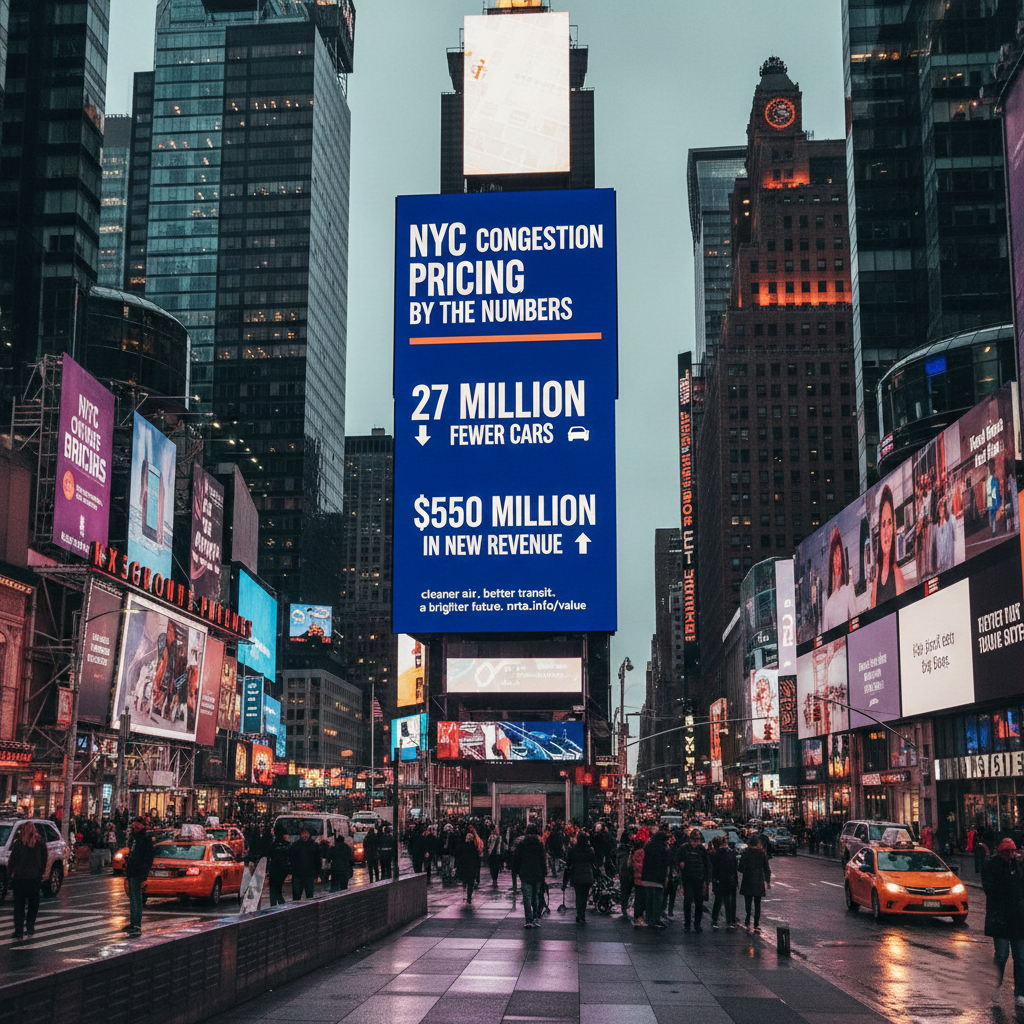
NYC Congestion Pricing Is Already Changing the City
NYC congestion pricing is no longer just a policy debate — it’s a measurable reality reshaping how New York City moves, breathes, and invests in its future. With 27 million fewer cars entering Manhattan’s busiest zones and $550 million in new revenue already generated, the numbers tell a powerful story.
For decades, New York struggled with gridlocked streets, worsening air quality, and underfunded public transit. Congestion pricing was introduced as a bold solution, and early results show it is delivering real, quantifiable outcomes.
In this in-depth analysis, we break down NYC congestion pricing by the numbers, explore how it works, who benefits most, where the money goes, and what it means for the future of urban transportation — not just in New York, but globally.
What Is NYC Congestion Pricing and Why It Matters
Congestion pricing is a traffic management system that charges vehicles for entering highly congested areas during peak hours. In New York City, this applies primarily to Manhattan below 60th Street, one of the most traffic-heavy zones in the world.
Why New York Needed Congestion Pricing
New York’s transportation system faced several long-standing problems:
- Chronic traffic congestion costing billions in lost productivity
- Rising pollution and public health concerns
- Aging subway and bus infrastructure
- Overcrowded streets slowing emergency services
Congestion pricing was designed to reduce unnecessary car trips, encourage public transportation, and create a stable funding source for transit upgrades.
NYC Congestion Pricing by the Numbers: Key Highlights
The early data paints a clear picture of impact:
| Metric | Result |
|---|---|
| Fewer vehicles entering congestion zone | 27 million |
| New revenue generated | $550 million |
| Average traffic speed increase | 7–15% |
| Emissions reduction in zone | Up to 12% |
| Public transit reinvestment | 100% of net revenue |
These figures confirm that NYC congestion pricing is not symbolic — it’s operational and effective.
How 27 Million Fewer Cars Are Changing Manhattan
Reduced Traffic Volume, Real-Time Benefits
With tens of millions fewer cars entering Manhattan’s core, streets are visibly less congested. This has immediate ripple effects:
- Faster commute times for essential vehicles
- More reliable delivery schedules
- Safer streets for pedestrians and cyclists
Traffic reduction also improves overall urban efficiency, something cities worldwide are watching closely.
Improved Emergency Response Times
Emergency vehicles benefit significantly from clearer roads:
- Ambulances reach hospitals faster
- Fire trucks navigate intersections more easily
- Police response times improve in high-density areas
This alone adds a public safety dimension to NYC congestion pricing that often goes unnoticed.
Where the $550 Million in Congestion Pricing Revenue Goes
Dedicated Funding for Public Transportation
Unlike general taxes, congestion pricing revenue is legally earmarked. The funds support:
- Subway signal modernization
- New electric buses
- Station accessibility upgrades
- Track repairs and system reliability
According to the Metropolitan Transportation Authority (MTA), these investments are essential to prevent service deterioration
(Outbound source: official MTA updates at mta.info).
Long-Term Transit Stability
Stable funding means fewer fare hikes, better service frequency, and improved rider experience — a win for millions of daily commuters.
For deeper policy coverage and ongoing updates, internal reporting can be found at thenews.zone, which regularly analyzes urban mobility trends.
Environmental Impact: Cleaner Air, Healthier Communities
Lower Emissions in Manhattan’s Core
Fewer vehicles translate directly to reduced pollution:
- Nitrogen oxide levels are dropping
- Carbon emissions are declining
- Noise pollution is noticeably lower
This is especially important for communities historically exposed to heavy traffic-related pollution.
Public Health Benefits
Cleaner air means:
- Fewer asthma-related hospital visits
- Lower cardiovascular risk
- Better quality of life for residents and workers
These long-term health savings rarely show up in headlines, but they matter.
Who Pays and Who Benefits from Congestion Pricing
Drivers vs. Transit Riders
Critics often argue congestion pricing hurts drivers. The data shows a more balanced reality:
Drivers pay:
- Daily congestion fees during peak hours
Drivers gain:
- Faster travel times
- Less fuel wasted in traffic
Transit users benefit:
- Better service
- Modernized infrastructure
- Increased reliability
Since most Manhattan commuters already rely on public transit, the policy aligns costs with actual road usage.
Comparing NYC Congestion Pricing to Other Global Cities
New York is not alone. Several cities have successfully implemented congestion pricing.
| City | Start Year | Results |
|---|---|---|
| London | 2003 | 30% traffic reduction |
| Stockholm | 2007 | 20% emissions drop |
| Singapore | 1998 | Sustained congestion control |
| New York City | 2020s | 27M fewer cars |
NYC’s early performance puts it in strong company and reinforces its global leadership role in urban transport reform.
Economic Impact: Beyond Traffic Reduction
Boost to Local Businesses
Contrary to fears, many local businesses report:
- Improved delivery efficiency
- Increased foot traffic
- More predictable customer access
With fewer cars clogging streets, walkability improves — a major plus for retail.
Job Creation Through Transit Investment
Infrastructure upgrades funded by congestion pricing create:
- Construction jobs
- Engineering roles
- Maintenance and operations employment
This turns traffic reduction into economic stimulus.
Common Myths About NYC Congestion Pricing
“It’s Just Another Tax”
Reality:
Congestion pricing is a use-based fee, not a general tax. Only those who drive into the zone during charged hours pay.
“It Hurts Working-Class New Yorkers”
Data shows most low-income workers rely on public transit, not personal vehicles. Transit improvements disproportionately benefit them.
FAQs About NYC Congestion Pricing
What is NYC congestion pricing?
It’s a system that charges vehicles entering Manhattan’s busiest zones to reduce traffic and fund public transit improvements.
How much money has NYC congestion pricing generated?
So far, approximately $550 million in new revenue has been collected.
Has congestion pricing reduced traffic?
Yes. Data shows 27 million fewer cars entering the congestion zone.
Where does the congestion pricing money go?
All net revenue is dedicated to improving New York City’s public transportation system through the MTA.
Is congestion pricing permanent?
The program is designed as a long-term solution, with ongoing evaluations and adjustments as needed
(Outbound reference: NYC Department of Transportation official releases).
What NYC Congestion Pricing Means for the Future of Cities
New York’s success sends a message: cities can manage congestion without crippling mobility. As urban populations grow, congestion pricing may become a standard policy tool worldwide.
From climate goals to infrastructure funding, the model offers a scalable solution that balances efficiency with equity.
Ongoing analysis and urban policy insights are regularly featured on thenews.zone, making it a valuable internal resource for readers tracking these developments.
Conclusion: NYC Congestion Pricing Is Delivering Real Results
NYC congestion pricing by the numbers proves one thing clearly — smart policy backed by data works. With 27 million fewer cars, $550 million in new revenue, cleaner air, safer streets, and better transit, the initiative is reshaping New York City for the better.
As the program evolves, its success will likely influence cities across the globe.
👉 Stay informed on urban policy, transportation trends, and data-driven city planning — visit thenews.zone for more in-depth coverage and expert analysis.
