

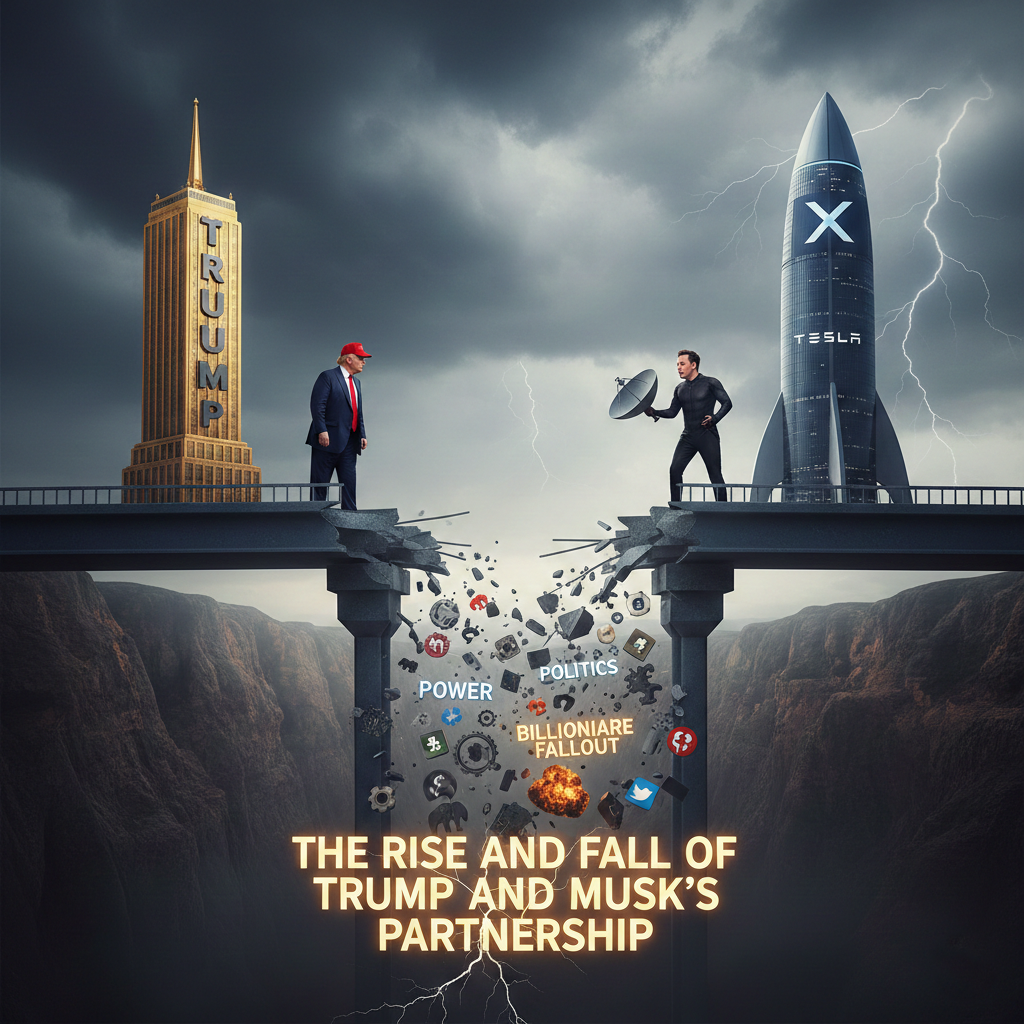
The rise and fall of Trump and Musk’s partnership is one of the most fascinating stories at the intersection of politics, technology, and personal power in modern America. Once seen as a mutually beneficial alliance between a populist president and a disruptive tech billionaire, the relationship promised influence, innovation, and global impact. However, what began as cooperation eventually collapsed under ideological clashes, public criticism, and diverging ambitions.
In an era where billionaires increasingly shape political discourse, the Trump-Musk dynamic offers a clear lesson. Alliances built on convenience rather than shared values rarely last. Moreover, this partnership’s breakdown reshaped political funding, public narratives, and even social media power structures.
This in-depth analysis explores how the partnership formed, why it appeared powerful, and what ultimately caused its downfall. It also examines the broader implications for politics, business leadership, and democratic influence.
How Trump and Musk’s Partnership Began
A Strategic Alignment of Power and Innovation
When Donald Trump assumed the U.S. presidency in 2017, Elon Musk was already one of the world’s most influential entrepreneurs. As CEO of Tesla, SpaceX, and later X, Musk represented technological ambition and private-sector dominance.
Initially, both figures saw value in cooperation.
Trump wanted to project an image of pro-business leadership, innovation, and American manufacturing. Musk, on the other hand, sought regulatory support, government contracts, and a seat at the policymaking table.
As a result, Musk joined Trump’s business advisory councils, including:
- The Strategic and Policy Forum
- The Manufacturing Jobs Initiative
These councils were designed to connect corporate leaders with White House decision-making.
Early Mutual Benefits
At the start, the partnership delivered tangible advantages:
- Trump highlighted Musk as proof that American innovation was thriving
- Musk gained direct access to federal policymakers
- SpaceX continued to secure lucrative NASA and defense contracts
- Tesla benefited from infrastructure discussions and EV policy debates
For a brief period, the alliance symbolized a bridge between Silicon Valley and Washington.
Ideological Differences Beneath the Surface
Climate Policy as the First Major Crack
Despite early cooperation, ideological differences were always present. Musk publicly supported renewable energy, climate action, and electric mobility. Trump, in contrast, openly questioned climate science and prioritized fossil fuels.
The breaking point came in 2017 when Trump announced the U.S. withdrawal from the Paris Climate Agreement.
In response, Musk resigned from Trump’s advisory councils, stating clearly that climate change demanded global cooperation.
This moment marked the first public fracture in Trump and Musk’s partnership.
Public Messaging vs Private Interests
Although Musk tried to maintain neutrality afterward, the distance grew. Trump increasingly criticized electric vehicle subsidies, while Musk became more vocal about climate responsibility.
Therefore, the partnership transitioned from collaboration to cautious disengagement.
From Cooperation to Conflict in the Public Arena
Trump’s Criticism of Electric Vehicles
As Trump’s political messaging shifted toward culture wars and populism, electric vehicles became a target. Trump framed EVs as elitist, costly, and harmful to traditional American jobs.
This narrative clashed directly with Musk’s business model.
Key points of conflict included:
- Opposition to EV mandates
- Support for oil and gas industries
- Attacks on green energy subsidies
Although Musk rarely responded directly at first, the ideological gap widened rapidly.
Musk’s Growing Political Independence
Over time, Musk positioned himself as politically independent, criticizing both Democrats and Republicans. However, Trump viewed neutrality as disloyalty.
Trump’s political strategy depended on clear allegiance. Musk’s refusal to align fully created tension that could not be repaired.
The Social Media Power Shift
Twitter and the New Battleground
The acquisition of Twitter, later rebranded as X, changed everything.
Musk’s takeover transformed him into a gatekeeper of digital political discourse. Meanwhile, Trump had already been banned from Twitter following the January 6 Capitol riots.
Although Musk eventually reinstated Trump’s account, Trump chose not to return actively, instead promoting his own platform.
This decision symbolized a complete breakdown in trust.
Competing Platforms and Influence
At this stage, the partnership had fully collapsed:
- Musk controlled a major global communication platform
- Trump promoted Truth Social as an alternative
- Both competed for influence over conservative audiences
Rather than allies, they became parallel power centers.
For deeper political media analysis, readers can explore insights published on thenews.zone, which regularly covers shifts in global power and digital influence.
Comparing Trump and Musk: Leadership and Influence
| Aspect | Donald Trump | Elon Musk |
|---|---|---|
| Core Power Base | Political movement | Technology and capital |
| Communication Style | Rally-driven, confrontational | Direct, platform-based |
| Policy Focus | Nationalism, deregulation | Innovation, space, AI |
| Long-Term Goal | Political legacy | Technological legacy |
This comparison highlights why their partnership struggled. Their visions overlapped temporarily but diverged fundamentally.
Why Trump and Musk’s Partnership Ultimately Failed
Clashing Egos and Control
Both Trump and Musk are dominant personalities accustomed to controlling narratives. Consequently, neither was willing to operate in a subordinate role.
Key reasons for failure include:
- Incompatible leadership styles
- Public criticism replacing private negotiation
- Divergent views on climate, technology, and regulation
- Competing platforms for influence
Moreover, their audiences began to overlap, turning cooperation into competition.
Political Timing and Personal Strategy
Trump’s focus shifted toward political survival and re-election narratives. Musk, meanwhile, concentrated on reshaping free speech debates and expanding technological empires.
Their priorities no longer aligned.
The Broader Impact on Politics and Business
Billionaires in Political Power
The rise and fall of Trump and Musk’s partnership reflects a broader trend. Billionaires increasingly shape public opinion, policy debates, and elections.
However, this case also proves that:
- Economic power does not guarantee political unity
- Influence without shared ideology is unstable
- Public alliances are vulnerable to social media scrutiny
Lessons for Future Political Alliances
Future leaders can learn several lessons:
- Strategic partnerships require value alignment
- Public disagreement accelerates collapse
- Control over platforms equals political leverage
For further reading on billionaire influence and global politics, authoritative coverage from The New York Times provides valuable context.
Media Narratives and Public Perception
How the Media Framed the Fallout
Mainstream media often portrayed the breakup as inevitable. Headlines focused on ego clashes rather than policy differences.
However, the reality was more complex. It involved:
- Structural political shifts
- Changing economic priorities
- The rise of digital power centers
Independent analysis platforms like thenews.zone offer alternative perspectives that go beyond surface-level narratives.
Frequently Asked Questions
Why did Trump and Musk initially work together?
They partnered due to mutual benefit. Trump gained business credibility, while Musk gained political access and regulatory influence.
What caused the first major rift in their partnership?
The U.S. withdrawal from the Paris Climate Agreement led Musk to resign from Trump’s advisory councils.
Did Musk support Trump politically?
Musk maintained a flexible stance. He avoided full endorsement and later criticized both major parties.
How did Twitter influence their fallout?
Musk’s acquisition of Twitter shifted power dynamics. Trump refused to return to the platform, choosing to build his own instead.
Is their partnership likely to revive?
Given ideological differences and competing ambitions, a revival appears unlikely. Most analysts agree the split is permanent.
For more expert political analysis, readers can refer to detailed reports published by BBC News.
Conclusion: What the Trump and Musk Fallout Really Means
The rise and fall of Trump and Musk’s partnership is more than a personal fallout. It is a case study in modern power, where politics, technology, and personality collide.
Initially, their alliance symbolized innovation meeting governance. However, ideological divides, control over narratives, and competing ambitions dismantled the relationship.
Ultimately, this story reminds us that influence without alignment is fragile. As billionaires continue to shape public discourse, the Trump-Musk saga will remain a defining example of how power partnerships can rise quickly and fall even faster.
For ongoing coverage of political power shifts, technology leadership, and global influence, stay connected with in-depth analysis on thenews.zone.
If you found this analysis valuable, explore more exclusive insights and expert opinions on emerging global power dynamics today.
