

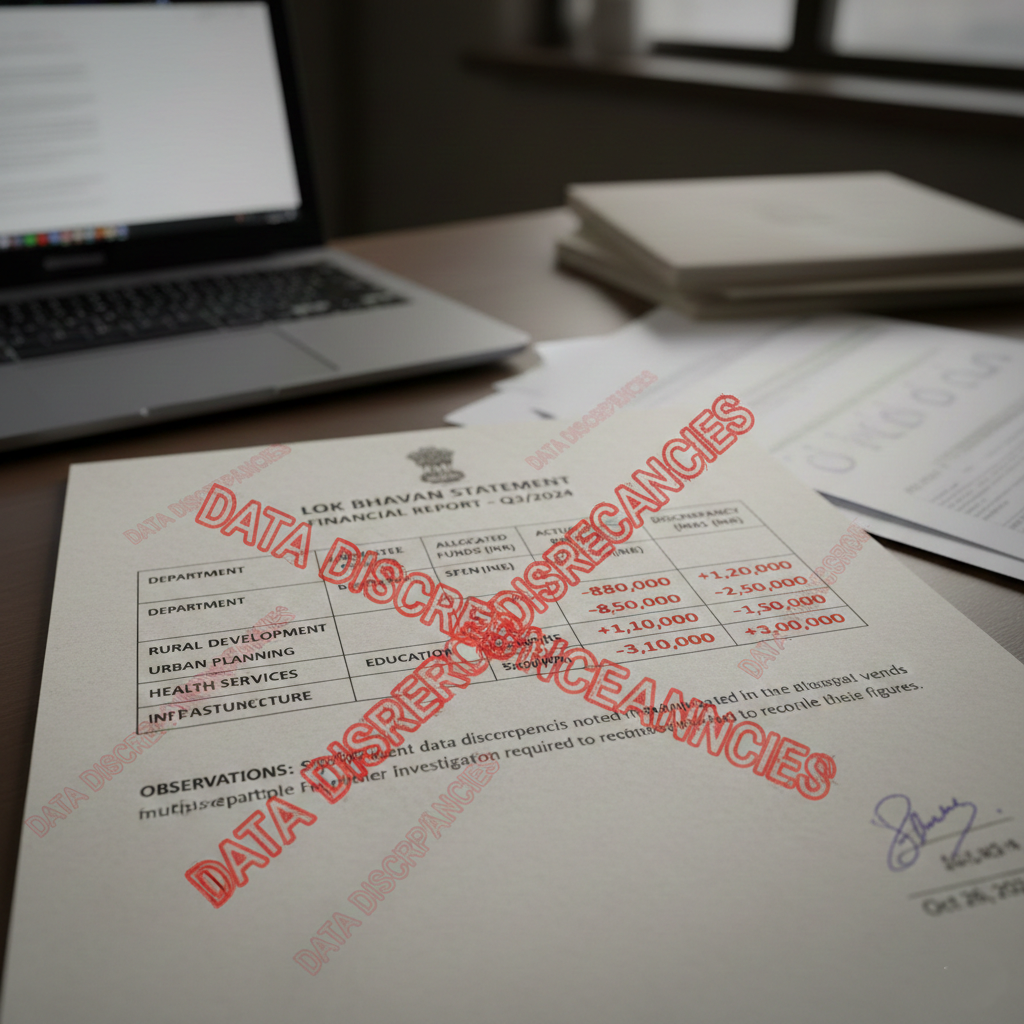
The recent row over data discrepancies in the Lok Bhavan statement on T.N. Governor’s address has become one of the most discussed political controversies in Tamil Nadu’s legislative history. On January 20, 2026, Governor R.N. Ravi refused to deliver the customary Governor’s Address in the Tamil Nadu Legislative Assembly, triggering a heated debate on governance, data accuracy, legislative norms, and constitutional conventions. The official Lok Bhavan statement issued soon after the incident has drawn both support and criticism, particularly for claims that appear factually inconsistent or unsupported by public data.
This comprehensive article examines the core discrepancies highlighted in the Lok Bhavan statement, explains the broader political implications, compares claims with publicly available data, and answers key questions essential to understanding the controversy.
What Happened in the Tamil Nadu Assembly? A Quick Overview
Governor Walks Out: Events in Brief
On January 20, 2026, as the Tamil Nadu Assembly convened for its first session of the year, Governor R.N. Ravi declined to read the address prepared by the DMK‑led state government, citing “inaccuracies” and misleading content in the text. He exited the assembly without delivering the speech, an unprecedented move in the state’s legislative tradition.
Immediately following the walkout, Lok Bhavan released a detailed statement outlining 13 reasons for the Governor’s refusal to present the address. These ranged from claims of factual misrepresentation to concerns over ignored social issues and procedural misconduct.
The Core Controversial Claims by Lok Bhavan
Here are some of the main points raised in Lok Bhavan’s statement:
- The speech contained unsubstantiated claims and misleading statements.
- Investment data cited by the state government were described as exaggerated or inaccurate.
- The Governor alleged rising social issues such as crime, suicides, and atrocities that were ignored in the address.
- It claimed that the state government’s data on sectors like MSMEs and FDI were misleading.
- The Governor’s microphone was allegedly switched off repeatedly, preventing him from addressing the House.
The point about the microphone being switched off has already been publicly disputed by the Assembly Speaker, who said this is not how House proceedings normally work.
Data Discrepancies in Focus: Claim vs Facts
While the Lok Bhavan statement alleges several serious issues, several points have been flagged as inconsistent with verifiable data or lacking clear evidence. Below, we review some of these discrepancies.
1. Foreign Direct Investment (FDI) Claims
| Claim Made by Lok Bhavan | Data/Reality Check |
| Tamil Nadu claimed to have attracted over Rs 12 lakh crore in investments. | Investment figures need context — MOU values vs actual inflows often differ across states. |
| Tamil Nadu’s ranking among FDI recipients dropped from 4th to 6th. | National data may vary depending on the sector and financial year measured. |
Observation: MOU figures are often far higher than actual realized investments. However, to conclude attraction of investments is poor solely based on MOU figures can misrepresent the true status of commitments vs realization in Tamil Nadu.
2. MSME Data and Employment Impact
The Lok Bhavan statement noted that Tamil Nadu has only about 4 million MSMEs compared with over 55 million across India, suggesting the MSME sector is underperforming.
| Aspect | Lok Bhavan Position | Broader Context |
| Tamil Nadu MSME count | ~4 million | MSME registration and classification often differ between states and sectors. |
| National MSME numbers | ~55 million | Includes micro units and unregistered enterprises, often undercounted in official registers. |
Observation: While comparative numbers can be instructive, raw MSME figures alone do not fully represent growth, employment contribution, or sector resilience in Tamil Nadu.
3. Social Issues and Crime Data
The statement also raised concerns about rising POCSO cases, sexual violence, suicides, drug abuse among youth, and atrocities against Dalits.
| Issue Raised | Lok Bhavan Claim | Verified Data Challenges |
| POCSO & sexual assault up by 55% | Indicates increasing crime | Crime data trends fluctuate and may not be comparable year‑on‑year without context. |
| Suicides ~20,000 | Labelled Tamil Nadu “Suicide Capital” | Suicide data from NCRB can vary and require careful interpretation. |
| Drug abuse among youth | Rising concern | Reliable data on youth drug abuse in Tamil Nadu is limited in public domain. |
Observation: Without transparent data sources, verifying these claims is difficult. Many such figures require careful context from official government reports or independent studies.
Political and Constitutional Implications
The Lok Bhavan statement and the subsequent political pushback reveal deeper tensions in Tamil Nadu’s governance ecosystem.
Governor’s Constitutional Role vs Political Norms
By constitutional convention in India, the Governor reads a speech drafted by the state government outlining policy priorities and achievements. Altering the content, adding personal criticism, or refusing to read it disrupts this convention. Critics argue that the Governor’s actions could be seen as interfering with state legislative procedures and convention.
State Government’s Reaction
Chief Minister M.K. Stalin and the DMK party criticized the Governor’s walkout as a violation of tradition and constitutional norms. The Assembly later adopted a resolution stating that the prepared address will be treated as having been read even in the Governor’s absence.
Claims of Misrepresentation
Both sides are now engaged in public messaging wars. While Lok Bhavan reiterates its stance, the state government has termed the controversy as politically motivated and rhetorically exaggerated. This competing narrative has amplified media attention and public scrutiny.
What the Experts Say
Political analysts note that such disputes reflect growing friction between central representatives (Governors) and state elected governments, particularly in states with different ruling parties. Experts contend that constitutional provisions need clearer articulation to avoid recurring friction.
To understand the constitutional role of Governors in Indian states, refer to Constitution of India – Article 176 and relevant scholarly discussions linked here:
👉 Outbound: https://legislative.gov.in/constitution‑of‑india
👉 Internal: thenews.zone/governor‑duties‑analysis
FAQs — Data Discrepancies and Lok Bhavan Statement
1. Why did the Governor refuse to read the assembly address?
Governor R.N. Ravi cited what he described as factual inaccuracies and misleading statements in the address text prepared by the state government, leading him to decline reading it.
2. What were the key factual claims disputed in Lok Bhavan’s statement?
The statement challenged figures related to investment, MSME numbers, crime and social welfare data, and other performance metrics claimed by the government.
3. Is there evidence that the microphone was switched off?
The Tamil Nadu Assembly Speaker has publicly refuted the claim that the microphone was repeatedly switched off, saying this is not standard practice during proceedings.
4. Does Tamil Nadu really have rising suicide and crime rates?
Reliable interpretation requires data from official sources like the National Crime Records Bureau (NCRB). The Lok Bhavan statement’s claims have not been cross‑verified with independent datasets.
5. What happens next in this controversy?
The Assembly has adopted its own procedural resolution. Political and legal observers expect debates on the Governor’s role and possible judicial or legislative review of the incident.
Conclusion
The data discrepancies in the Lok Bhavan statement on T.N. Governor’s address have underscored a larger debate about constitutional propriety, political communication, and the role of verified facts in public governance discourse. While the Governor’s concerns revolve around alleged factual inaccuracies and procedural issues, critics of the statement have questioned its data sources and interpretations.
As this evolving situation continues to draw attention, it is essential for readers, voters, and researchers to rely on verified data, understand constitutional norms, and seek balanced perspectives rather than one‑sided narratives.
For continued coverage of this developing story and more political analysis, keep following thenews.zone.
