

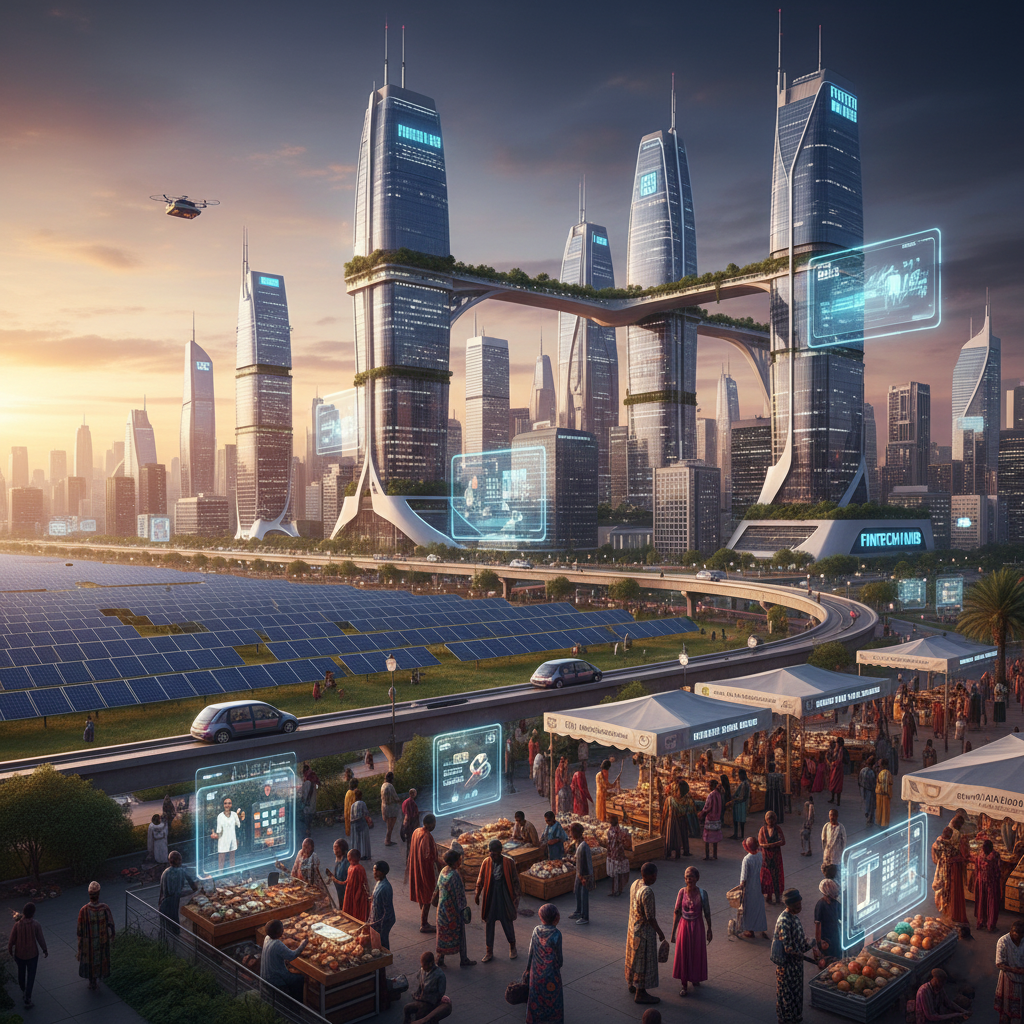
For decades, global economic narratives focused on Asia, Europe, and the Americas. But today, the world is witnessing something extraordinary—
Africa is rising faster than ever before.
With young populations, booming digital transformation, fintech revolutions, renewable energy growth, and aggressive infrastructure investments, Africa is becoming the fastest-growing emerging market region on the planet.
The Africa of 2025–2026 is:
- innovative
- digitally connected
- entrepreneur-driven
- rich in natural and renewable resources
- a growing tech hub
- home to multiple trillion-dollar future industries
Major global powers—from China to India, the US to the EU—are rushing to invest. Startups are scaling. Digital payments are exploding. Green energy is accelerating. And Africa’s young population is fueling historic economic momentum.
1. Why Africa Is Becoming the World’s Next Big Economic Power
Africa’s rise is powered by several mega-factors:
1. Young Workforce (Fastest in the World)
By 2030, 60% of Africa will be under 25—the youngest population globally.
This means:
- More innovation
- More workforce availability
- A tech-driven generation
2. Exploding Digital Economy
Smartphone and internet penetration are growing at historic rates.
- Kenya, Nigeria, and South Africa lead fintech
- Mobile money is a global model (MPesa)
- E-commerce is booming
- African startups raised billions in 2024–2025
3. Renewable Energy Boom
Africa has:
- 60% of the world’s best solar resources
- Massive hydro and wind potential
- Global funding for green energy projects
4. Natural Resources & Critical Minerals
Africa holds the world’s highest reserves of:
- Cobalt
- Lithium
- Rare earth metals
- Platinum
- Gold
- Copper
These are the backbone of EVs, batteries, and electronics.
5. Infrastructure & Smart Cities Growth
New highways, ports, economic zones, and digital cities are being built in:
- Nigeria
- Kenya
- Egypt
- Morocco
- Ghana
- Rwanda
- Ethiopia
6. Strong Government Reform Policies
Countries are improving:
- Ease of doing business
- Startup regulations
- Tax incentives
- Foreign investment laws
2. Fastest Growing African Economies in 2025–2026
Africa is home to 7 of the 10 fastest-growing economies in the world.
Below are the most promising markets:
1. Nigeria — Africa’s Tech & Fintech Superpower
Nigeria remains Africa’s largest economy and a global fintech powerhouse.
Growth Drivers:
- Flutterwave, Paystack, Interswitch
- Million-dollar startup ecosystem
- Oil & gas
- Agriculture & exports
- Smart cities & infrastructure
- Massive population of 223M
Why it’s rising:
Nigeria has the fastest-growing digital payments sector in Africa.
2. Kenya — Silicon Savannah of Africa
Kenya is known globally for MPesa, the world’s most successful mobile-money system.
Key strengths:
- Fintech innovation
- Digital identity systems
- Agritech startups
- Solar energy expansion
Why it’s rising:
One of the most stable and tech-driven African nations.
3. South Africa — Industrial & Financial Hub
South Africa is Africa’s most advanced industrial economy.
Key growth sectors:
- Mining
- Banking
- Manufacturing
- Tourism
- Digital services
Why it’s rising:
Global companies use South Africa as their African headquarters.
4. Egypt — Africa’s New Investment Magnet
Egypt is rapidly modernizing its economy.
Growth areas:
- Renewable energy
- Real estate
- Tourism
- Suez Canal trade
- Logistics
Why it’s rising:
One of Africa’s largest digital transformation programs.
5. Morocco — Africa’s Automotive & Green Energy King
Morocco is building the largest renewable energy infrastructure in Africa.
Strengths:
- EV manufacturing
- Solar energy farms
- Aerospace engineering
- Logistics advantage
Why it’s rising:
Morocco produces EVs for global markets.
6. Ghana — West Africa’s Stability & Innovation Leader
Ghana is becoming a startup and financial services hub.
Key strengths:
- Gold mining
- Fintech
- Agriculture
- Education tech
Why it’s rising:
Strong governance + growing middle class.
7. Rwanda — Africa’s Smart Nation
Rwanda is called Africa’s Singapore.
Innovations:
- Drone delivery systems
- Tech-friendly regulations
- Smart cities
- Clean governance
Why it’s rising:
Fastest digital policy adoption in Africa.
3. Industries Driving Africa’s New Growth Wave
Africa’s rise is not limited to resources—it’s powered by modern industries.
A. Fintech & Digital Payments
Africa is the world leader in mobile money:
- 70% of global mobile-money traffic is African
- MPesa, Flutterwave, Chipper Cash dominate
- Digital wallets replacing banks
Fintech is Africa’s strongest investment sector.
B. Renewable Energy & Electric Mobility
Africa receives the best solar radiation on Earth.
Massive solar farms in:
- Morocco
- Egypt
- Kenya
- South Africa
EV adoption is rising with support from:
- BYD
- Tesla
- Hyundai
C. Agritech & Food Innovation
Africa’s agriculture market will reach $1 trillion by 2030.
Innovations include:
- Smart irrigation
- AI crop analysis
- Drone farming
- Digital supply chains
Agritech is transforming food production.
D. Digital Services & Outsourcing
Africa is becoming an outsourcing hub.
Countries like:
- Kenya
- Ghana
- Egypt
- South Africa
are offering high-quality IT services at competitive costs.
E. Startup Ecosystem Growth
Africa’s startup funding crossed $5 billion in 2024.
Key sectors:
- EdTech
- HealthTech
- Fintech
- CleanTech
- AI startups
F. Real Estate & Smart City Development
New economic zones and smart cities include:
- Eko Atlantic (Nigeria)
- Konza Technopolis (Kenya)
- New Administrative Capital (Egypt)
- Kigali Innovation City (Rwanda)
These cities attract global investors.
4. Why Global Investors Are Targeting Africa
Africa offers unmatched advantages:
1. High ROI
Returns in African markets are significantly higher than Europe or America.
2. Untapped Market Potential
1.4 billion people—mostly young—create long-term consumption demand.
3. Digital Leapfrogging
Africa jumps straight to:
- digital payments
- mobile-first banking
- e-commerce
- remote work
4. Global Dependence on African Minerals
EV and battery industries depend on African resources.
5. Challenges Africa Must Overcome
Africa’s rise is strong, but challenges exist.
1. Infrastructure gaps
Some regions still lack consistent electricity and roads.
2. Political instability
A few countries face governance issues.
3. Education & skill gap
More tech training is required.
4. Currency fluctuations
Volatile exchange rates affect investors.
5. Security concerns
Some areas face conflict or terrorism threats.
Despite these, Africa is rapidly improving stability through policy reforms and international partnerships.
6. The Future of Africa (2026–2035)
Africa is projected to become:
⚡ A $4 trillion economy by 2030
⚡ The world’s largest workforce by 2040
⚡ A global green energy superpower
⚡ A trillion-dollar digital economy
Major future transformations:
- Smart cities
- High-speed internet expansion
- Cross-border digital payments
- AfCFTA (African Continental Free Trade Area)
- AI-powered agriculture
- EV manufacturing zones
Africa is not catching up—
it’s jumping ahead.
Conclusion: Africa Is the Next Global Growth Engine
Africa is rising—and rising fast.
The continent is shifting from a resource-dependent model to a digital, innovative, and future-ready economy.
With fintech, renewable energy, startups, and smart cities expanding aggressively, Africa is set to become one of the most important markets of the 21st century.
Smart governments, foreign investments, and a youth-driven workforce are building an unstoppable growth engine.
The world is finally recognizing what Africa has always been:
A land of opportunity, innovation, and limitless potential.
