

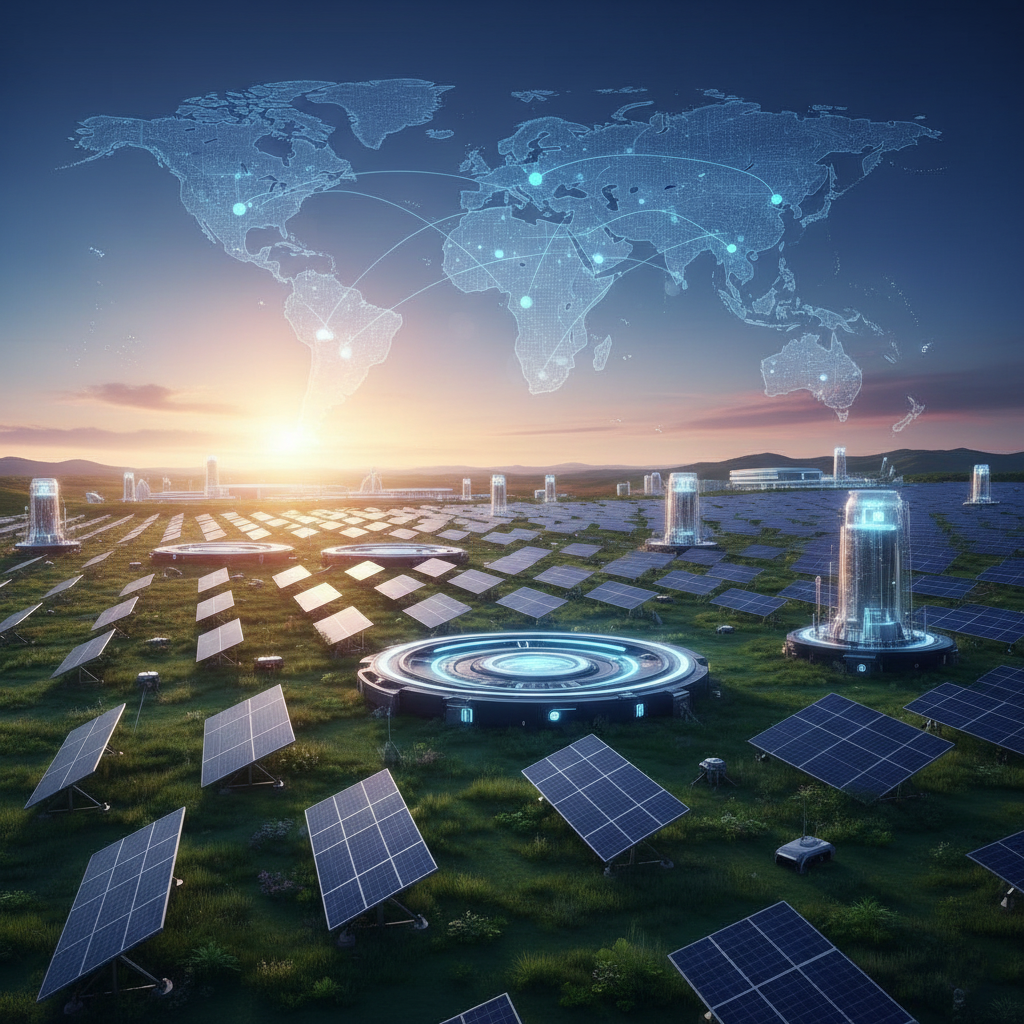
Just a decade ago, solar energy was considered expensive and less efficient. Fast forward to 2025, and solar power is dominating global energy installations. Multiple forces are responsible for this rapid adoption:
- Decreasing cost of solar panels
- Rising electricity demand
- Climate change agreements
- Shift toward decentralized energy
- Government incentives
- Innovations in battery storage
Solar power has transitioned from an “alternative energy” to the primary growth engine of global power systems.
☀️ 1. Global Solar Market Growth: Numbers That Matter
📌 Global solar capacity 2025:
🟢 Over 1.8 terawatts (TW) installed globally
📌 Expected by 2026:
🟢 Cross 2.1 TW capacity
📌 Solar energy now contributes:
🟢 ~6.5% of global electricity (up from 3% in 2019)
📌 Annual growth rate:
🟢 30–35% year-over-year
📌 Solar is now cheaper than:
- Coal
- Oil
- Diesel generators
- Nuclear
- Gas-based electricity
Solar power has become the most economical energy source for both households and industries.
🌞 2. Why Solar Energy Is Growing So Fast
a. Falling Cost of Solar Panels
In 2010, solar panels cost 30–40 times more than they do in 2025. Innovations in manufacturing and global competition have reduced costs by over 90%.
b. Climate Change Pressures
Global pledges like the Paris Agreement forced countries to adopt clean energy commitments.
c. Rising Electricity Prices
From Europe to Asia, traditional electricity has become extremely expensive, pushing people toward solar rooftop systems.
d. Technological Innovation
New technologies such as:
- Bifacial solar panels
- Perovskite solar cells
- Thin-film technologies
- Solar tiles
- Solar windows
have boosted efficiency dramatically.
e. Battery Storage Revolution
Modern batteries store more power for longer at lower costs, making solar reliable 24/7.
f. Decentralization of Power
Solar energy empowers communities with independent, off-grid systems, reducing dependency on big power companies.
🌎 3. Country-Wise Solar Energy Leaders (2025–2026)
1. China — The Global Solar King
China accounts for 35–40% of global solar capacity.
Massive investments, manufacturing dominance, and large solar farms have made China the leader.
2. India — Fastest-Growing Solar Market
India added record-breaking solar installations in 2025 and aims for 500 GW renewable energy by 2030.
Top Indian solar hubs:
- Rajasthan
- Gujarat
- Karnataka
- Telangana
3. United States — Solar + Storage Boom
The U.S. solar market exploded due to:
- Federal tax incentives
- Corporate clean energy pledges
- Rooftop solar popularity
4. Europe — Green Energy Transition
Countries like Germany, Spain, and Netherlands are expanding solar rooftops and utility-scale projects.
5. Middle East — Desert Solar Powerhouses
UAE, Saudi Arabia, and Qatar are building giant solar farms with world-record low electricity prices.
6. Africa — Off-Grid Solar Revolution
Africa is witnessing a solar boom driven by:
- Solar mini-grids
- Rural electrification
- Solar-powered irrigation
Countries leading the growth:
- Kenya
- Nigeria
- South Africa
- Egypt
⚡ 4. Solar Technology Innovations Transforming the World
1. Perovskite Solar Cells
Efficiency exceeding 30%, lightweight, transparent, and cheaper than silicon.
2. Bifacial Solar Panels
Capture sunlight from both sides and increase power generation by 10–20%.
3. Solar Tiles & Solar Roofs
Tesla and multiple Asian brands are enabling houses to generate power through rooftop tiles.
4. Floating Solar Farms
Countries with water bodies are adopting floating solar to reduce land usage.
5. Agrivoltaics
Dual-use land where farmers generate electricity and grow crops under solar panels.
6. Solar-Powered EV Charging Stations
With EV adoption booming, solar stations are becoming essential worldwide.
7. Smart Solar Inverters
AI-powered inverters optimize:
- Energy flow
- Battery health
- Load management
- Smart grid synchronization
💼 5. Solar Energy & Global Employment
Solar energy is now one of the world’s biggest job creators.
Employment growth 2025–2026
Solar industry generated more than 4.6 million jobs in:
- Installation
- Manufacturing
- Maintenance
- Research
- Battery systems
- Solar farm operations
By 2030, more than 10 million jobs will be linked to the solar sector.
🏭 6. Industrial Solar Adoption: A Massive Trend
Industries are switching to solar to reduce operational costs.
Sectors adopting solar:
- Manufacturing
- IT parks
- Agriculture
- Logistics
- Education
- Healthcare
Businesses benefit from:
- Lower electricity bills
- Increased energy independence
- Zero-carbon branding
Solar PPAs (Power Purchase Agreements) are rising tremendously across Asia and Europe.
🏡 7. Residential Solar: Rooftop Systems Become Household Essentials
In 2025, rooftop solar became a mainstream solution globally.
Why more homes are choosing solar rooftops
- Zero electricity bills
- Backup during power cuts
- Affordable financing
- Smart battery integration
Homeowners are also installing:
- Solar heaters
- Solar ovens
- Solar air conditioners
- Solar water pumps
Solar has become a lifestyle choice.
🔋 8. Solar + Battery Storage: The Power Combo of the Future
Battery innovation is the biggest accelerator of solar adoption.
2025–2026 Battery Trends
- Lithium-ion price drop
- Sodium-ion batteries
- Solid-state batteries
- AI-optimized energy storage
This combination allows solar users to:
- Store power at day
- Use at night
- Remain off-grid
- Avoid diesel generators
🌡️ 9. Climate Impact: How Solar Reduces Global Emissions
Solar energy reduces greenhouse gases significantly.
Annual emissions reduction:
Over 1 billion tons of CO₂ cut in 2025.
Benefits
- Cleaner air
- Lower pollution levels
- Reduced climate impact
- Health improvement
- Agricultural productivity
Solar is one of the most powerful tools to fight global warming.
🔮 10. Solar Energy Forecast for 2026 and Beyond
⭐ 1. Solar will become the world’s biggest energy source by 2032.
Faster adoption than wind, hydro, or nuclear.
⭐ 2. Solar panels will become 40% more efficient.
⭐ 3. Solar-powered EV charging networks will expand globally.
⭐ 4. AI-powered smart grids will become standard.
⭐ 5. Solar battery storage will become cheaper than diesel.
⭐ 6. More countries will announce 100% renewable goals.
Solar energy isn’t the future—it is the present and the only sustainable path ahead.
📝 Conclusion
From Asia to Africa, from the U.S. to Europe, the world is witnessing an extraordinary rise in solar power. Technology, affordability, climate awareness, and global clean-energy commitments are pushing solar toward unstoppable growth. In 2025–2026, solar energy is more than just a trend—it’s the foundation of the world’s energy future.
Countries that invest in solar today will be global leaders tomorrow.
Solar energy isn’t just powering homes—it’s powering economies, industries, and a safer planet.
