

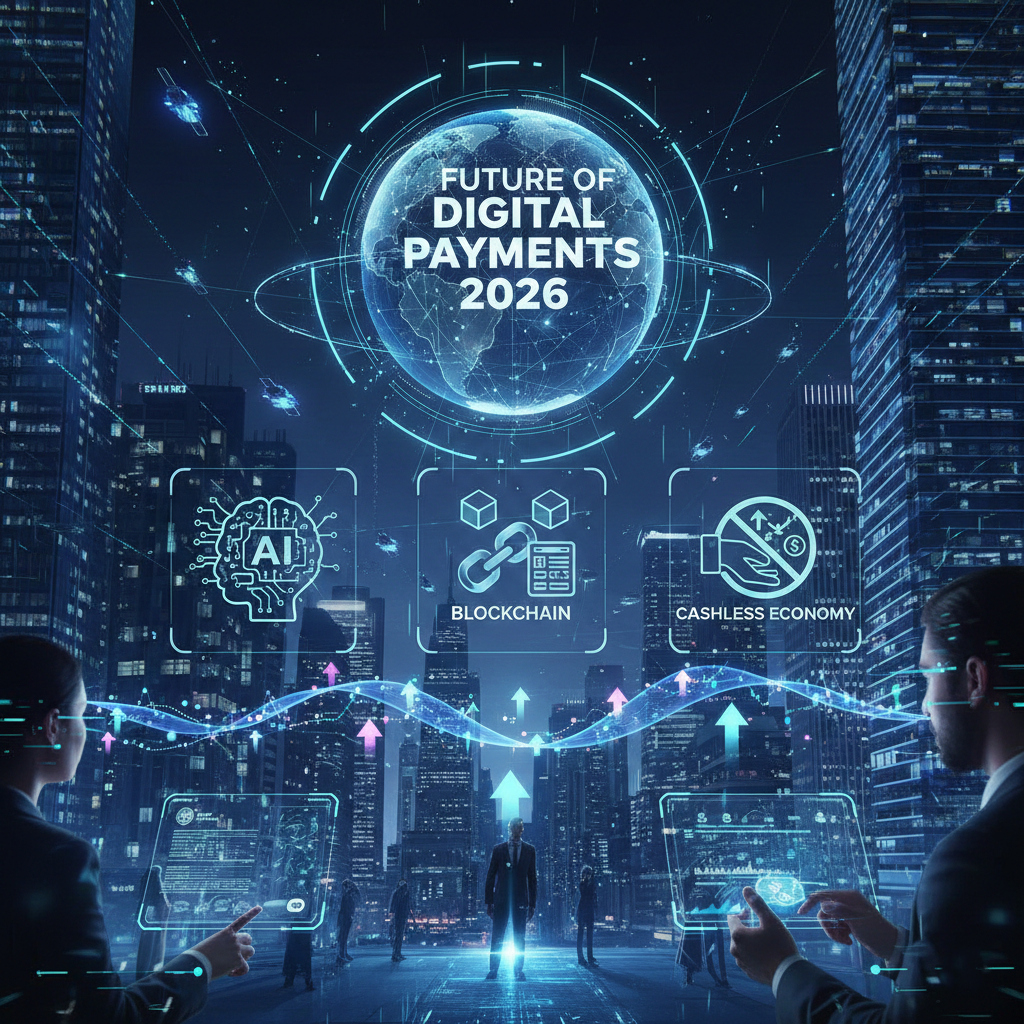
Digital payments have transformed from a convenience into a global necessity. In 2026 and beyond, we are entering a new era of hyper-digital, AI-powered, blockchain-secured financial transactions that will redefine how individuals, businesses, and governments manage money.
From UPI 3.0 to CBDCs, from biometric payments to AI-driven fraud detection, the future of digital payments is not just faster—it is smarter, safer, and truly borderless.
🌐 1. Rise of Cashless Economies Worldwide
Countries like India, China, Singapore, and the UAE are leading the move toward cashless ecosystems.
Key trends:
- Cash usage dropping by 30–60% in many developed markets
- Government policies pushing for digital-first transactions
- New players like fintech start-ups, payment banks, and super apps
In 2026 and beyond, digital wallets will become the primary method of transaction for most users under 40.
🧠 2. AI Will Become the Mind of Digital Payments
AI will drive the future payment infrastructure.
AI advancements include:
- Real-time fraud detection
- Smart spending insights
- Automated reconciliation for businesses
- Behavioral analytics to prevent identity theft
- Instant risk scoring for every transaction
AI will make payments more personalized, predictive, and proactive.
🔗 3. Blockchain: The New Security Standard
Blockchain will strengthen payment security, transparency, and speed.
Blockchain innovations:
- Fraud-proof transaction records
- Decentralized payment gateways
- Smart contracts that automate transactions
- Lower remittance costs worldwide
Blockchain won’t replace banks—it will upgrade them.
💳 4. Biometric Payments Take Over
Forget OTPs and cards. By 2026, payments will become identity-driven.
Biometrics in payments:
- Face recognition payments
- Fingerprint-enabled ATM withdrawals
- Voice-based authentication
- Palm-scanning in retail stores (already launched by Amazon One)
Your face will become your new wallet.
📱 5. UPI 3.0 & Global Digital Railways
India is becoming a global leader in digital payments. UPI has already expanded to multiple countries.
UPI 3.0 is expected to bring:
- Credit on UPI
- Global interoperability
- Offline UPI payments
- Enhanced security layers
This will bring India’s payment model to the global stage.
🏦 6. Central Bank Digital Currencies (CBDCs) Growing Fast
Governments are launching official digital currencies to stay ahead of crypto.
What CBDCs change:
- Faster interbank transactions
- Lower costs
- Improved transparency
- Reduced dependency on cash
- Secure cross-border payments
India’s Digital Rupee, China’s e-CNY, and Europe’s Digital Euro will shape the next financial revolution.
🤖 7. Embedded Payments: Pay Without Realizing
Payments will blend seamlessly into apps and devices.
Examples:
- Pay directly from car dashboards
- Smart refrigerators ordering groceries
- IoT-enabled fuel payments
- In-app one-click checkout everywhere
Embedded finance will be worth $7 trillion+ globally by 2030.
🌍 8. Cross-Border Payments Become Instant
Traditional international transfers take days and cost high fees. New technologies will make them:
- Instant
- Borderless
- Low-fee
- Blockchain-secured
Platforms like RippleNet, Wise, and UPI Global will transform global commerce.
🛡 9. Cybersecurity Becomes the Top Priority
With digital transactions rising, so do cybercrimes.
Security upgrades ahead:
- AI-based fraud prevention
- Encrypted digital identity
- Multi-layer authentication
- Blockchain-ledger verification
Security will be the #1 investment for banks and fintech companies.
🏪 10. Digital Payments in Offline & Rural Markets
Even places with low internet connectivity will adopt digital payments through:
- Offline UPI
- NFC tap-to-pay
- QR-based micropayments
- Digital kiosks
This will boost financial inclusion across Asia and Africa.
📊 Conclusion: The Future of Digital Payments Is Smart, Secure & Borderless
We are moving toward a world where money flows:
- Instantly
- Globally
- Securely
- Without friction
Whether for individuals, businesses, or governments, digital payments will redefine economic activity in 2026 and the decade ahead.
