

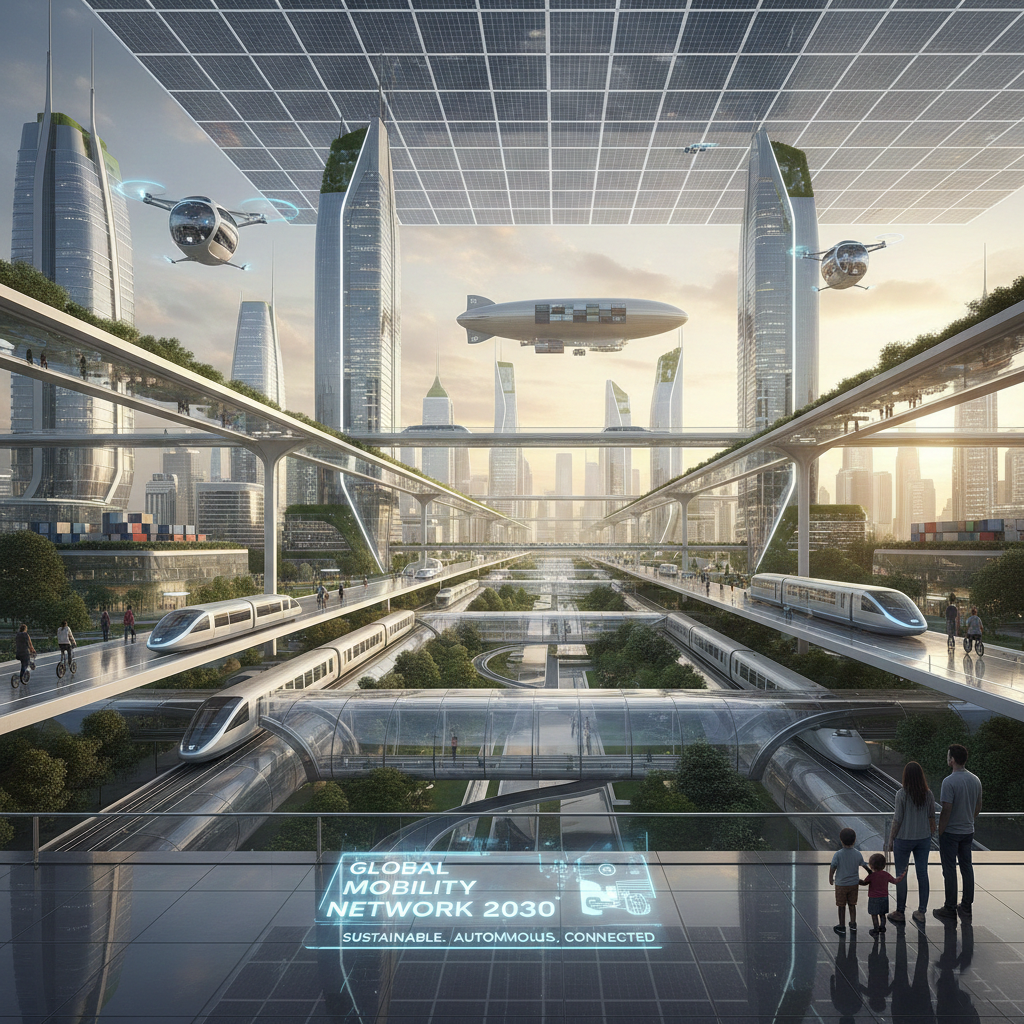
Transportation in 2030 will look nothing like today. The world is entering a new era where AI-driven vehicles, hyperloop systems, electric aviation, green mobility, and autonomous logistics will redefine how people and goods move across the planet.
From cities powered by smart mobility to highways filled with self-driving EVs, the global transport revolution is accelerating faster than ever. This blog explores the major innovations, trends, challenges, and predictions shaping the Future of Transportation by 2030.
🚀 1. Autonomous Vehicles Become Mainstream
By 2030, Level 4 and Level 5 driverless vehicles will dominate urban roadways.
What Will Change:
- Cars will drive themselves with no steering wheel.
- Robo-taxis will replace traditional taxis and ride-hailing drivers.
- AI traffic management will reduce accidents by 80–90%.
- Parking buildings will shrink—cars will park themselves outside cities.
Benefits:
- Fewer road accidents
- Lower fuel usage
- Faster travel with optimized routing
- Mobility for elderly and disabled
Industries Affected:
Taxi drivers, delivery riders, insurance sector, and logistics companies will see major restructuring.
⚡ 2. Electric Vehicles (EVs) Become the Global Standard
2030 will be the tipping point where EVs surpass petrol/diesel vehicles worldwide.
Why?
- Cheaper batteries
- Government EV mandates
- Ban on ICE (Internal Combustion Engine) sales in many countries
- Global adoption of solar EV charging hubs
Future Features in EVs 2030:
- 10-minute ultra-fast charging
- 1,000–1,200 km range
- Wireless roadside charging pads
- Solar roofs generating energy while driving
🛩️ 3. Electric & Autonomous Air Taxis (eVTOLs)
Air taxis will transform city-to-city travel.
Examples:
- Joby Aviation
- Lilium
- Volocopter
- Ehang
What will be possible:
- 20–30 minute air taxi flights between major hubs
- Zero traffic congestion
- Cheaper short-distance flying
Countries like UAE, USA, Singapore, and India are already testing eVTOL networks.
🚄 4. Hyperloop: Ultra-Fast Travel Becomes Reality
Hyperloop is expected to begin commercial rollout in some regions by 2030.
Speed:
Up to 1,200 km/h — faster than airplanes on short distances.
Impact:
- Mumbai → Delhi in 60–70 minutes
- Dubai → Abu Dhabi in 12 minutes
- Los Angeles → San Francisco in 50 minutes
Hyperloop will dramatically boost trade, tourism, and inter-city mobility.
🛫 5. Green Aviation & Hydrogen Planes
Aviation is one of the biggest contributors to emissions; 2030 will bring cleaner solutions.
By 2030 we will see:
- Hydrogen-powered aircraft trials
- Electric short-haul flights under 500 km
- Hybrid jet engines reducing fuel use by 30–40%
- AI autopilot systems
Airlines will shift from fuel-heavy operations to sustainability-driven models.
🚲 6. Micro-Mobility & Smart Urban Transport
Cities worldwide are redesigning mobility systems for sustainability.
What will expand:
- Electric bicycles
- E-scooters
- Autonomous mini-buses
- Walking-first city designs
- Pollution-free zones
Smart Features:
- AI pedestrian monitoring
- Digital traffic lights
- Smart parking
- Contactless payments for all mobility
By 2030, smart mobility will cut urban pollution by 25–40%.
📦 7. Autonomous Logistics & Drone Deliveries
The logistics sector will undergo the biggest disruption.
Trends:
- Drones delivering groceries, medicines, food
- Driverless trucks for long-distance routes
- Robot-based last-mile delivery
- AI-managed warehouses
Companies like Amazon, Walmart, FedEx, and startups worldwide are already testing large-scale systems.
Benefits:
- 24/7 delivery
- Faster supply chain
- Lower shipping cost
- Minimal human error
🌍 8. Connected & Intelligent Transport Ecosystems
2030 transport will run on real-time connectivity.
What’s coming:
- 6G-powered vehicles
- Vehicle-to-Vehicle (V2V) communication
- Vehicle-to-Infrastructure (V2I) smart roads
- AI traffic prediction systems
- Sensors embedded in highways
Cities will use real-time data to manage traffic, weather, and emergencies.
🌱 9. The Green Mobility Revolution
Sustainability is the core of transportation’s future.
Key elements:
- Zero-emission public transport
- Electric buses leading city transport
- Biofuel adoption in aviation
- Recyclable battery materials
- Circular economy vehicle manufacturing
Governments will incentivize green mobility to fight climate change.
🧠 10. AI as the Core of Transportation
2030 transportation runs on AI—not engines.
AI will power:
- Navigation
- Traffic control
- Route optimization
- Autonomous driving
- Predictive maintenance
- Passenger safety
- Fleet management
AI reduces human error, optimizes systems, and ensures smoother travel worldwide.
🚧 Challenges the World Must Solve
Even with advancements, major issues remain:
- Cybersecurity risks
- Infrastructure upgrades needed
- High costs of early systems
- Regulation of autonomous vehicles
- Public acceptance of AI-driven mobility
Governments and companies must collaborate to create safe, reliable transport ecosystems.
🔮 Transportation in 2030: Key Predictions
Here are the most realistic predictions for 2030:
1. 50% of new cars sold globally will be electric
2. Driverless taxis operational in 100+ cities
3. Drone delivery becomes a standard service
4. Smart roads in most developed countries
5. Air taxi routes active in major cities
6. AI controls most traffic systems
7. Public transport becomes fully digital & cashless
8. Green mobility policies dominate all countries
Transportation will be cleaner, faster, safer, and more automated than ever.
✨ Conclusion
The Future of Transportation in 2030 is not just about vehicles—it’s about a fully connected, AI-enhanced ecosystem that transforms how people and goods move across the world.
From autonomous cars to flying taxis, hyperloop travel, and green mobility, the world is entering a revolutionary decade of transformation. By 2030, transportation will become smarter, more sustainable, and more efficient, making global mobility seamless and environment-friendly.
