

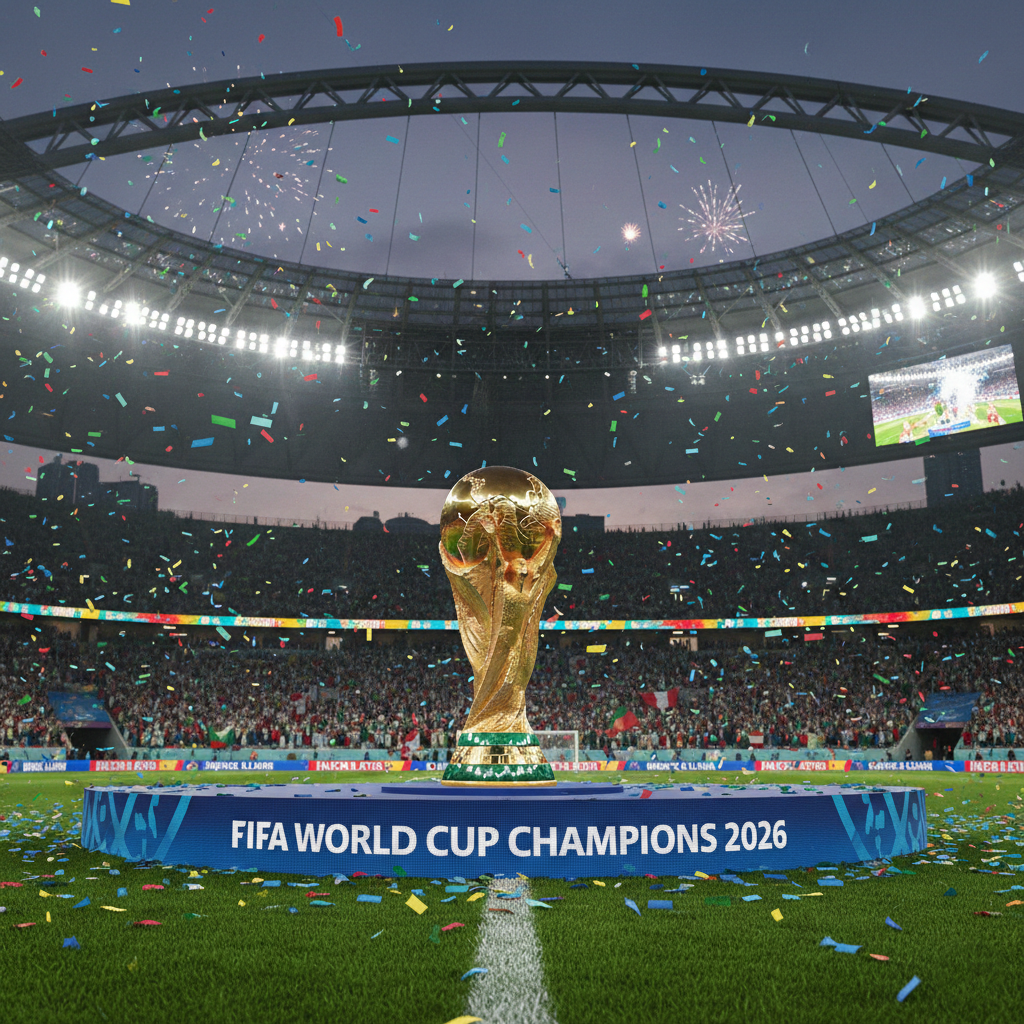
Why the FIFA Club World Cup Matters in Global Football
The FIFA Club World Cup is one of the most prestigious international football tournaments, bringing together champion clubs from every continent to decide one ultimate question: Who is the best club in the world?
Unlike domestic leagues or continental competitions, this tournament places Europe, South America, Asia, Africa, North America, and Oceania on one global stage. For fans, it’s a rare chance to see clubs from different football cultures clash. For players and clubs, it’s about pride, legacy, and global recognition.
As football continues to globalize, the importance of the FIFA Club World Cup has grown rapidly. With new formats, bigger audiences, and increased commercial value, the tournament is evolving into a true global spectacle.
For more football insights and global sports coverage, you can explore updates regularly on thenews.zone.
What Is the FIFA Club World Cup?
The FIFA Club World Cup is an international men’s football competition organized by FIFA, featuring club teams that have won their respective continental championships.
Key Purpose of the Tournament
- To determine the world champion club
- To unite champions from all FIFA confederations
- To promote football development globally
FIFA Confederations Represented
- UEFA (Europe)
- CONMEBOL (South America)
- AFC (Asia)
- CAF (Africa)
- CONCACAF (North & Central America)
- OFC (Oceania)
- Host nation’s league champion (in some editions)
A Brief History of the FIFA Club World Cup
From Intercontinental Cup to Global Competition
Before FIFA officially launched the Club World Cup, the Intercontinental Cup (1960–2004) decided the best club between Europe and South America. However, it excluded other continents.
In 2000, FIFA introduced the first Club World Cup in Brazil. Though early editions faced logistical and financial challenges, the tournament was reintroduced successfully in 2005 and has been held regularly since.
Evolution Over the Years
- 2000: First edition held in Brazil
- 2005–2019: Annual tournament with 7 teams
- 2020–2023: Pandemic-affected editions
- 2025 onwards: Expanded 32-team format announced
This evolution reflects FIFA’s vision of making the competition more inclusive and commercially powerful.
How the FIFA Club World Cup Format Works
Traditional Tournament Structure (7 Teams)
The classic format includes:
- 6 continental champions
- 1 host nation champion
Match Progression
- Preliminary round (host vs. lowest-ranked confederation)
- Quarterfinals
- Semifinals
- Final and third-place match
European and South American champions usually enter at the semifinal stage.
Upcoming Expanded Format (32 Teams)
From 2025, FIFA plans a 32-team Club World Cup, similar to the FIFA World Cup structure.
Expected Features
- Group stage + knockout rounds
- Greater representation from all continents
- Once every four years
- Massive global broadcasting reach
You can find official updates on FIFA’s announcements at fifa.com (outbound link).
Why European Clubs Dominate the FIFA Club World Cup
European clubs, especially from Spain, England, and Germany, have dominated the competition.
Reasons Behind UEFA Dominance
- Higher financial power
- World-class players and managers
- Stronger domestic leagues
- Tactical depth and squad rotation
Notable Dominant Clubs
- Real Madrid – Most titles in history
- FC Barcelona – Known for tactical excellence
- Bayern Munich – Consistent elite performances
Despite this dominance, South American clubs continue to provide fierce competition and historic rivalries.
FIFA Club World Cup Winners List (Top Clubs)
| Club Name | Titles Won | Country |
|---|---|---|
| Real Madrid | 5 | Spain |
| FC Barcelona | 3 | Spain |
| Bayern Munich | 2 | Germany |
| Corinthians | 2 | Brazil |
| Chelsea | 1 | England |
Stats based on official FIFA records.
Iconic Moments in FIFA Club World Cup History
Legendary Finals That Defined Eras
- Barcelona vs Santos (2011): Tactical masterclass
- Liverpool vs Flamengo (2019): Extra-time thriller
- Bayern Munich vs Tigres (2020): European efficiency
Breakthrough Performances
- TP Mazembe (DR Congo) reaching the final in 2010
- Kashima Antlers pushing Real Madrid to extra time
These moments prove the tournament is not just about European dominance, but also about underdog stories.
Economic and Global Impact of the Tournament
Financial Benefits for Clubs
- Increased prize money
- Global sponsorship exposure
- Merchandise sales boost
Impact on Host Countries
- Tourism growth
- Infrastructure development
- International visibility
According to sports business reports featured on ESPN.com (outbound link), global club competitions significantly increase football’s commercial value.
FIFA Club World Cup vs UEFA Champions League
Key Differences Explained
| Aspect | FIFA Club World Cup | UEFA Champions League |
|---|---|---|
| Scope | Global | Europe only |
| Teams | Continental champions | League-based qualifiers |
| Frequency | Annual / Quadrennial | Annual |
| Prestige | Global crown | European supremacy |
While the Champions League is more competitive week-to-week, the Club World Cup offers unmatched global prestige.
Fan Engagement and Global Viewership Growth
Football fans worldwide are increasingly tuning into the FIFA Club World Cup.
Reasons for Rising Popularity
- International club rivalries
- Short, high-stakes format
- Emerging football markets
Digital platforms and global broadcasters have expanded reach, making the tournament more accessible than ever.
For regular sports news and match analysis, readers often rely on trusted platforms like thenews.zone for quick updates.
Challenges Facing the FIFA Club World Cup
Scheduling Conflicts
- Player fatigue
- Overcrowded football calendar
Competitive Balance
- Gap between elite European clubs and others
- Need for development support in smaller leagues
FIFA aims to address these challenges through format changes and revenue redistribution.
The Future of the FIFA Club World Cup
What to Expect Next
- Bigger prize pools
- Enhanced fan experiences
- Increased competitiveness
The expanded format could redefine club football and create a true World Cup for clubs.
Frequently Asked Questions (FAQs)
What is the FIFA Club World Cup?
The FIFA Club World Cup is an international tournament that decides the world’s best football club among continental champions.
How often is the FIFA Club World Cup held?
Traditionally held annually, but from 2025 it will shift to a four-year cycle with an expanded format.
Which club has won the most FIFA Club World Cups?
Real Madrid holds the record with the most titles.
Where can I watch FIFA Club World Cup matches?
Matches are broadcast globally via official FIFA partners and streaming platforms. Updates are available on fifa.com.
Is the FIFA Club World Cup bigger than the Champions League?
In global scope, yes. In competition depth, the Champions League remains more intense.
Conclusion: Why the FIFA Club World Cup Is the Future of Club Football
The FIFA Club World Cup represents the ultimate evolution of club football—uniting continents, cultures, and champions into one global contest. With an expanded format, rising viewership, and growing prestige, the tournament is set to redefine how the world views club supremacy.
Whether you’re a die-hard football fan or a casual viewer, this competition offers drama, diversity, and world-class talent in one place.
👉 Stay updated with global football news, deep analysis, and trending sports stories by visiting thenews.zone today.
