

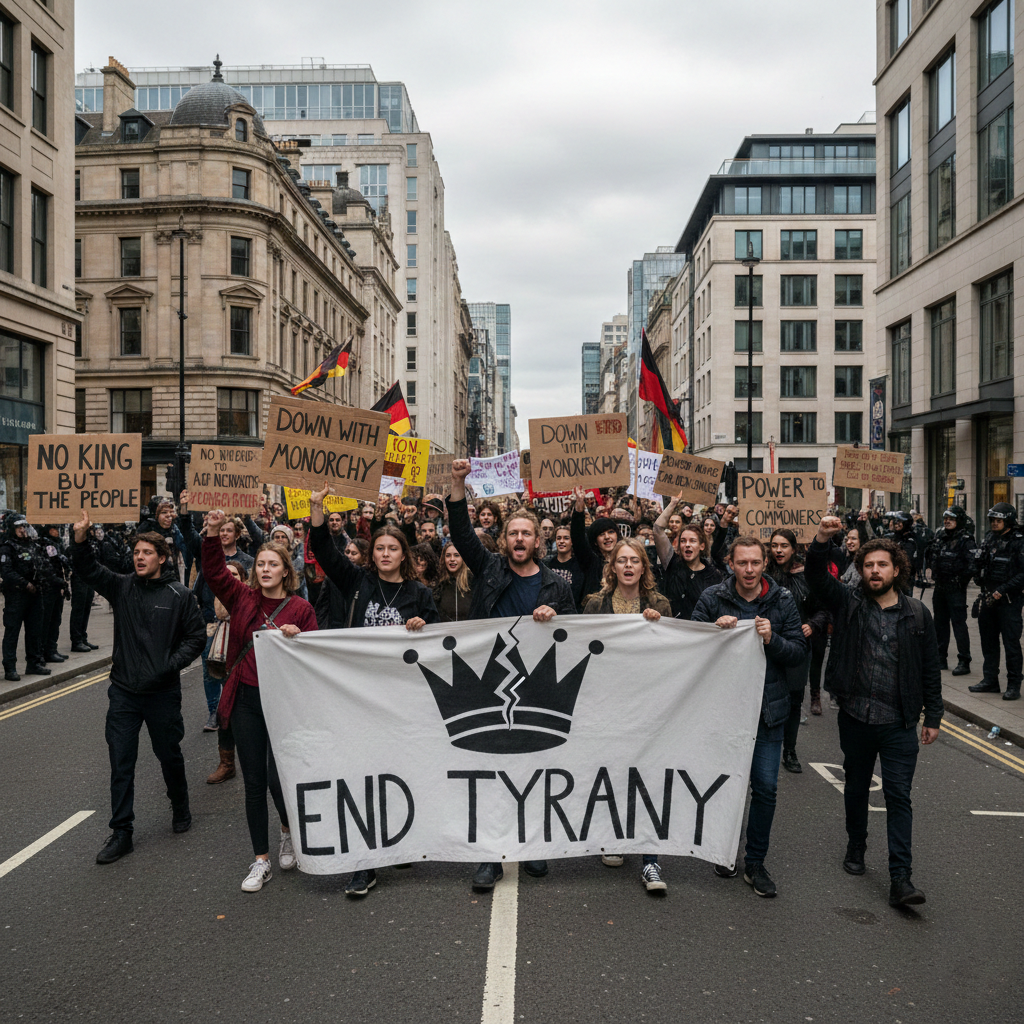
What Is the No Kings Protest?
The No Kings protest emerged as one of the most significant grassroots movements in recent U.S. history — organized demonstrations that drew millions nationwide, directly challenging perceptions of authoritarian power and defending democratic values. What started as a coordinated nationwide day of action evolved into a broader movement opposing policies and rhetoric seen as threatening democratic norms in the United States.
In this article, we’ll explore the origins, goals, scope, and legacy of the No Kings protests, with clear details, key stats, and expert analysis. Whether you’re researching modern civic movements or want to understand the political impact of nationwide protests, this is your go-to resource.
Origins of the No Kings Protest: Democracy Takes the Streets
Why “No Kings”? Meaning Behind the Name
The No Kings slogan was chosen deliberately to highlight the core message of protest: rejecting authoritarian leadership and preserving democratic governance. Organizers argue that equating political leaders to “kings” — who rule by power rather than consent — reflects concerns over perceived abuses of executive authority in contemporary politics.
The name originated from political activists including groups like the 50501 Movement, Indivisible, and other allied organizations who interpreted certain actions and rhetoric from the Trump administration as authoritarian and antithetical to democratic principles.
The No Kings Protest Timeline — Key Events and Scale
June 14, 2025: The First Wave
The first No Kings protests were held on June 14, 2025 — timed to coincide with a major military parade and the president’s birthday. According to historical estimates:
| Event | Date | Estimated Turnout |
|---|---|---|
| Initial No Kings protests | June 14, 2025 | ~5–6 million across the U.S. |
| Second major protests | October 18, 2025 | ~5–7 million across the U.S. |
These protests took place in over 2,000 cities and towns, from major urban hubs to small rural communities.
October 18, 2025: No Kings 2.0
Building on the momentum of June, the movement returned on October 18, 2025 with even larger demonstrations — drawing what organizers and analysts estimated as nearly 7 million participants nationwide.
These large-scale mobilizations made the No Kings protests some of the largest single-day demonstrations in U.S. history, surpassing turnout figures from earlier national marches.
What Did Protesters Stand For? Key Goals & Messages
Core Issues Raised by No Kings Protesters
The movement’s demands and messages focused on several interconnected themes:
- Defense of democratic processes and rejection of authoritarian political behavior.
- Opposition to perceived abuses of power, including military displays and expanded executive authority.
- Protection of civil liberties, including free speech and assembly rights.
- Pushback against policies viewed as harmful to workers, immigrants, and marginalized communities.
Overall, the protests were framed as defending democracy itself, not merely criticizing a single figurehead.
Who Organized the No Kings Protest? A Coalition of Groups
The No Kings movement wasn’t spontaneous — it was a coordinated coalition led by dozens of advocacy organizations, including:
- 50501 Movement (created the name and branding)
- Indivisible
- MoveOn
- American Civil Liberties Union (ACLU)
- American Federation of Teachers
- Communications Workers of America and many others Wikipedia
These groups used both grassroots organizing and national networks to spread awareness, register local rally points, and mobilize volunteers.
👉 For broader context on how movements organize and grow over time, see the news.zone — internal line command for your site’s top news coverage on civic movements.
Where Did No Kings Protests Happen? Nationwide Reach
Unlike protests limited to a few major cities, No Kings events unfolded in:
- Capital cities like Washington, D.C.
- Major urban centers like Chicago, Los Angeles, New York, and Philadelphia
- Smaller towns and regions across states like Idaho, Montana, Michigan, Missouri, and Nebraska
In many states, local organizers registered dozens of events, ensuring that almost every corner of the country saw No Kings activity.
Impact & Legacy: What Changed After No Kings?
Political Awareness and Civic Engagement
The No Kings protests helped shine a spotlight on citizen engagement, encouraging:
- More people to register as voters
- Increased community organizing year-round
- Several smaller advocacy campaigns tackling civil liberties and policy decisions
Political analysts view the movement as a relay race of activism: visible events draw attention, but grassroots efforts sustain long-term engagement.
Policy and Public Debate
While the protests did not directly alter federal policy, they:
- Amplified discussion around executive authority
- Encouraged debates on national media platforms
- Highlighted community concerns about checks and balances
This influence extended into local and state policy discussions as well.
No Kings Protest: Myths vs. Facts
| Myth | Fact |
|---|---|
| It was a violent uprising | Most protests were peaceful and protected by the First Amendment. American Civil Liberties Union |
| “No Kings” means abolish the presidency | The slogan is symbolic — protesting perceived authoritarian tendencies, not abolishing democratic institutions. Encyclopedia Britannica |
| Only young activists participated | Protesters spanned age groups and political backgrounds. PBS |
Frequently Asked Questions (FAQs)
What does “No Kings” in No Kings protest mean?
The phrase rejects the idea that any leader should hold unchecked power, emphasizing democratic rule and citizens’ rights over authoritarian control. Encyclopedia Britannica
How many people took part in the No Kings protests?
Estimates suggest around 5–6 million attendees during the first nationwide protests in June 2025 and nearly 7 million in October 2025
Were the protests peaceful?
Yes — the vast majority were peaceful demonstrations exercising freedom of speech and assembly.
Did the No Kings protest affect U.S. policy?
While it didn’t directly change legislation, it influenced public discourse and increased civic engagement on issues of executive authority and democratic norms.
Can protests like No Kings happen outside the U.S.?
Similar movements inspired by No Kings have appeared in other countries, often with localized themes like “No Tyrants” in nations with monarchy or authoritarian concerns.
For more related updates on civic movements and political engagement, check out thenews.zone — internal link to relevant topical coverage.
Conclusion: Why the No Kings Protest Matters
The No Kings protest was more than a series of rallies — it was a nationwide expression of democratic activism and civic engagement. By bringing millions into the streets, the movement reminded people of the power they hold when organized around shared values like democracy, accountability, and freedom.
Whether you support its goals or simply want to understand modern civic dynamics, the No Kings protests offer a meaningful case study in how citizens can mobilize on a massive scale.
👉 Join the conversation: Visit thenews.zone for more insights on civic movements and what’s next for democracy.
