

What Are Tariffs and Why Do They Matter?
Tariffs are one of the most powerful tools used in global trade and economic policy. Whether you realize it or not, tariffs affect the price you pay for everyday goods—from smartphones and cars to food and clothing. Governments use tariffs to protect domestic industries, control imports, generate revenue, and sometimes apply political pressure on other nations.
In today’s interconnected global economy, tariffs are no longer just about taxes on imports—they influence inflation, employment, trade relations, and even international diplomacy. Understanding how tariffs work is essential for students, business owners, investors, and everyday consumers.
In this in-depth guide, you’ll learn the true meaning of tariffs, their types, real-world examples, pros and cons, and how they shape the global economy—explained clearly and simply.
Understanding Tariffs in Simple Words
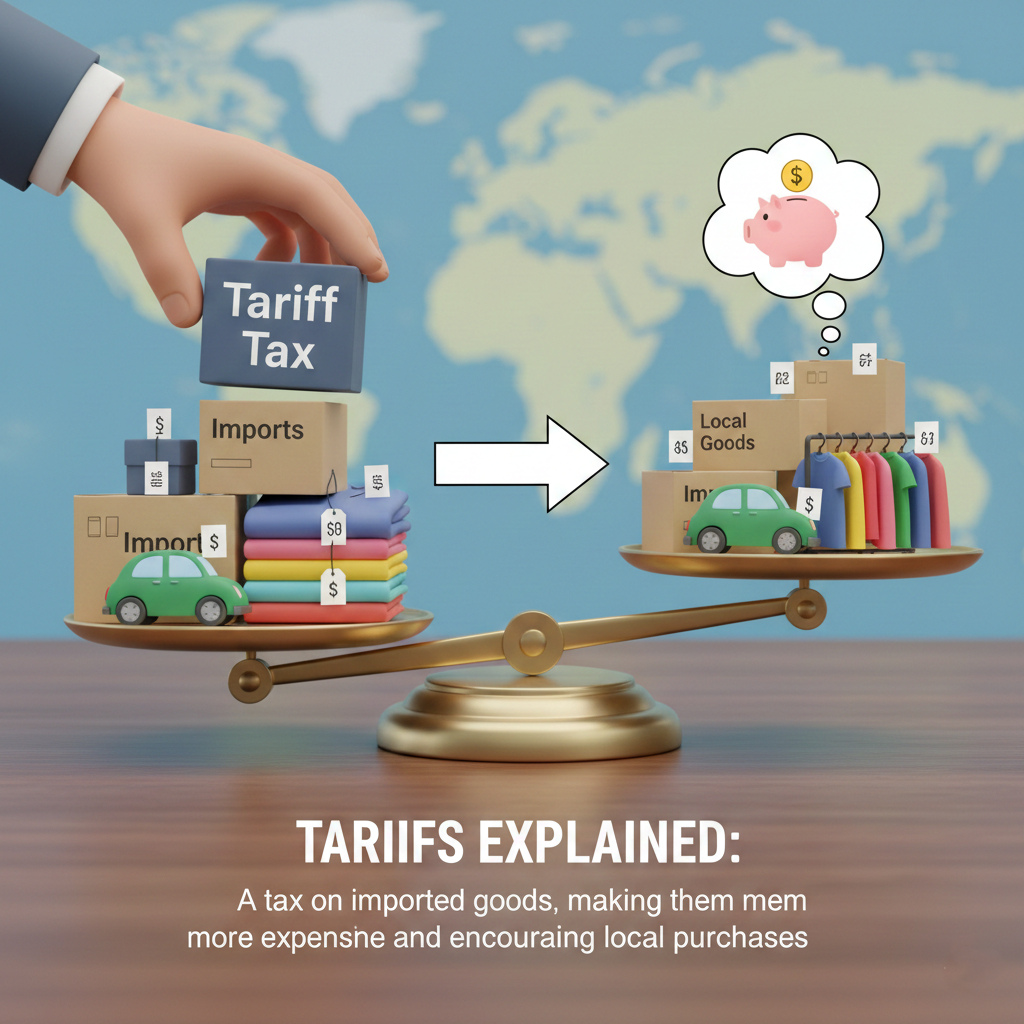
A tariff is a tax imposed by a government on goods and services imported from another country. Sometimes, tariffs may also apply to exports, though this is less common.
Basic Definition of Tariffs
- A government-imposed tax on imported goods
- Paid by importers at the border
- Often passed on to consumers through higher prices
Why Governments Use Tariffs
- To protect domestic industries
- To reduce trade deficits
- To generate government revenue
- To respond to unfair trade practices
Tariffs are regulated internationally through organizations like the World Trade Organization (WTO) to prevent misuse and trade wars.
Outbound reference: https://www.wto.org
How Tariffs Work in Real Life
When a product enters a country, customs authorities assess its value and apply a tariff based on a predefined rate.
Example of a Tariff in Action
If a country imposes a 20% tariff on imported shoes:
- Import price of shoes: $100
- Tariff applied: $20
- Total cost to importer: $120
- Final consumer price may rise to $130–$150
This price increase often encourages consumers to buy locally made products instead.
Major Types of Tariffs Explained
Different tariffs serve different economic purposes. Below are the most common types used worldwide.
Ad Valorem Tariffs (Value-Based Tariffs)
These tariffs are charged as a percentage of the product’s value.
- Example: 10% tariff on imported electronics
- Most commonly used tariff type
- Adjusts automatically with price changes
Specific Tariffs (Fixed-Rate Tariffs)
A fixed amount is charged per unit of goods.
- Example: $5 per kg of sugar
- Simple to calculate
- Does not adjust for inflation
Compound Tariffs
A combination of ad valorem and specific tariffs.
- Example: 5% of value + $2 per unit
- Used for sensitive goods
Protective Tariffs
Designed to protect domestic industries from foreign competition.
- Common in agriculture and manufacturing
- Helps local businesses survive
Revenue Tariffs
Main purpose is to generate government income.
- Common in developing economies
- Applied to non-essential imports
Tariffs vs Taxes: Key Differences
| Aspect | Tariffs | Taxes |
|---|---|---|
| Applied On | Imported/Exported Goods | Income, sales, property |
| Collected At | Border or customs | Domestic transactions |
| Purpose | Trade control & protection | Revenue & redistribution |
| Impact | Affects global trade | Affects domestic economy |
Advantages of Tariffs
Tariffs are often controversial, but they do offer certain benefits.
Protection of Domestic Industries
- Helps local businesses compete
- Prevents dumping of cheap foreign goods
- Encourages domestic production
Employment Generation
- Increased demand for local goods
- Supports manufacturing jobs
Government Revenue
- Important income source for developing countries
- Reduces reliance on direct taxes
National Security
- Protects strategic industries like defense and energy
Disadvantages of Tariffs
Despite their benefits, tariffs can create serious economic challenges.
Higher Prices for Consumers
- Imported goods become expensive
- Inflationary pressure increases
Trade Wars
- Retaliatory tariffs by other countries
- Reduces global trade volume
Limited Consumer Choice
- Fewer imported options available
- Reduced quality competition
Inefficiency in Domestic Industries
- Less incentive to innovate
- Overdependence on protection
The World Bank has repeatedly warned that excessive tariffs can slow economic growth.
Outbound reference: https://www.worldbank.org
Impact of Tariffs on the Economy
Consumers
- Pay higher prices
- Reduced purchasing power
Businesses
- Import-dependent companies face higher costs
- Exporters may suffer from retaliation
Government
- Short-term revenue gain
- Long-term economic distortions
Effect on Inflation
lead to cost-push inflation, especially in essential goods like fuel and food.
Tariffs and Global Trade Relations
closely linked to diplomacy and international relations.
Trade Agreements and Tariffs
Countries sign trade agreements to reduce or eliminate tariffs.
- Free Trade Agreements (FTAs)
- Regional Trade Agreements (RTAs)
- Bilateral and multilateral treaties
Role of WTO in Tariff Regulation
- Sets tariff ceilings (bound tariffs)
- Resolves trade disputes
- Promotes free and fair trade
Tariffs in Developing vs Developed Countries
Developing Countries
- Use tariffs for revenue
- Protect infant industries
- Limited domestic competition
Developed Countries
- Use targeted tariffs
- Focus on strategic sectors
- More emphasis on free trade
Tariffs vs Quotas: A Clear Comparison
| Feature | Tariffs | Quotas |
|---|---|---|
| Nature | Tax-based | Quantity-based |
| Revenue | Generates income | No revenue |
| Flexibility | Price adjusts | Quantity fixed |
| Trade Impact | Gradual | Immediate restriction |
Real-World Examples of Tariffs
US–China Trade Tariffs
- Increased costs for electronics and machinery
- Global supply chain disruption
Agricultural Tariffs
- High tariffs on dairy and grains
- Protects farmers but raises food prices
Automobile Tariffs
- Protects domestic carmakers
- Raises vehicle costs for consumers
How Tariffs Affect Common People
Tariffs are not just economic tools—they impact daily life.
- Higher grocery bills
- Expensive electronics
- Reduced job opportunities in export sectors
For detailed economic insights, visit thenews.zone for regular updates and expert analysis.
Internal link: thenews.zone
Tariffs and Inflation: The Hidden Connection
Tariffs increase production costs, which businesses pass on to consumers. This leads to:
- Rising cost of living
- Lower real income
- Increased wage pressure
Economists often debate whether tariffs are worth the inflation risk.
Future of Tariffs in a Globalized World
With digital trade, e-commerce, and global supply chains, the role of tariffs is evolving.
Emerging Trends
- Digital service taxes
- Carbon border tariffs
- Strategic trade restrictions
Countries are shifting from blanket tariffs to sector-specific trade policies.
Frequently Asked Questions (FAQs)
What is the main purpose of tariffs?
Tariffs are used to protect domestic industries, generate revenue, and regulate international trade.
Who actually pays tariffs?
Importers pay tariffs initially, but the cost is usually passed on to consumers.
Are tariffs good or bad for the economy?
Tariffs can help in the short term but may harm long-term economic growth if overused.
Do tariffs reduce imports?
Yes, tariffs generally reduce imports by making foreign goods more expensive.
Can tariffs cause trade wars?
Yes, retaliatory tariffs between countries often lead to trade wars.
For global trade rules and tariff data, refer to the WTO official portal: https://www.wto.org
Conclusion: Are Tariffs Necessary or Harmful?
Tariffs are a double-edged sword. When used wisely, they can protect domestic industries, support jobs, and strengthen national security. When misused, they increase prices, reduce competition, and trigger trade conflicts.
In a rapidly globalizing world, balanced trade policies—not excessive tariffs—are the key to sustainable economic growth. Policymakers must carefully weigh short-term gains against long-term consequences.
👉 Stay informed on global economics, trade policies, and breaking news—visit thenews.zone today and explore expert insights that matter.
