

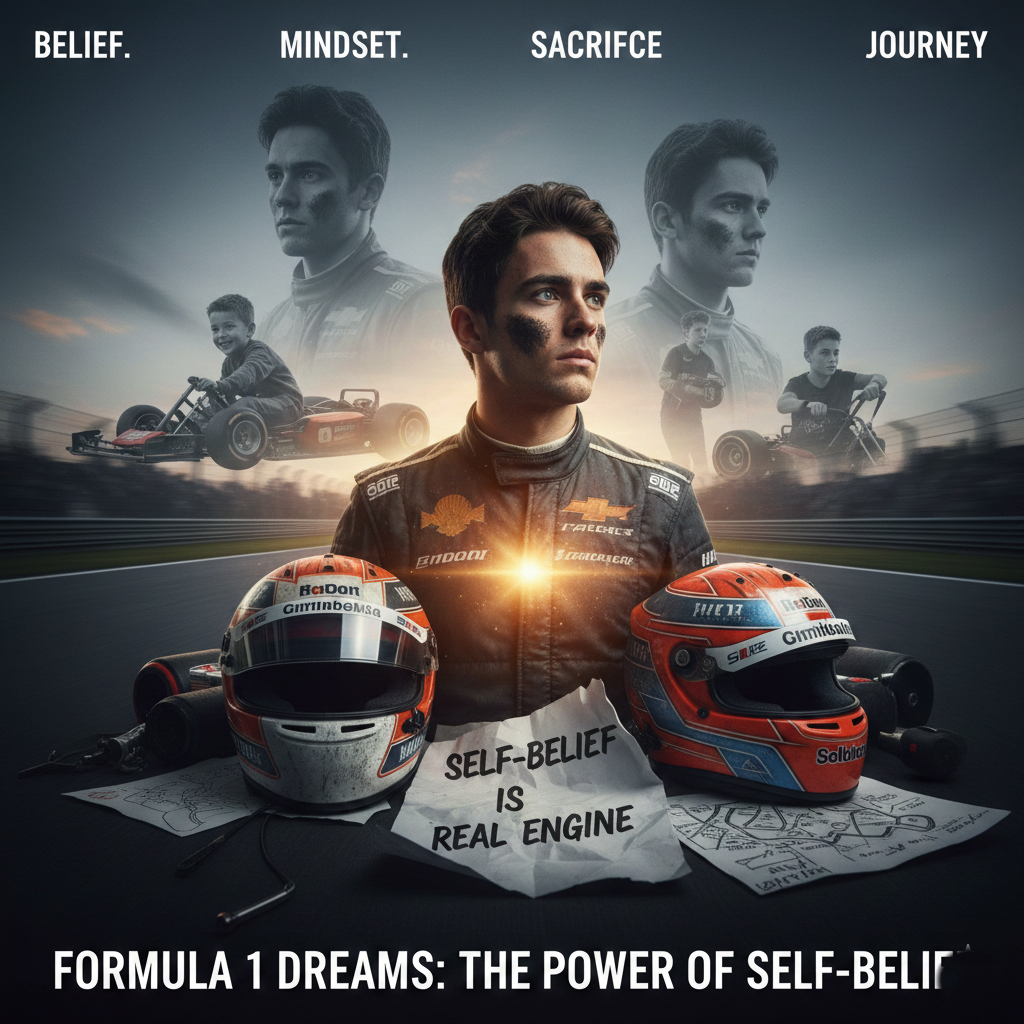
Belief Is Where Every Formula 1 Journey Begins
“I always believed I could be in F1 when I started this journey” is more than just a statement—it’s a mindset that has shaped the careers of almost every Formula 1 driver who has ever made it to the grid.
Long before the podiums, the champagne, and the global fame, Formula 1 champions start with belief. Not trophies. sponsors. massive budgets. Just an unshakable conviction that they belong at the highest level of motorsport.
Formula 1 is one of the most competitive sports on the planet. Out of millions of aspiring racers worldwide, only 20 drivers earn a seat each season. Yet, those who succeed often share one common trait: they believed in their F1 future long before the world did.
In this article, we explore how belief fuels the Formula 1 journey, the real path to F1, the sacrifices involved, and why mindset is just as important as raw speed.
The Power of Belief in Formula 1 Success
Why belief matters more than talent alone
Talent is essential in Formula 1—but talent without belief rarely survives the grind. The road to F1 is brutal, expensive, and emotionally exhausting.
Belief helps drivers:
- Push through repeated failures
- Handle pressure from teams and media
- Stay focused despite financial struggles
- Keep improving when results don’t come
Many former drivers have admitted that mental strength separates those who reach F1 from those who don’t.
According to sports psychology studies, elite athletes with strong self-belief show:
- 20–30% higher resilience under pressure
- Faster recovery from failure
- Better long-term performance consistency
Belief doesn’t replace skill—it amplifies it.
From Karting to Formula 1: Where the Journey Really Starts
Karting: the birthplace of F1 dreams
Almost every Formula 1 driver begins in karting, often as young as 4–7 years old. This is where belief first forms.
Karting teaches:
- Racecraft and wheel-to-wheel fighting
- Track awareness
- Mental toughness at a young age
Drivers like Lewis Hamilton, Max Verstappen, Sebastian Vettel, and Fernando Alonso all dominated karting before moving up.
👉 Learn more about the official motorsport ladder on the FIA website:
https://www.fia.com
The Formula Racing Ladder Explained
The structured path to Formula 1
Reaching F1 isn’t luck—it follows a structured motorsport pyramid.
| Level | Championship | Typical Age |
|---|---|---|
| Entry | Karting | 6–15 |
| Junior | Formula 4 (F4) | 15–17 |
| Development | Formula 3 (F3) | 17–19 |
| Elite Feeder | Formula 2 (F2) | 18–22 |
| Pinnacle | Formula 1 | 18+ |
Each level filters out hundreds of drivers. Only those with skill, funding, and belief move forward.
For more motorsport insights and driver stories, visit thenews.zone for in-depth coverage and analysis.
“I Believed I Belonged Here” – Lessons from F1 Drivers
Lewis Hamilton: belief against all odds
Lewis Hamilton grew up without wealth, connections, or privilege. Yet he famously told McLaren boss Ron Dennis at age 10:
“One day I want to race for you in Formula 1.”
Years later, he became a seven-time World Champion.
His story proves that belief can:
- Break social and financial barriers
- Outlast rejection
- Turn dreams into data-backed performance
Official driver profiles can be found on Formula1.com:
https://www.formula1.com
Max Verstappen: confidence built from childhood
Max Verstappen’s belief was shaped early through intense training and discipline. By 17, he became the youngest F1 driver ever.
His confidence wasn’t arrogance—it was preparation meeting opportunity.
Key takeaway:
- Belief grows faster when backed by discipline and hard work
The Mental Game: Formula 1 Is a Psychological Sport
Pressure, fear, and self-doubt
At 300 km/h, fear is natural. What separates F1 drivers is how they manage it.
Common mental challenges include:
- Performance anxiety
- Media scrutiny
- Team politics
- Constant risk of replacement
Drivers work with:
- Sports psychologists
- Performance coaches
- Simulation training
Belief helps drivers stay calm under pressure and deliver when it matters most.
Financial Reality: The Cost of Chasing Formula 1
Why belief alone is not enough—but still essential
Racing is expensive. Very expensive.
Approximate costs:
- Karting career: ₹25–50 lakh
- Formula 4 season: ₹1–2 crore
- Formula 3 season: ₹6–8 crore
- Formula 2 season: ₹15–20 crore
Most drivers rely on:
- Sponsorships
- Driver academies
- Personal investors
Yet sponsors invest in drivers who believe in themselves—confidence sells potential.
For motorsport economics and industry insights, explore related articles on thenews.zone.
Talent vs Belief: Which Matters More in Formula 1?
A realistic comparison
| Factor | Talent | Belief |
|---|---|---|
| Raw speed | ✅ High | ❌ |
| Consistency | ⚠️ Medium | ✅ High |
| Pressure handling | ⚠️ | ✅ |
| Career longevity | ❌ | ✅ |
| Leadership | ⚠️ | ✅ |
The truth?
Talent opens the door. Belief keeps it open.
Why Most F1 Dreams Fail—and Why Some Succeed
Common reasons drivers quit
- Lack of funding
- Mental burnout
- Loss of confidence
- No long-term plan
Why successful drivers keep going
- Clear goals
- Strong belief system
- Support teams
- Ability to learn from failure
Every F1 driver has failed more times than they’ve won. Belief decides whether failure ends the journey—or fuels it.
How Aspiring Drivers Can Build F1-Level Belief
Practical mindset strategies
- Visualize success daily
- Study past champions
- Set short-term achievable goals
- Train mental fitness like physical fitness
- Surround yourself with believers
Belief is not blind optimism—it’s earned confidence built through preparation.
FAQs: Formula 1 Dreams and Reality
Can anyone become a Formula 1 driver?
Technically yes, but realistically it requires talent, funding, opportunity, and extreme dedication.
Is belief really that important in F1?
Yes. Almost every F1 driver credits mindset as critical to survival and success.
What age is too late to start F1?
Starting karting after 12 makes F1 extremely difficult, but motorsport careers still exist beyond F1.
Do all F1 drivers come from wealthy families?
No. Many come from modest backgrounds but rely on academies and sponsors.
Where can I read more real F1 stories and analysis?
Visit thenews.zone for detailed motorsport features and human-interest stories.
Conclusion: Belief Is the First Victory in Formula 1
“I always believed I could be in F1 when I started this journey” is not just a reflection—it’s a roadmap.
Formula 1 rewards speed, intelligence, and precision—but above all, it rewards those who refuse to quit. Belief doesn’t guarantee success, but without it, success is impossible.
Whether you’re an aspiring racer, a sports enthusiast, or someone chasing an ambitious dream, the lesson from Formula 1 is universal:
Believe first. Work relentlessly. Let results follow.
👉 For more powerful sports journeys, expert insights, and inspiring stories, explore thenews.zone today.
Your journey starts with belief. What’s stopping you? 🚀
