

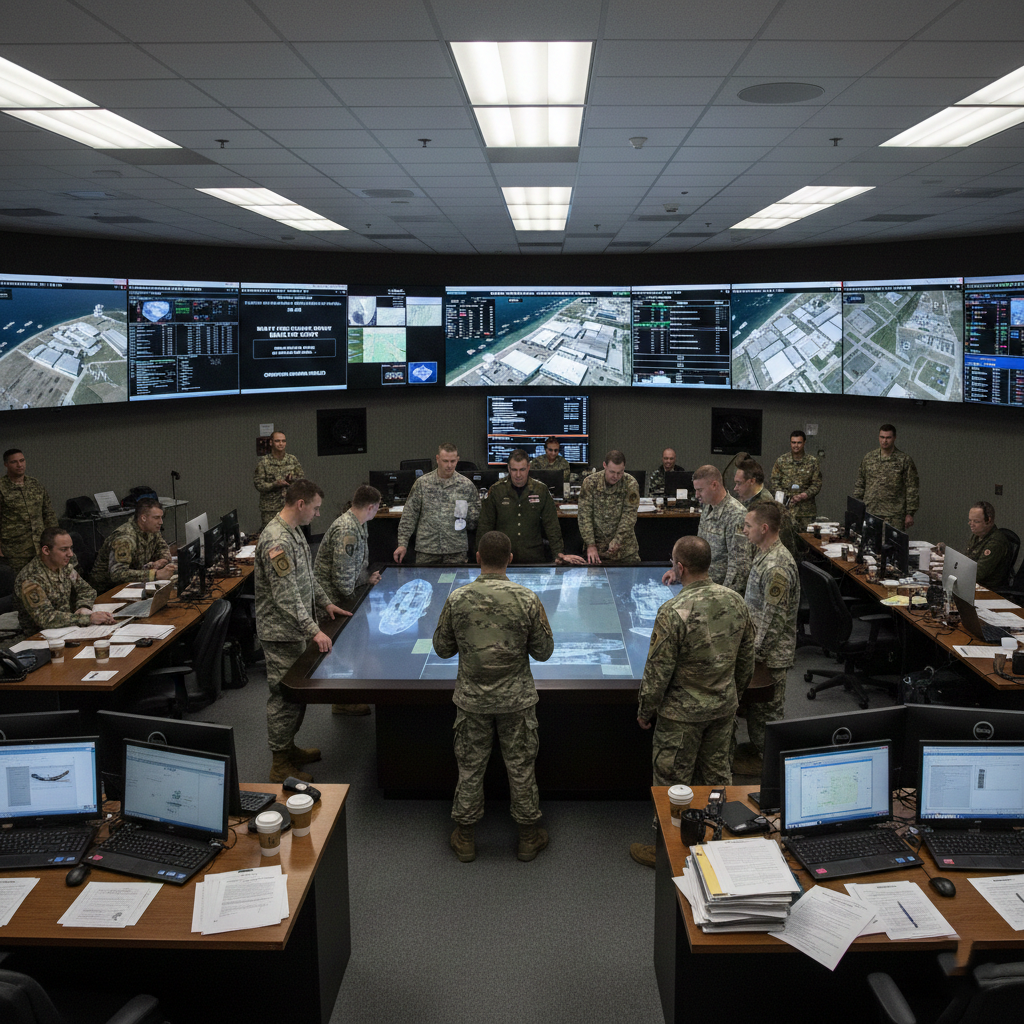
US military operations this fall have triggered one of the most serious controversies the Pentagon has faced in years. What began as targeted strikes on suspected narcotics‑trafficking vessels morphed into a crisis of legality, public outrage, and a desperate scramble inside Washington to manage the fallout.
This article walks through what happened, why it matters, how the Pentagon responded, and what’s at stake — from law, ethics, to global reputation.
⚠️ What Happened: Boat Strike and the Deadly “Follow‑up”
- On September 2, 2025, US forces struck a boat in the Caribbean Sea suspected of carrying illicit drugs. The vessel was destroyed.
- After the strike, surveillance reportedly showed survivors in the water, clinging to remnants of the wrecked vessel and apparently unarmed.
- Despite that, US forces carried out a second strike — killing those survivors, sinking the wreckage.
- According to Pentagon sources, the rationale offered privately was to “sink the vessel” so it would not pose a hazard or be recovered — but the legal and moral implications sparked immediate backlash.
- The overall campaign: since early September 2025, more than 20 boat‑strikes have occurred, killing dozens. At least some boats produced survivors — creating repeated dilemmas.
In short: what began as strike‑and‑destroy operations turned into a series of deadly engagements that involved killing people in the water — survivors from the first strike.
🧨 Why It Sparked Outrage: Legal & Ethical Questions
This incident has triggered severe criticism and questions — from lawmakers, human‑rights groups, military legal experts and media alike — because:
- International law forbids targeting shipwreck survivors or incapacitated individuals once combat has ended.
- Critics say the “double‑tap” strike — hitting people who were unarmed and possibly signalling distress — violates humanitarian/military law and basic ethics.
- Whether the survivors posed any immediate threat — or at any point attempted violence — remains unclear. Video reportedly shown to Congress shows them “clinging” and “waving” rather than attacking.
- The operation blurs the line between law enforcement (drug interdiction) and wartime combat, raising concerns about misuse of military force.
For many observers, the incident isn’t just a tragic mistake — it calls into question the legality of a broader policy that treats suspected drug‑trafficking vessels as combatants worthy of lethal force in peacetime seas.
🏛️ The Panic and Pushback Inside the Pentagon & Congress
The strike and its aftermath triggered an urgent scramble within the Pentagon and among US lawmakers:
- Senior US military officials briefed Congress behind closed doors about the strike. Some lawmakers were reportedly shown drone/video footage of the second strike.
- During the briefings, key questions arose — who ordered the second strike, and whether there was an explicit “kill‑all” or “no‑survivor” order.
- The commander at the centre, Frank M. Bradley, has reportedly told lawmakers there was no explicit “kill‑all” order from the topmost leadership.
- But many opponents — including across party lines — find the explanation inadequate. Credibility of the chain-of-command, rules of engagement, and legal justifications are under intense scrutiny.
- Civil‑rights groups have filed lawsuits demanding the release of classified memos justifying the strikes — arguing the public deserves to know the legal reasoning behind use of lethal force at sea.
Inside the Pentagon, senior officers reportedly fear this could damage US credibility and complicate future operations — especially if more strikes lead to visible civilian casualties.
🔎 What the Pentagon Is Trying to Do Right Now
Facing mounting pressure, the Pentagon is acting on several fronts:
- It has acknowledged the strike and presented evidence privately to Congress — but has refused a public release of the full video or legal memos, citing operational security.
- Officials are defending the policy by framing the operations as part of a broader “armed conflict” against narcotics or “narco‑terror” groups, to fit legal frameworks that allow use of force.
- The chain-of-command — including Secretary of Defense Pete Hegseth — has publicly defended the operations as lawful and necessary to curb drug trafficking toward the US.
- Internally, senior military leaders are reportedly debating stricter engagement rules and better after‑action procedures. Some even speculate the need for policy review to avoid international backlash and possible legal consequences.
Still, no full resolution — or public accountability — has emerged so far.
🌐 What’s at Stake: Legal Precedent, International Norms & Global Image
The controversy has major implications — beyond just politics and media attention:
- If legal challenges succeed, it could limit future use of lethal force at sea under drug‑interdiction pretexts — forcing the US to rely more on law-enforcement, not wartime-style operations.
- Allies and international observers are watching closely. Other nations may use this as precedent for condemning strikes, or revising maritime law enforcement norms.
- For the US military, this may mean increased scrutiny, tighter rules of engagement, and more oversight — affecting flexibility and speed of operations.
- The reputational damage — among both foreign populations and domestic audiences — could reduce public support for aggressive maritime interventions.
- Most importantly: it raises questions about human rights and accountability — even in war on drugs, innocent lives or survivors cannot be treated as “collateral” by default.
📄 The Key Legal & Moral Questions
- Were the survivors genuine combatants or incapacitated civilians? — The footage reportedly shows them unarmed and attempting to cling to wreckage.
- Was the second strike legally justified? — Under international humanitarian law and U.S. military law-of-war manuals, targeting shipwreck survivors is typically prohibited.
- Was due process possible? — Could the survivors have been apprehended instead of killed? Given available naval assets, critics argue yes.
- Is drug trafficking equivalent to armed conflict? — The administration classifies it as “narco-terror,” but many experts dispute whether that meets the threshold for wartime force.
- Who bears responsibility — the person giving the order or the executors? — If orders came from high-level leadership, legal and moral accountability may extend to top officials.
🧭 What to Watch Next
- Calls for public release of full video evidence — If released, public reaction could surge.
- Possible lawsuits and legal investigations — Civil‑rights groups have already filed; international human‑rights bodies may also get involved.
- Congressional hearings or new oversight legislation — As lawmakers seek clarity, future military operations may be limited or more strictly regulated.
- Policy revisions inside Pentagon — Rules‑of‑engagement may be tightened; “no‑survivor” orders could be banned.
- Global diplomatic fallout — Countries in Latin America and beyond may condemn or reassess cooperation with U.S. maritime operations.
📝 Conclusion
The Pentagon’s decision to strike — and then strike again — at survivors of a boat wreck has opened a Pandora’s box. What was billed as an aggressive campaign against narcotics trafficking is being questioned as a dangerous precedent: lethal force used in peacetime seas, against unarmed survivors, without public oversight or transparency.
As U.S. leadership scrambles to justify, defend, and contain the damage, the broader consequences loom large — for human rights, international law, military doctrine, and America’s global standing.
In the end, the boat‑strike saga may be remembered not just for its casualties, but as a test of whether powerful nations can wield force responsibly — even against those they suspect are enemies.
