

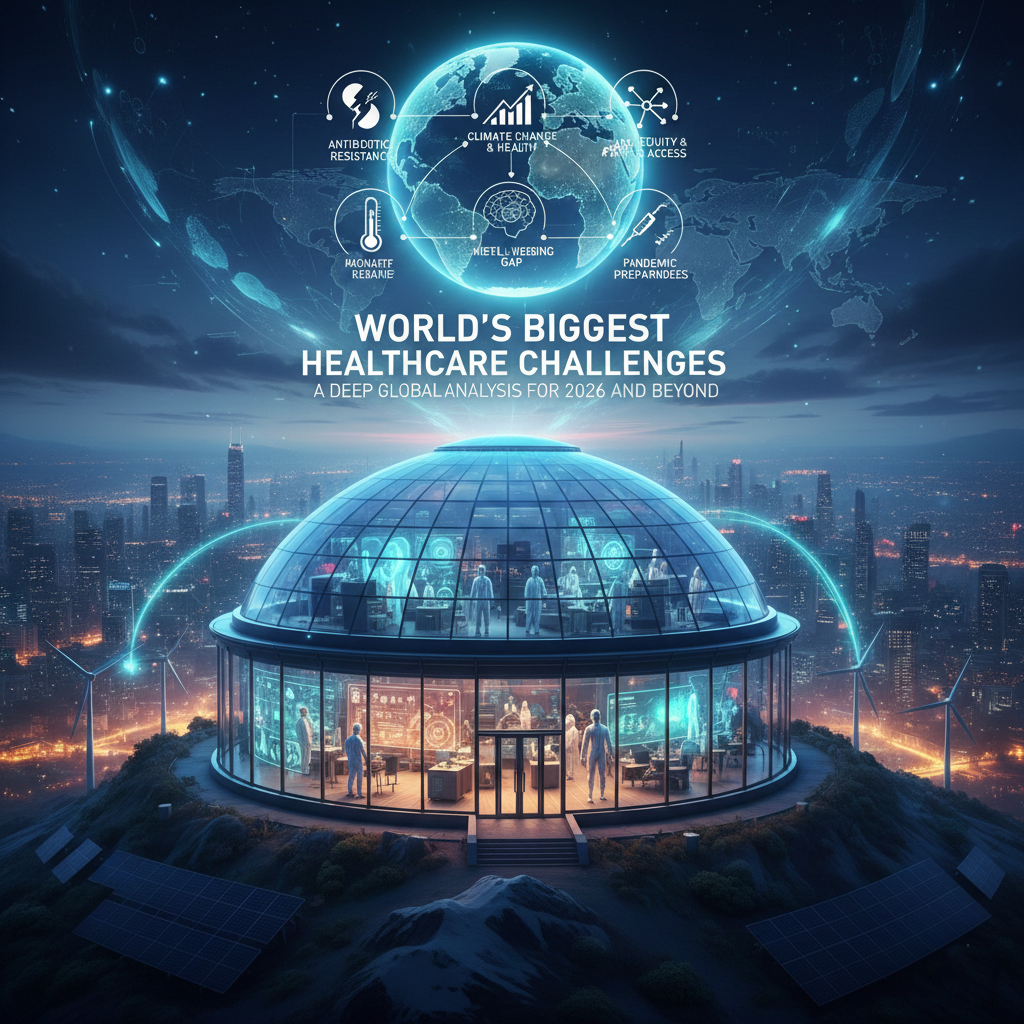
Healthcare is the backbone of every nation’s development, stability, and human well-being. Yet, in 2026, the world continues to face enormous healthcare challenges — many of them growing faster than systems can handle. From rising chronic diseases and aging populations to global pandemics, inequality, mental health crises, and technology disruptions, the global healthcare ecosystem is under unprecedented pressure.
This long-form analysis explores the biggest healthcare challenges the world faces today, why they exist, and how nations can overcome them. Whether you are a student, researcher, policymaker, healthcare worker, or someone who wants to understand the future of global health, this deep-dive blog provides a complete picture of the problems shaping the next decade.
🌍 1. Aging Populations and the Global Longevity Crisis
One of the most critical challenges affecting both developed and developing nations is the rapid rise in elderly populations.
Countries most affected:
- Japan
- South Korea
- China
- Italy
- Germany
- United Kingdom
- United States
Why it’s happening:
- Longer life expectancy
- Falling birth rates
- Decline in young workforce
Key impacts:
- Massive pressure on public healthcare
- Shortage of caregivers
- Rising cases of Alzheimer’s and dementia
- Higher cost of long-term care
- Reduced economic productivity
By 2030, the UN predicts 1 in 6 humans will be over the age of 60.
This shift will redefine healthcare needs globally.
🧠 2. Mental Health Crisis: Depression & Anxiety at Record Highs
Mental health disorders are now among the leading causes of disability worldwide.
Why the crisis is exploding:
- Social media mental fatigue
- Overwork and burnout
- Economic instability
- Isolation
- Climate anxiety
- Rising substance abuse
Most affected groups:
- Teenagers
- Young adults
- Working professionals
- Elderly living alone
Challenges for governments:
- Shortage of psychiatrists and mental health professionals
- Low public awareness
- Cultural stigma in many regions
- Limited insurance coverage
Mental health is no longer a silent epidemic — it is a public health emergency that demands global action.
🦠 3. Infectious Diseases & Pandemic Preparedness
COVID-19 exposed the world’s inability to handle global pandemics.
But despite lessons learned, pandemic readiness remains insufficient.
Top infectious disease threats today:
- New influenza strains
- Drug-resistant tuberculosis
- Mosquito-borne diseases (Dengue, Zika, Malaria)
- Ebola & Marburg outbreaks
- Respiratory viruses
- Unknown pathogens (“Disease X”)
Major challenges:
- Weak health systems in low-income countries
- Unequal vaccine distribution
- Shortage of medical supplies
- Slow global coordination
- Growing antimicrobial resistance
The risk of another global pandemic remains high due to climate change, increased travel, and urban density.
⚕️ 4. Shortage of Healthcare Workers
More than 40 million additional healthcare workers will be needed worldwide by 2035.
Reasons for the shortage:
- Aging workforce
- Burnout after COVID-19
- Low salaries in many countries
- Poor working conditions
- Migration of doctors/nurses to richer nations
Worst-affected regions:
- Africa
- South Asia
- Latin America
- Rural areas worldwide
No healthcare system can function without a strong workforce — this shortage threatens global health security.
🧬 5. Rise of Chronic Diseases: A Global Lifestyle Epidemic
Chronic illnesses are now the leading cause of death globally.
Top chronic diseases:
- Heart disease
- Cancer
- Diabetes
- Hypertension
- Obesity-related disorders
- Chronic kidney disease
Why chronic diseases are increasing:
- Sedentary lifestyles
- Ultra-processed food consumption
- Pollution and toxins
- Stress
- Urbanization
- Lack of preventive healthcare
Economic impact:
Chronic diseases may cost the world over $30 trillion by 2030.
This is one of the most expensive healthcare challenges in human history.
🧫 6. Antimicrobial Resistance (AMR): The Silent Global Threat
Antibiotic resistance is one of the most dangerous health threats ever faced by humanity.
Why AMR is rising:
- Overuse of antibiotics
- Misuse in livestock
- Lack of new antibiotic research
- Global travel spreading resistant strains
Deadly consequences:
- Common infections becoming untreatable
- Higher medical costs
- Increased mortality
- More complicated surgeries and childbirth
- Resistant viruses and bacteria spreading faster
Scientists warn that AMR may cause 10 million deaths per year by 2050 if not addressed.
🌡️ 7. Climate Change and Health Emergencies
Climate change is reshaping global healthcare patterns.
Health impacts of climate change:
- Heat-related deaths
- Water-borne diseases
- Increase in respiratory illnesses
- Malnutrition due to crop failure
- Vector-borne disease expansion
- Natural disasters causing injury and displacement
Most vulnerable regions:
- Small island nations
- Africa
- South Asia
- Latin America
Climate-health links are becoming stronger each year, making climate action essential for future public health.
💰 8. Healthcare Inequality: A Widening Global Gap
Even as medical technology advances rapidly, inequality continues to grow.
Key inequality indicators:
- Access to hospitals
- Maternal and child health
- Cancer screening rates
- Life expectancy differences
- Lack of insurance
- Urban vs. rural healthcare divisions
Global facts:
- Over 50% of the world lacks access to essential healthcare
- Billions fall into poverty due to medical expenses
- Developing nations face shortage of even basic medicines
Health inequality is one of the biggest ethical and social challenges of modern times.
🧪 9. High Healthcare Costs Worldwide
Healthcare systems in many countries are becoming too expensive for citizens to afford.
Common reasons:
- Expensive medical treatments
- High price of medicines
- Private hospital dominance
- Insurance premium inflation
- Rising chronic diseases
- Aging populations
Countries facing severe cost burdens:
- United States
- United Kingdom
- Japan
- South Korea
- Brazil
Millions of families face financial hardship due to medical bills each year.
📉 10. Slow Digital Transformation & Fragmented Systems
Despite technological progress, many countries still rely on outdated healthcare systems.
Digital health challenges:
- Poor adoption of Electronic Health Records
- Lack of telemedicine infrastructure
- Weak data security
- No interoperability across hospitals
- Slow regulatory frameworks
Why this matters:
Digital transformation is essential for:
- Faster diagnosis
- Efficient hospital operations
- Reducing medical errors
- Better patient records
- Predictive healthcare using AI
Without digital systems, healthcare efficiency remains low.
🧒 11. Maternal & Child Health Challenges
Maternal and child mortality rates remain high in many developing countries.
Common issues:
- Malnutrition
- Lack of prenatal care
- Early pregnancies
- Inadequate hospital facilities
- Poor sanitation
- Unsafe childbirth practices
Most vulnerable regions:
- Sub-Saharan Africa
- South Asia
Children face a lifetime of disadvantage without proper healthcare early on.
🧪 12. Healthcare Data Security and Privacy Concerns
As digital health grows, so do security challenges.
Major threats:
- Hospital ransomware attacks
- Medical data theft
- AI algorithm misuse
- Data privacy violations
Why it’s dangerous:
Healthcare data is the most sensitive data on earth — breaches can cause irreversible harm.
🧬 13. The Ethical Challenges of AI-Driven Healthcare
AI is transforming diagnostics, treatment planning, and patient monitoring.
But it also raises ethical challenges:
- Bias in AI healthcare models
- Misdiagnosis risks
- Over-reliance on automation
- Inequality in AI access
- Data misuse
The world must regulate AI health systems responsibly.
🌍 What the Future of Global Healthcare Must Look Like
To overcome these challenges, countries must work toward:
✔ Universal healthcare access
✔ Affordable medicines
✔ Stronger pandemic preparedness
✔ Investment in digital health
✔ Expansion of mental health services
✔ Clean-water & sanitation programs
✔ Climate resilience
✔ Training more doctors & nurses
✔ Global cooperation on diseases
✔ Ethical AI regulation
A healthy world requires coordinated action — no country can solve healthcare problems alone.
⭐ Final Thoughts: The World Must Act Now
The world’s biggest healthcare challenges are not just medical — they are economic, social, and global. They impact education, poverty, workforce productivity, and overall development.
But there is hope.
Advances in AI, telemedicine, biotechnology, and digital health can revolutionize healthcare in ways never imagined before. The next decade will decide whether the world becomes healthier or faces deeper crises.
Humanity must choose innovation, collaboration, and compassion to build a healthier future for all.
