

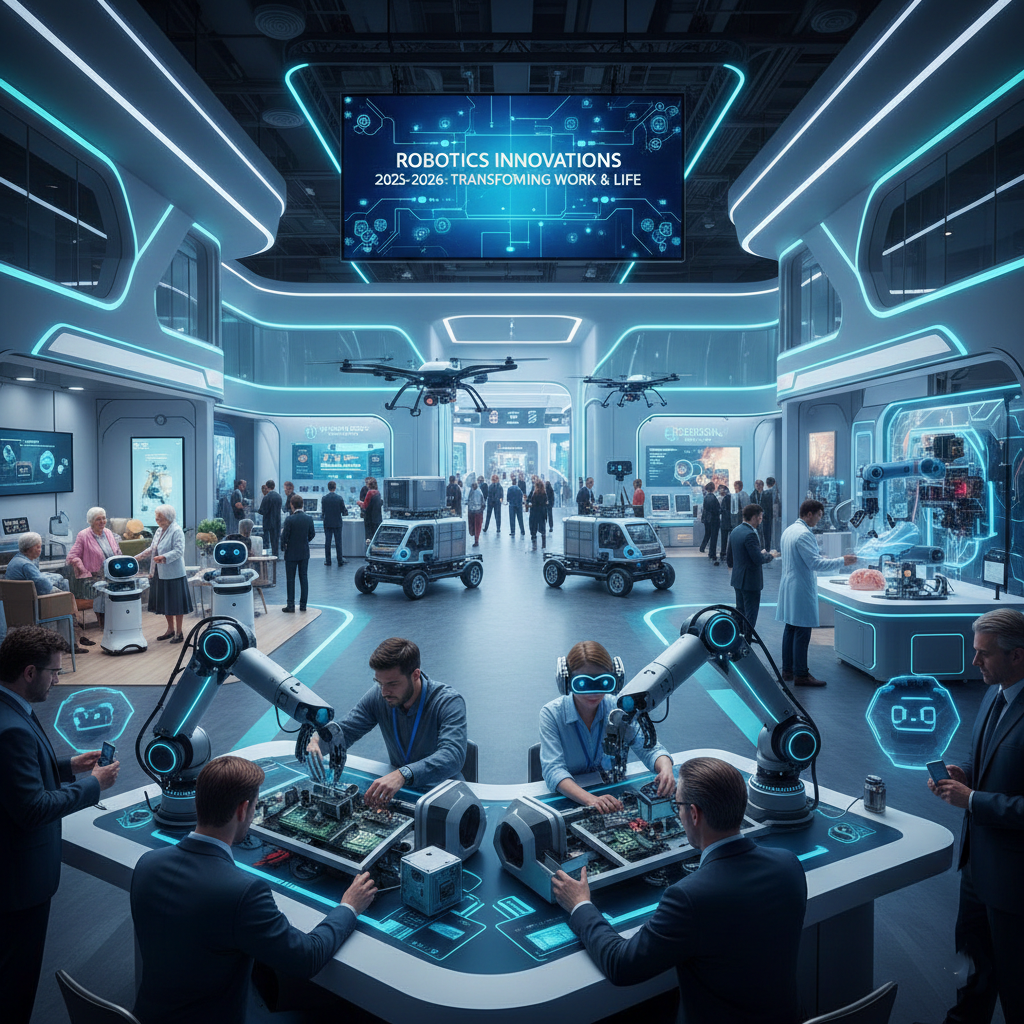
Robotics is no longer a futuristic concept limited to science fiction — it’s now a fast-evolving reality shaping industries, homes, and human interaction. With breakthroughs in artificial intelligence (AI), material science, biohybrid design, and mobile autonomy, robots are advancing faster than ever before. From AI-driven humanoids to smart retail assistants and drone swarms guided by intelligent systems, the robotics landscape in 2025–2026 is packed with innovations that will change how we live and work.
we explore the biggest robotics advancements, real-world applications, global trends, and future prospects, anchored in the most recent developments. Whether you’re a tech enthusiast, investor, policymaker, or curious learner, this guide will help you understand the state of robotics today — and where it’s heading tomorrow.
🧠 1. AI Takes Center Stage in Robotics
A fundamental shift driving robotics today is the integration of advanced artificial intelligence, particularly vision-language-action (VLA) models. These AI models allow robots to understand language, perceive their environment, and act autonomously, making them far more capable than traditional scripted machines. For example, Google DeepMind’s Gemini Robotics series — including on-device variants — enables robots to process and act on complex visual and linguistic information without constant cloud connectivity.
This fusion of AI and robotics is key to creating machines that learn, adapt, and collaborate with humans in dynamic environments, from factories to homes.
🤖 2. Next-Gen Humanoid Robots — Closer to Everyday Life
The dream of humanoid robots resembling human form and flexibility is rapidly materializing:
Figure AI’s New Generations
Figure AI’s humanoid platforms, such as Figure 03, demonstrate significant advancement in perception, mobility, and human-robot interaction. These robots use next-gen sensors and tactile feedback to perform complex tasks, and improvements in hand dexterity and safety features suggest these robots may soon shift from labs to workplaces and homes.
Real-World Demonstrations
Unusual yet telling moments, like the CEO of a Chinese robotics company demonstrating his own robot’s strength in a viral video, underline how quickly these machines are gaining physical capability and public attention — even amid ongoing debates about autonomy versus tele-operation.
South Korea’s Humanoid Alliance
Countries are committing to national initiatives, such as the K-Humanoid Alliance, to accelerate development of robots capable of lifting heavy objects, sporting high agility, and operating at human speeds.
Together, these efforts suggest humanoid robots may soon transition from industrial curiosities to practical helpers across sectors like logistics, manufacturing, construction, retail, and elder care.
🚀 3. Real-World Robotics Applications Across Industries
Retail Robots Enhancing Customer Experience
Major retailers are integrating autonomous robots into store environments. For instance, a leading UK supermarket rolled out robots that roam aisles, interact with shoppers, and offer deals or product guidance. These robots not only assist customers but also collect data for smarter inventory and marketing strategies.
AI and Robotics in Logistics
Amazon continues to push the boundaries of warehouse automation with multi-armed robotic systems and AI tools that speed up sorting, packing, and delivery preparation. This helps reduce processing time and improves order accuracy.
Research and Innovation Hubs
Organizations like GrayMatter Robotics have established large innovation centers to advance robotics research and develop interactive robotic experiences, indicating that investment in robotics infrastructure continues growing.
🧬 4. Biohybrid and Biomimetic Robotics — Learning from Nature
A frontier of robotics research fuses biological components with synthetic parts to create biohybrid robots that possess adaptability and responsiveness resembling living systems. These robots are designed to improve interaction with unpredictable environments and are being explored for applications in environmental monitoring, medical devices, and adaptive manufacturing.
Similarly, biomimetic flying robots like AI-enhanced bionic birds and flying foxes mimic natural flight dynamics while incorporating GPS, high-resolution imaging, and environmental sensing. Such designs improve robotic performance in real-world tasks like infrastructure inspection, data collection, or emergency response.
🕹️ 5. Robot Swarms and Autonomous Systems for Complex Tasks
In military and civilian domains alike, robotics innovation includes swarm robotics — coordinated groups of small robots working together toward shared goals (e.g., disaster response, surveillance, environmental monitoring, or logistics). Defense insiders see futures where a single operator can command swarms of aerial or ground robots with minimal human intervention, significantly enhancing operational scalability and flexibility.
This concept — inspired by natural swarms like bees or ants — may soon deliver new capabilities in contexts from agriculture to emergency services and urban infrastructure.
🧑🔬 6. Robotics in Healthcare & Surgery
Medical robotics continues to make waves. Partnerships like the one between the World Health Organization and the Society of Robotic Surgery aim to expand access to virtual care and telesurgery, potentially transforming global healthcare delivery and surgical precision.
Advanced surgical robots assist surgeons in performing complex procedures with minimal invasiveness and greater precision, while rehabilitation robotics helps patients recover mobility faster with personalized motion assistance and real-time feedback.
🏭 7. Industrial and Collaborative Robotics (Cobots)
Industrial robots have historically dominated manufacturing, but today’s innovations focus on next-generation robots that are smarter, safer, and collaborative:
- Robots now use AI, computer vision, and digital twins to adapt to real-world environments, boosting productivity in automotive, electronics, and aerospace manufacturing.
- Collaborative robots (cobots) are designed to work safely alongside humans without bulky safety cages, making automation accessible to smaller businesses and flexible production setups.
- Emerging warehouse robotics integrate drones, self-calibrating sensors, and private 5G networks to automate inventory, transport, and logistics tasks.
This trend toward flexible, intelligent, and human-friendly robotics marks a shift from fixed factory automation to dynamic, interconnected robotic systems that enhance productivity and workplace safety.
🌾 8. Service and Agricultural Robotics
Beyond factories and homes, robots are increasingly applied in agriculture and service sectors:
- Agricultural robots help farmers with precision tasks like crop monitoring, pest detection, selective spraying, and harvesting — improving yield and sustainability.
- In hospitality and public spaces, service robots greet guests, provide information, deliver services, and assist staff, creating hybrid roles where robots augment human labor rather than replace it.
These applications underscore the versatility of robotic systems across a wide spectrum of everyday life and industry.
🔮 9. Key Robotics Innovation Trends to Watch (2026 and Beyond)
Here are the major trends expected to shape robotics in the coming years:
AI-Driven Physical Intelligence
Robots increasingly mimic cognitive and motor skills through models that blend language, vision, and motion planning — enabling more autonomous, flexible behaviors.
Digital Twins & Smart Environments
Using virtual replicas (digital twins) to simulate and optimize robot behavior in changing environments can dramatically enhance adaptability and reduce downtime.
Human-Robot Collaboration
Human-centric design, safety innovations, and seamless interfaces will define how robots support human workers in shared spaces.
Robots as a Service (RaaS)
Subscription models and service platforms will democratize robotics, making advanced automation viable even for small- and medium-sized businesses.
Regulation and Ethical Standards
As robots become more autonomous and integrated into society, frameworks for safety, liability, and ethical use will be critical — especially in domains like healthcare, transport, and home assistance.
📝 Conclusion: Robotics Is Everywhere — And Just Getting Started
Robotics today is far more than assembly-line arms and scripted machines. With AI integration, smarter perception, adaptive autonomy, and real-world deployment across industries, robotics stands at the forefront of technological transformation. From retail assistants and flying biomimetic drones to medical robotics and humanoid helpers, innovation is rapidly changing how humans and machines collaborate.
