

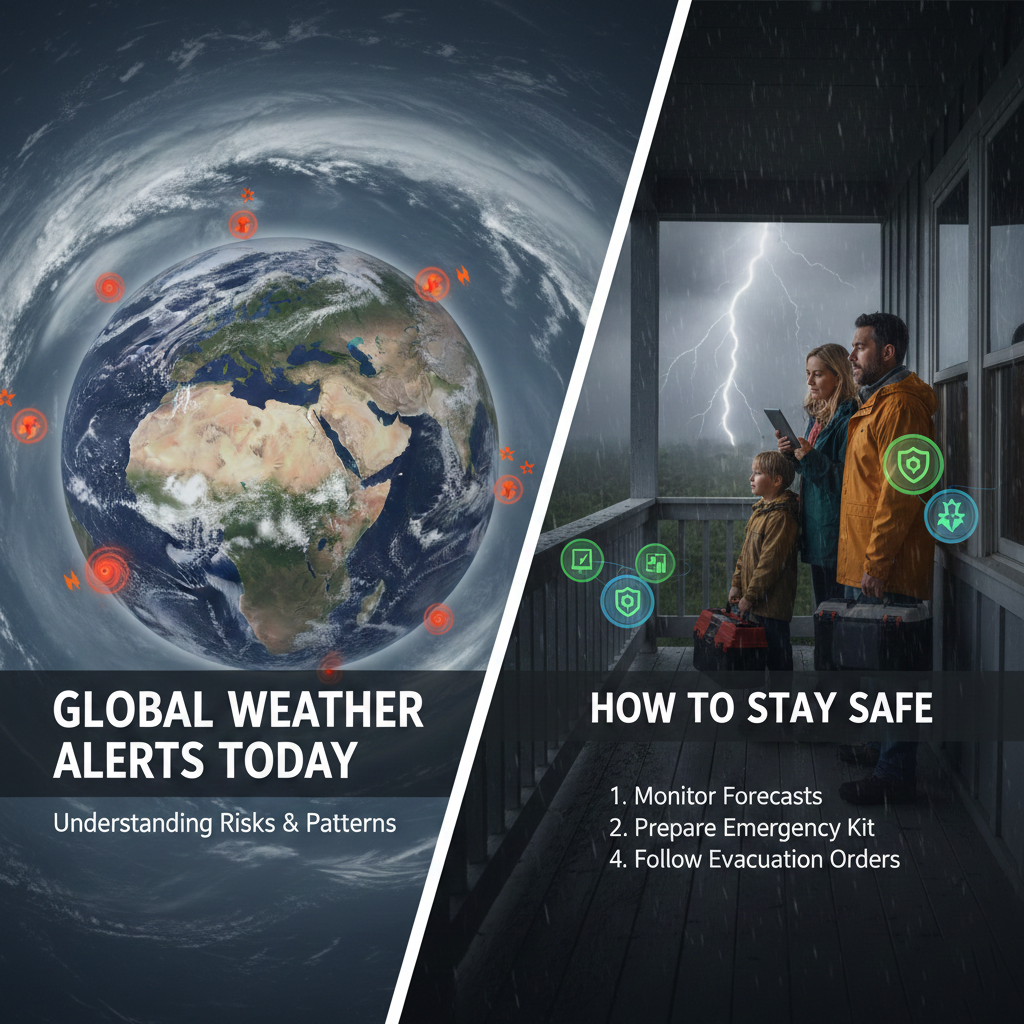
Weather affects every person on Earth — from daily commutes to global economies. On any given day, multiple weather alerts may be active around the world — signaling storms, flooding, heatwaves, winds, drought, or other hazardous conditions. This article breaks down:
- What weather alerts are and how they’re issued
- Common severe weather phenomena in December
- How alerts work regionally (Storms, Cyclones, Wildfire risks, Cold waves)
- How governments and agencies communicate alerts
- Safety measures for each alert type
- Forecasting tools and citizen resources
Whether you’re planning travel, managing agriculture, or just tracking climate patterns, this guide will help you understand global weather alerts today in a comprehensive way.
1. What Are Global Weather Alerts?
Weather alerts are official warnings issued by national meteorological agencies — such as:
- NOAA/NWS (United States)
- Met Office (UK)
- Bureau of Meteorology (Australia)
- India Meteorological Department (IMD)
- Japan Meteorological Agency (JMA)
- MeteoFrance, MeteoSwiss, etc. in Europe
These alerts warn the public when weather conditions may become hazardous.
Common alert categories include:
- Advisory: Potential for disruption
- Watch: Conditions are favorable for hazardous weather
- Warning: Hazardous weather is imminent or occurring
- Emergency: Severe danger to life/property
Alerts can apply to rainfall, wind, temperature, wildfires, air quality, flooding, and more.
2. Common Weather Alerts Worldwide (December)
Although weather changes constantly, December is a transitional month in many regions — winter in the Northern Hemisphere and summer in the Southern. Below is a breakdown of typical alerts relevant today in a wide geographic sense.
🌬️ Winter Storms & Cold Waves (Northern Hemisphere)
December marks the onset of winter across:
- North America (USA & Canada)
- Europe (especially Eastern Europe & Scandinavia)
- Central and Northern Asia
Typical alerts include:
- Blizzard Warnings — heavy snow + strong winds
- Winter Storm Warnings — snow, ice, sleet
- Wind Chill Alerts — dangerously low “feels-like” temperatures
Cold waves can cause:
- Hypothermia and frostbite risks
- Transportation disruptions
- Utility outages
Safety tips:
- Dress in layers and stay dry
- Avoid unnecessary travel during heavy snow
- Insulate homes and protect pets
🌧️ Tropical Cyclones & Subtropical Storms (Seasonal in Some Regions)
December is part of the Southern Hemisphere cyclone season, which affects areas like:
- South Pacific (Fiji, Vanuatu, New Caledonia)
- Australian region (Queensland, Northern Territory)
- South Indian Ocean (Madagascar, Africa’s east coast)
Possible alerts:
- Cyclone/Typhoon Watches and Warnings
- Marine Weather Warnings
- Coastal Flood Alerts
These storms bring:
- High winds
- Storm surge
- Heavy rainfall and flooding
Safety tips:
- Secure loose outdoor items
- Follow evacuation orders
- Keep emergency supplies ready
🌍 Flooding Alerts
Flood alerts can occur anytime, especially in:
- Tropical regions experiencing heavy rains
- Monsoon transition zones
- Low-lying and delta regions
Major flood alerts may include:
- Flood Watches and Warnings
- River Flood Advisories
- Flash Flood Warnings
Flooding can spread quickly with little notice, especially during fast downpours or tropical storm remnants.
Safety tips:
- Avoid walking or driving through floodwater
- Move to higher ground immediately
🔥 Wildfire Smoke & Heat Alerts (Southern Hemisphere & Mid-Latitude Regions)
Although winter dominates the north, parts of the southern hemisphere experience:
- High temperatures
- Dry winds
- Wildfire outbreaks
Regions prone to wildfire alerts include:
- Australia
- Southern Africa
- South America (parts of Argentina, Chile)
Alerts can include:
- Bushfire / Wildfire Warnings
- Air Quality Alerts due to smoke
- Extreme Heat Warnings
Safety tips:
- Monitor air quality index (AQI)
- Reduce outdoor activity
- Keep indoor air clean with filtration
3. How Weather Alerts Are Issued & Shared Globally
Weather alerts rely on real-time monitoring from satellites, radar, surface stations, ocean buoys, and advanced numerical models.
Major global systems include:
- World Meteorological Organization (WMO) — coordinates international alert standards
- Global Telecommunication System (GTS) — shares data among nations
Local agencies integrate these data into national warnings.
Alert communication channels:
- Mobile emergency alerts
- Radio and television bulletins
- Official apps (national weather services)
- Social media feeds from meteorological agencies
- SMS/Push notifications
Citizens are encouraged to register for local weather alerts and enable push notifications from trusted sources.
4. Tools to Check Real-Time Weather Alerts
To track today’s global weather alerts, these resources are widely used:
Official Meteorology Platforms
- NOAA Weather App / NWS Alerts
- Met Office UK Weather Warnings
- Australia BOM Alerts
- IMD Cyclone Alerts
- JMA Typhoon Information
Global Aggregator Tools
- WMO Severe Weather Information Centre (SWIC)
- Storm / Wind / Flood alert apps
- Earth.nullschool visualizations
- Satellite weather maps
These tools visualize:
- Current storm tracks
- Temperature anomalies
- Precipitation risk
- Wind and pressure systems
5. Seasonal Patterns Affecting Weather Alerts
Northern Hemisphere (Winter)
- Snowstorms, ice, blizzards
- Lake-effect snow in North America
- Freeze/thaw cycles causing road hazards
Tropics / Equatorial
- Thunderstorm clusters
- Rainy seasons and monsoon remnants
- Heavy rainfall leading to flash floods
Southern Hemisphere (Summer Season)
- Cyclone activity in oceans
- Heat events inland
- Wildfire risk in dry regions
Understanding seasonal patterns helps anticipate the most likely alert types.
6. Climate Change and Weather Alerts
Climate change influences:
- Storm intensity
- Rainfall extremes
- Heatwave frequency
- Drought patterns
This means weather alert systems are becoming increasingly vital — not just for short-term safety but also for adaptation and resilience planning.
Examples of climate-linked alert increases:
- More frequent extreme rainfall events
- Longer heatwave durations
- Intensified cyclone wind speeds
Communities are building advanced early warning systems and climate-resilient infrastructure in response.
7. Safety Checklist for Common Weather Alerts
Here’s a quick alert-specific survival checklist:
✨ Winter Storm / Blizzard
✔ Stock warm clothing
✔ Prepare non-perishable food
✔ Stay off roads during heavy snow
⚠️ Flood / Flash Flood
✔ Move to higher ground
✔ Avoid water crossings
✔ Monitor river gauges
🌪️ Cyclone / Tropical Storm
✔ Secure property items
✔ Evacuate if ordered
✔ Battery-powered radios ready
🔥 Wildfire / Smoke
✔ Close windows and doors
✔ Use air purifiers
✔ Stay informed about fire spread
🔆 Heatwave
✔ Hydrate frequently
✔ Avoid peak daytime heat
✔ Check on vulnerable people
8. Case Studies in Weather Alerts
(NOTE: These are illustrative scenarios common in late autumn and early summer cycles. Real-time data may vary.)
🌀 Cyclone in the Southern Indian Ocean
A tropical disturbance off Madagascar could intensify, prompting regional alerts for:
- High seas
- Coastal flooding
- Wind damage
These alerts would include evacuation advisories and shelter preparations.
❄️ Winter Storm in Central Asia
Cold fronts can sweep from Siberia toward Central Asia, triggering:
- Snow and ice warnings
- Travel advisories
- Temperature advisories
☔ Atlantic Mid-Latitude Storm
In winter, Atlantic storm tracks often affect:
- Western Europe
- Eastern North America
- The Caribbean
Alerts may include heavy rainfall, wind warnings, and coastal surge watches.
9. How Communities Respond to Weather Alerts
Government Preparedness
- Emergency operations centers activate
- Public schools may close
- Transport agencies issue travel restrictions
Business Response
- Supply chain re-routing
- Remote work advisories
- Infrastructure inspections
Individual Preparedness
- Family emergency plans
- Weather apps and notifications
- Storm kits (flashlights, food, water)
10. The Future of Weather Alerts: AI & Early Forecasting
Looking ahead, weather forecasting and alert systems are evolving with:
✔ AI-Enhanced Prediction
Machine learning improves pattern recognition for storm development and intensification.
✔ Better Global Coverage
Smaller nations and remote regions are gaining better radar and satellite access.
✔ Mobile Alert Integration
Apps connect official alerts with step-by-step safety guidance.
✔ Real-Time Hazard Maps
Interactive maps show where alerts are active live.
These improvements mean alerts will be faster, more accurate, and more actionable.
SEO Keywords for This Blog
- Global weather alerts today
- Severe weather warnings worldwide
- Storm, cyclone, flood alerts
- Weather safety tips
- Seasonal weather hazards
- Climate impact on weather alerts
- How weather alerts work
- Real-time weather warning systems
Conclusion: Global Weather Alerts — Why They Matter
Weather impacts lives, economies, and infrastructure around the world every day. From winter storms in the north to tropical cyclones in the south, staying informed about global weather alerts today helps individuals, communities, and governments take proactive steps to stay safe.
Although specific alert details vary moment by moment, the systems that protect us are built on cutting-edge science, international cooperation, and public communication. By knowing how alerts work and how to respond, you become not just a passive receiver of information, but an empowered decision-maker during weather emergencies.
