

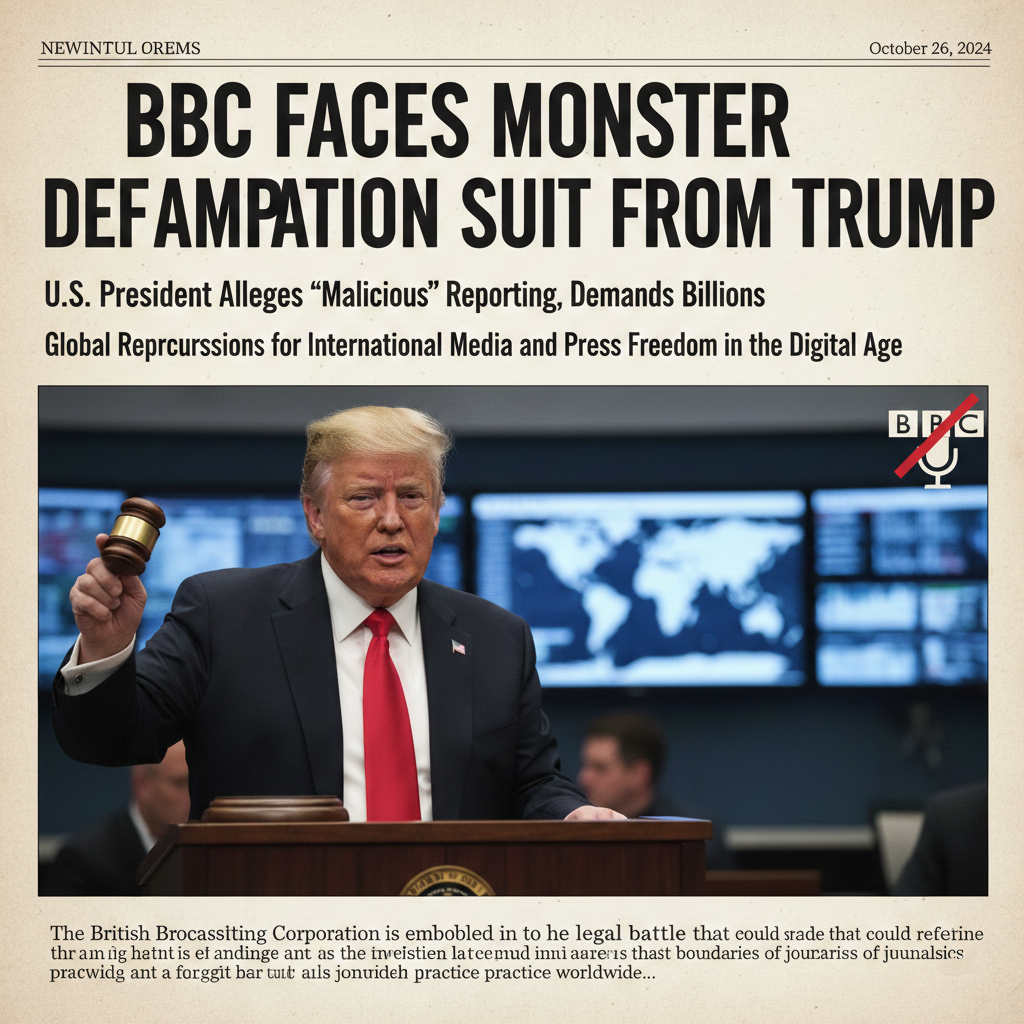
In a groundbreaking legal confrontation that has sent shockwaves through global newsrooms, U.S. President **Donald Trump has filed a $10 billion lawsuit against the BBC, accusing the British public broadcaster of defamation and deceptive editing in a documentary that allegedly misrepresented his January 6, 2021, speech. This high-stakes legal battle isn’t just about reputation — it raises fundamental questions about media accountability, international journalism ethics, and the limits of press freedom in an era of political polarization and misinformation.
What’s Behind the Trump vs BBC Defamation Lawsuit?
President Trump’s lawsuit was filed in a Florida federal court, centering on a BBC Panorama program titled Trump: A Second Chance? that aired before the 2024 U.S. election. The complaint argues that the BBC “spliced together” clips of Trump’s January 6 speech, creating a misleading impression that Trump encouraged supporters to march on the U.S. Capitol and “fight like hell.” Trump claims this edit damaged his reputation and influenced public perception unjustly.
Key Allegations in the Lawsuit
- Defamation Claim: Alleged false portrayal of Trump’s words and intent.
- Florida Trade Practices Violation: Claim that deceptive editing breached state law.
- Reputational Harm & Financial Damage: Seeks $5 billion for defamation and $5 billion for unfair trade practices.
- Broadcast Timing: The documentary aired just before a pivotal U.S. election, amplifying its perceived impact.
The BBC has acknowledged the controversial edit as an “error of judgment,” apologized, but firmly rejected the basis for a defamation claim. It has pledged to defend itself vigorously in court, challenging jurisdiction and insisting its editorial independence must be upheld.
BBC’s Response
Why This Lawsuit Matters: Press Freedom & Global Media Impact
This lawsuit isn’t just a high-profile legal dispute — it’s poised to become a bellwether case for how media outlets around the world practice journalism and how courts interpret defamation, especially when a public figure initiates a lawsuit against reporters or news organizations.
International Media and Defamation Law
- Cross-Border Reach: The BBC is based in the UK but Trump filed the suit in the U.S., creating complex jurisdictional questions.
- Defamation Standards: U.S. law requires proof of “actual malice” for public figures to prevail — a high bar.
- International Press Freedom: A ruling against the BBC could embolden political leaders to target media outlets with litigation as a tool of pressure.
Timeline: From BBC Edit to Lawsuit Filing
| Date | Event |
|---|---|
| January 6, 2021 | Trump delivers controversial speech before Capitol riot. |
| 2024 | BBC airs Panorama documentary containing edited clips. |
| Late 2025 | BBC acknowledges editorial issue and apologizes. |
| Dec 15-16, 2025 | Trump files a $10 billion lawsuit in Florida. |
Legal Challenges Ahead
1. Proving Defamation in U.S. Courts
Under U.S. law, a plaintiff must show the broadcaster published information knowing it was false or with reckless disregard for truth. For public figures like Trump, this is often the toughest part of a defamation lawsuit.
2. Jurisdiction Issues
The documentary did not officially air in the U.S., so the BBC argues that American courts may lack jurisdiction. Trump counters that streaming services like BritBox and VPN access made it available to U.S. viewers.
3. Press Freedom Backlash
Legal experts warn that if the case succeeds, international media organizations may face pressure to alter editorial standards to avoid costly litigation, potentially chilling investigative reporting.
Defamation Lawsuit Breakdown: Trump vs BBC
| Aspect | Trump’s Claim | BBC’s Position |
|---|---|---|
| Defamation | False and misleading edits harmed reputation. | No legal basis; apologized for error but denies defamation. |
| Damages | $10 billion total. | Contest damages, likely to dismiss. |
| Jurisdiction | Miami court valid due to online accessibility. | Argued footage never officially broadcast in U.S. |
| Press Freedom | Trump frames it as accountability. | BBC frames it as threat to editorial independence. |
The Broader Debate: Press Freedom vs. Accountability
This case sits at the intersection of media accountability and free press protections. While no news outlet is above scrutiny, critics warn that high-value lawsuits can be weaponized to intimidate journalists and chill robust reporting.
Key Questions at Stake
- Should powerful individuals be able to sue foreign media organizations in U.S. courts?
- Does an editorial mistake justify billions in damages?
- How will international media adapt to potential legal precedents?
Legal analysts and journalists alike are watching this case closely, as the implications could redefine standards for international news reporting and protective boundaries for press freedom.
FAQs (SEO-Friendly Questions & Answers)
What is President Trump’s lawsuit against the BBC about?
President Donald Trump filed a $10 billion lawsuit against the BBC for alleged defamation and deceptive editing of his January 6 speech in a Panorama documentary, claiming the edits misrepresented his words and damaged his reputation.
How much is Trump suing the BBC for?
Trump is seeking $10 billion in damages, split between claims of defamation and violation of Florida’s trade practices law.
Why is the BBC fighting the lawsuit?
The BBC says it will defend itself, arguing the lawsuit lacks legal basis and that the documentary was not shown in the U.S., raising jurisdictional defenses.
Does this lawsuit threaten press freedom?
Critics say high-value defamation suits could chill international media reporting, potentially intimidating outlets from covering controversial topics. Supporters stress accountability and accurate reporting.
What is defamation law in the U.S.?
U.S. defamation law requires public figures to prove the media outlet published false statements with actual malice — knowing they were false or acting with reckless disregard for the truth.
Conclusion
The Trump vs BBC lawsuit marks one of the most significant legal challenges in recent memory over journalistic integrity, defamation law, and media freedom. Whether the case succeeds or falters, its implications will reverberate across newsrooms worldwide, prompting critical conversations about how international media balances truth, accountability, and editorial independence in an age of political tension and global scrutiny.
📢 Stay Updated: Follow reliable news sources for court developments and expert analysis. If you’re interested in media law, international journalism ethics, or press freedom debates, this case will be a defining story in 2025 and beyond
