

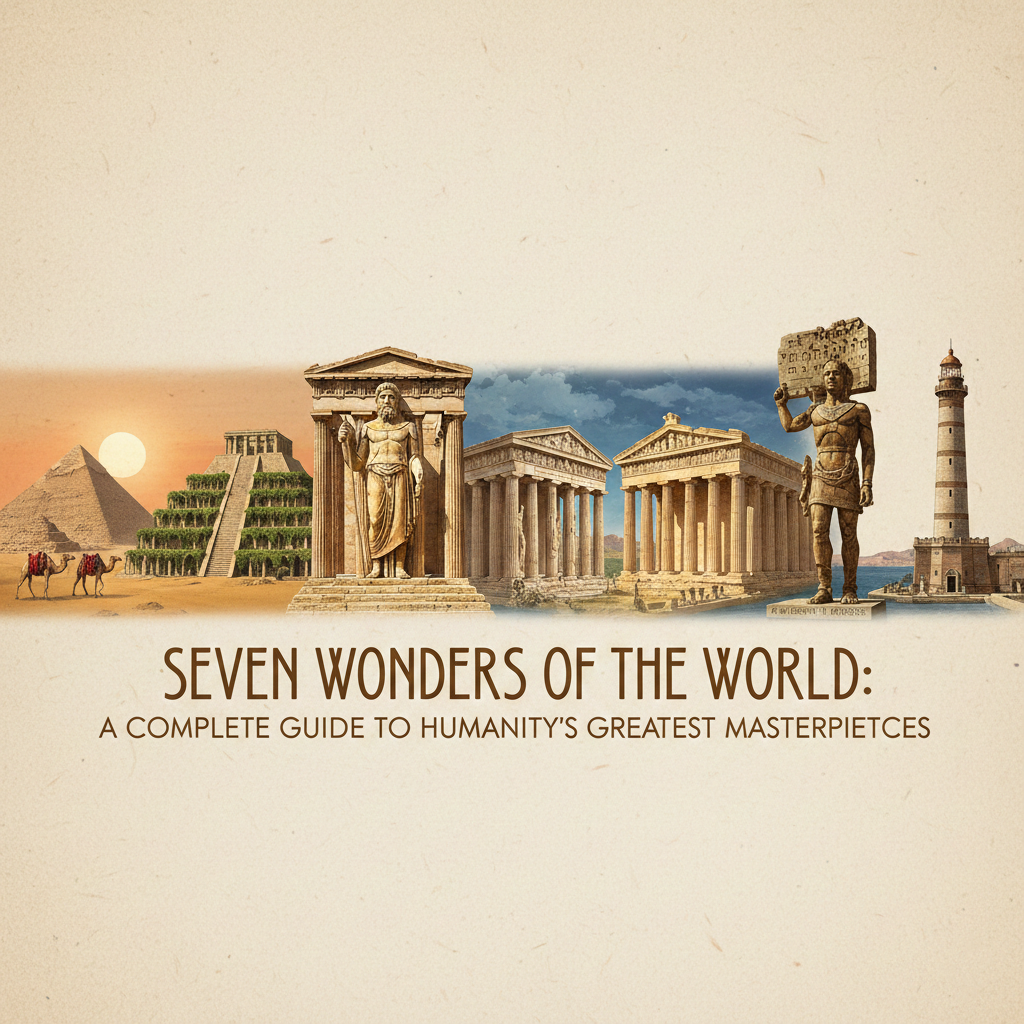
Why the Seven Wonders of the World Still Inspire Us
From ancient civilizations to modern travelers, humans have always been fascinated by extraordinary creations. The Seven Wonders of the World represent the pinnacle of human imagination, engineering excellence, and cultural pride. These iconic landmarks are not just tourist destinations—they are living symbols of history, resilience, and global heritage.
The modern Seven Wonders of the World, officially recognized in 2007, were chosen through a worldwide poll involving millions of votes. Each wonder tells a powerful story of its civilization, its people, and their vision. Whether carved into mountains or standing tall against time, these wonders continue to inspire awe across generations.
In this detailed guide, you’ll explore the history, significance, and unique facts about each wonder—written in a clear, engaging, and human-friendly style designed for readers and search engines alike.
What Are the Seven Wonders of the World?
The New Seven Wonders of the World are a modern list highlighting remarkable man-made landmarks that still exist today. Unlike the ancient list, which included lost structures, this updated version focuses on accessible, preserved monuments.
List of the New Seven Wonders
| Wonder | Country | Built |
|---|---|---|
| Great Wall of China | China | 7th century BC |
| Petra | Jordan | 4th century BC |
| Christ the Redeemer | Brazil | 1931 |
| Machu Picchu | Peru | 15th century |
| Chichén Itzá | Mexico | 600–1200 AD |
| Roman Colosseum | Italy | 80 AD |
| Taj Mahal | India | 1653 |
The Great Wall of China – The Longest Structure Ever Built
A Symbol of Strength and Unity
Stretching over 21,000 kilometers, the Great Wall of China is the longest man-made structure on Earth. Built over centuries by multiple dynasties, its primary purpose was to protect China from invasions.
Key Highlights
- Constructed using stone, brick, wood, and earth
- Built by over one million workers
- Visible from space is a myth, but its scale is unmatched
Why It’s a Wonder
The Great Wall is not just a wall—it’s a masterpiece of military architecture and a testament to perseverance.
Petra – The Rose City of Jordan
A City Carved in Stone
Hidden within Jordan’s desert canyons, Petra is an archaeological marvel carved directly into pink sandstone cliffs. Once a thriving trade hub, Petra showcases advanced engineering and water management.
Unique Features
- Rock-cut architecture
- Ancient water channels
- Famous Treasury (Al-Khazneh)
Why Petra Stands Out
Its fusion of natural beauty and human craftsmanship makes Petra one of the most photogenic wonders in the world.
Christ the Redeemer – Brazil’s Icon of Peace
A Global Symbol of Faith
Standing atop Mount Corcovado in Rio de Janeiro, Christ the Redeemer overlooks the city with open arms. At 30 meters tall, this statue represents peace, acceptance, and Christianity.
Interesting Facts
- Made of reinforced concrete and soapstone
- Survived lightning strikes and harsh weather
- One of the New Seven Wonders located in South America
Why It Matters
The statue symbolizes unity and hope, making it a spiritual and cultural landmark.
Machu Picchu – The Lost City of the Incas
An Ancient Engineering Marvel
Nestled high in the Andes Mountains, Machu Picchu is a breathtaking Incan citadel built without mortar. Despite earthquakes and centuries of exposure, it remains remarkably intact.
Engineering Achievements
- Precision-cut stone construction
- Advanced drainage systems
- Agricultural terraces
Why It’s Extraordinary
Machu Picchu reflects the Incas’ deep understanding of astronomy, agriculture, and architecture.
Chichén Itzá – The Heart of the Mayan Civilization
A Center of Science and Ritual
Located in Mexico’s Yucatán Peninsula, Chichén Itzá was a major Mayan city. The iconic El Castillo pyramid demonstrates the Mayans’ astronomical knowledge.
Fascinating Elements
- 365 steps representing the solar calendar
- Shadow serpent illusion during equinox
- Sacred cenote for rituals
Why It’s Unique
Chichén Itzá perfectly blends science, religion, and architecture.
The Roman Colosseum – Rome’s Grand Arena
A Testament to Roman Power
The Colosseum in Rome is the largest amphitheater ever built. It hosted gladiator battles, public spectacles, and dramatic performances.
Remarkable Facts
- Could seat over 50,000 spectators
- Built in under 10 years
- Included underground chambers and elevators
Why It’s Legendary
The Colosseum showcases Roman innovation and remains a symbol of ancient entertainment and engineering.
The Taj Mahal – India’s Eternal Symbol of Love
A Monument Beyond Time
Built by Emperor Shah Jahan in memory of his wife Mumtaz Mahal, the Taj Mahal is a masterpiece of Mughal architecture made entirely of white marble.
Architectural Brilliance
- Perfect symmetry
- Intricate inlay work
- Color changes with sunlight
Why It’s Unmatched
The Taj Mahal combines emotion, artistry, and precision, making it one of the most admired structures globally.
Comparison: Ancient vs Modern Wonders
| Aspect | Ancient Wonders | Modern Wonders |
|---|---|---|
| Existence | Mostly destroyed | All still standing |
| Accessibility | Limited | Open to visitors |
| Selection | By historians | Global public vote |
Why the Seven Wonders of the World Matter Today
These wonders:
- Preserve human history
- Boost global tourism
- Inspire modern architecture
- Promote cultural understanding
They remind us that creativity and determination can outlast centuries.
FAQs About the Seven Wonders of the World
What are the Seven Wonders of the World?
They are seven extraordinary man-made landmarks chosen for their historical, cultural, and architectural importance.
Who selected the New Seven Wonders?
They were selected through a global voting process organized by the New7Wonders Foundation in 2007.
Are all Seven Wonders man-made?
Yes, all seven are human-made structures, unlike natural wonders.
Which is the oldest wonder?
The Great Wall of China dates back to the 7th century BC.
Can tourists visit all Seven Wonders?
Yes, all are open to visitors, though some have restrictions to preserve them.
Conclusion: Experience the Wonders That Shaped Our World
The Seven Wonders of the World are more than famous landmarks—they are living chapters of human history. Each one reflects innovation, belief, and artistic excellence that continues to inspire millions worldwide.
If you love history, travel, or culture, visiting these wonders should be on your bucket list. Start exploring, learning, and preserving these treasures—because the wonders of the world belong to all of us.
Ready to explore the world’s greatest marvels? Start planning your journey today and witness history come alive. 🌍✨
