

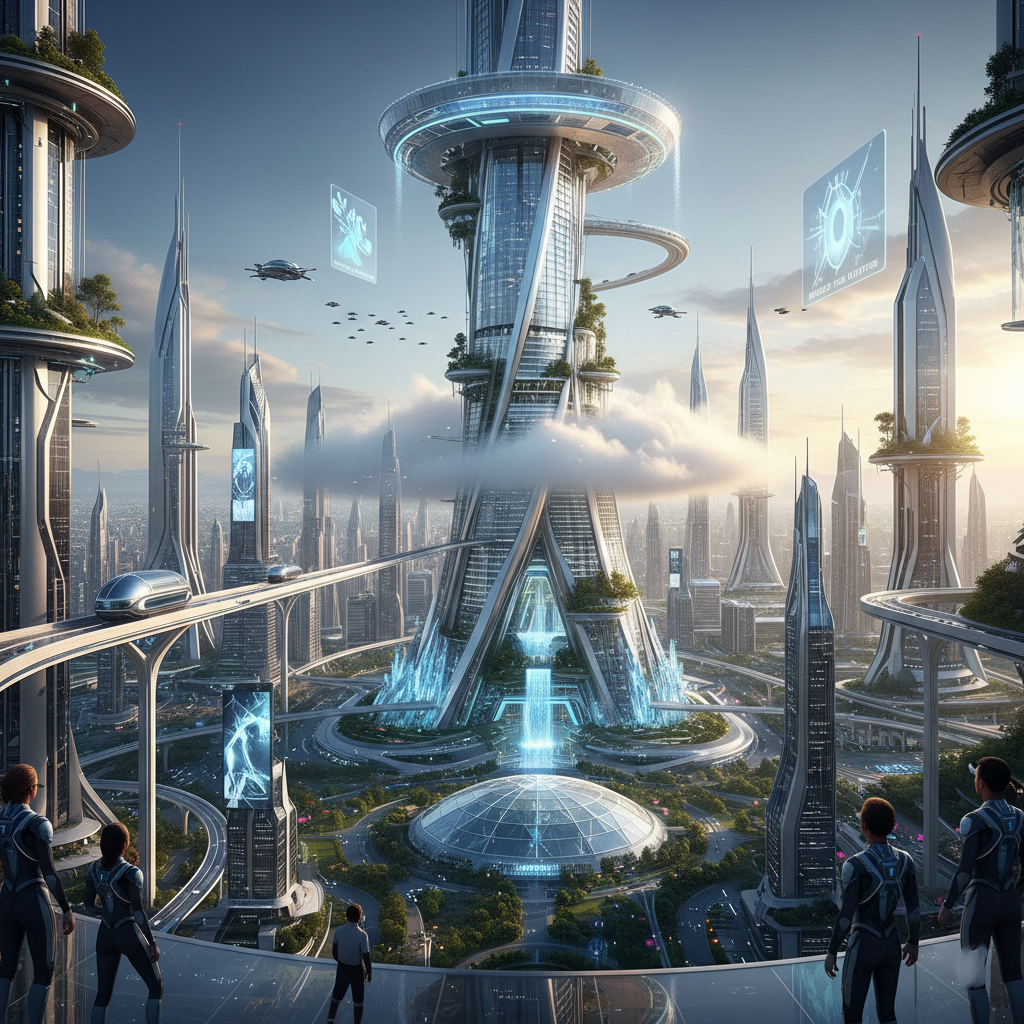
Reaching Beyond the Sky 🌍
Human ambition has always been measured by how high we build. From ancient pyramids to modern skyscrapers like Burj Khalifa, every era has tried to touch the sky. But the tallest building of the future world will not just be taller—it will be smarter, greener, and more meaningful for humanity.
As urban populations explode and land becomes scarce, future megastructures will redefine how we live, work, and connect. These vertical cities will combine cutting-edge engineering, AI-driven systems, and sustainable architecture to create buildings that feel less like concrete towers and more like living organisms.
So, what will the tallest building of the future look like? How tall will it be? Where will it be built? And why does it matter? Let’s explore.
Why the World Is Moving Toward Taller Buildings
Urban Growth Is Forcing Cities to Build Upward
By 2050, nearly 70% of the world’s population will live in cities. Horizontal expansion is no longer practical due to:
- Limited land availability
- Rising real estate costs
- Environmental concerns
- Traffic and infrastructure congestion
Vertical development offers a smarter solution.
Skyscrapers as Symbols of Economic Power
Historically, the tallest buildings reflect global leadership:
| Era | Tallest Structure | Country |
|---|---|---|
| 1930s | Empire State Building | USA |
| 1990s | Petronas Towers | Malaysia |
| 2010s | Burj Khalifa | UAE |
| Future | Mega Vertical Cities | Asia / Middle East |
The tallest building of the future world will symbolize technological dominance, sustainability leadership, and economic strength.
How Tall Will the Tallest Building of the Future Be?
Beyond One Kilometer: The Next Frontier
Burj Khalifa stands at 828 meters. Future structures are expected to cross:
- 1,000 meters (1 km) – officially a megatall skyscraper
- 1,600+ meters – classified as mile-high towers
Proposed Heights of Future Mega Towers
| Project Concept | Estimated Height |
|---|---|
| Jeddah Tower (Saudi Arabia) | 1,000+ meters |
| Mile-High Tower Concept | 1,609 meters |
| Sky City 1000 | 1,000 meters |
| Floating Vertical City (concept) | 2,000+ meters |
The tallest building of the future world could be twice as tall as Burj Khalifa.
Revolutionary Design Concepts Shaping Future Skyscrapers
Aerodynamic Architecture to Beat Wind Pressure
At extreme heights, wind becomes the biggest enemy. Future towers will use:
- Tapered and spiral designs
- Multiple interconnected towers
- Sky gaps to let wind pass through
These reduce sway and increase comfort for occupants.
Earthquake-Resistant Mega Foundations
Future buildings will sit on foundations that:
- Extend hundreds of meters underground
- Use carbon-fiber reinforcement
- Adapt in real-time using smart sensors
This ensures safety even in seismic zones.
Smart Technology Powering the Tallest Building of the Future World
AI-Driven Building Management Systems
Artificial Intelligence will control:
- Lighting and climate optimization
- Predictive maintenance
- Energy consumption patterns
- Security and surveillance
Buildings will learn from human behavior.
Vertical Transportation Without Waiting
Traditional elevators won’t work at this scale. Future solutions include:
- Magnetic levitation (Maglev) elevators
- Horizontal + vertical movement
- Sky lobbies every 100–150 floors
Travel time from ground to top? Under 60 seconds.
Sustainability at Extreme Heights 🌱
Net-Zero and Energy-Positive Buildings
The tallest building of the future world will likely produce more energy than it consumes using:
- Wind turbines embedded into structure
- Solar glass facades
- Hydrogen energy storage
- Waste-to-energy systems
Water, Air, and Food Inside the Tower
These buildings will be self-sufficient:
- Rainwater harvesting systems
- Atmospheric water generators
- Vertical farming floors
- Advanced air purification ecosystems
Imagine growing vegetables on the 300th floor.
Vertical Cities: More Than Just Buildings
Living, Working, and Relaxing in One Structure
Future mega skyscrapers will include:
- Residential zones
- Corporate offices
- Schools and universities
- Hospitals
- Shopping malls
- Parks and sky gardens
People may live their entire lives without stepping outside.
Psychological Comfort at Extreme Heights
To avoid isolation and stress:
- Biophilic design (plants, natural light)
- Open sky terraces
- Community hubs every few floors
These towers will prioritize human well-being, not just height.
Countries Competing to Build the Tallest Building of the Future
Middle East: Vision Meets Capital
Countries like Saudi Arabia and UAE lead with:
- Visionary urban planning
- Massive investment power
- Fewer land restrictions
Saudi Arabia’s Vision 2030 directly supports megastructure development.
Asia: Technology and Population Pressure
China, Japan, and South Korea are strong contenders due to:
- Engineering expertise
- High urban density
- Government-backed innovation
Asia may host the tallest building of the future world.
Economic Impact of the Tallest Future Skyscraper
Boosting Tourism and Global Branding
Tallest buildings instantly become:
- Global landmarks
- Tourism magnets
- National pride symbols
Burj Khalifa attracts millions of visitors annually—future towers will do even more.
Job Creation and Innovation Ecosystem
Mega projects generate:
- Thousands of construction jobs
- Long-term employment
- New industries and startups
They act as economic engines, not just structures.
Challenges and Risks of Ultra-Tall Buildings
Construction Costs and Time
Building a future megatower may cost:
- $5–10 billion or more
- 10–15 years to complete
Safety, Evacuation, and Ethics
Concerns include:
- Emergency evacuation at extreme heights
- Fire safety
- Social inequality (luxury vs accessibility)
Future planning must balance ambition with responsibility.
Comparison: Past vs Future Tallest Buildings
| Feature | Past Skyscrapers | Future Mega Towers |
|---|---|---|
| Height | Under 1 km | 1–2 km |
| Energy | High consumption | Net-zero / positive |
| Function | Offices only | Full vertical cities |
| Technology | Mechanical systems | AI-driven ecosystems |
| Sustainability | Limited | Core priority |
What Makes the Tallest Building of the Future Truly Different?
It’s not just about height.
It’s about:
- Self-sustaining ecosystems
- Human-centered design
- Climate resilience
- Smart city integration
The future’s tallest building will be a living symbol of progress, not a vanity project.
FAQs: Tallest Building of the Future World
What will be the tallest building of the future world?
The tallest future building is expected to exceed 1,000 meters, possibly reaching a mile high, with Saudi Arabia or Asia as likely locations.
Will future skyscrapers be safe to live in?
Yes. Advanced materials, AI monitoring, and real-time safety systems will make them safer than current buildings.
How will people travel inside such tall buildings?
Using high-speed maglev elevators capable of vertical and horizontal movement.
Will future skyscrapers be environmentally friendly?
Absolutely. They will be net-zero or energy-positive, using renewable energy and sustainable materials.
When will the tallest future building be completed?
Experts predict between 2035 and 2050, depending on economic and technological progress.
Conclusion: The Sky Is No Longer the Limit 🚀
The tallest building of the future world will be more than a record-breaking structure—it will be a blueprint for how humanity lives in an overcrowded, climate-conscious world. These vertical cities will blend technology, sustainability, and human-centered design to create a future where height equals hope, not excess.
As engineering pushes boundaries and cities look upward, one thing is clear:
The future of civilization is vertical.
👉 If you found this article valuable, share it, bookmark it, or explore more insights into future architecture and smart cities.
