

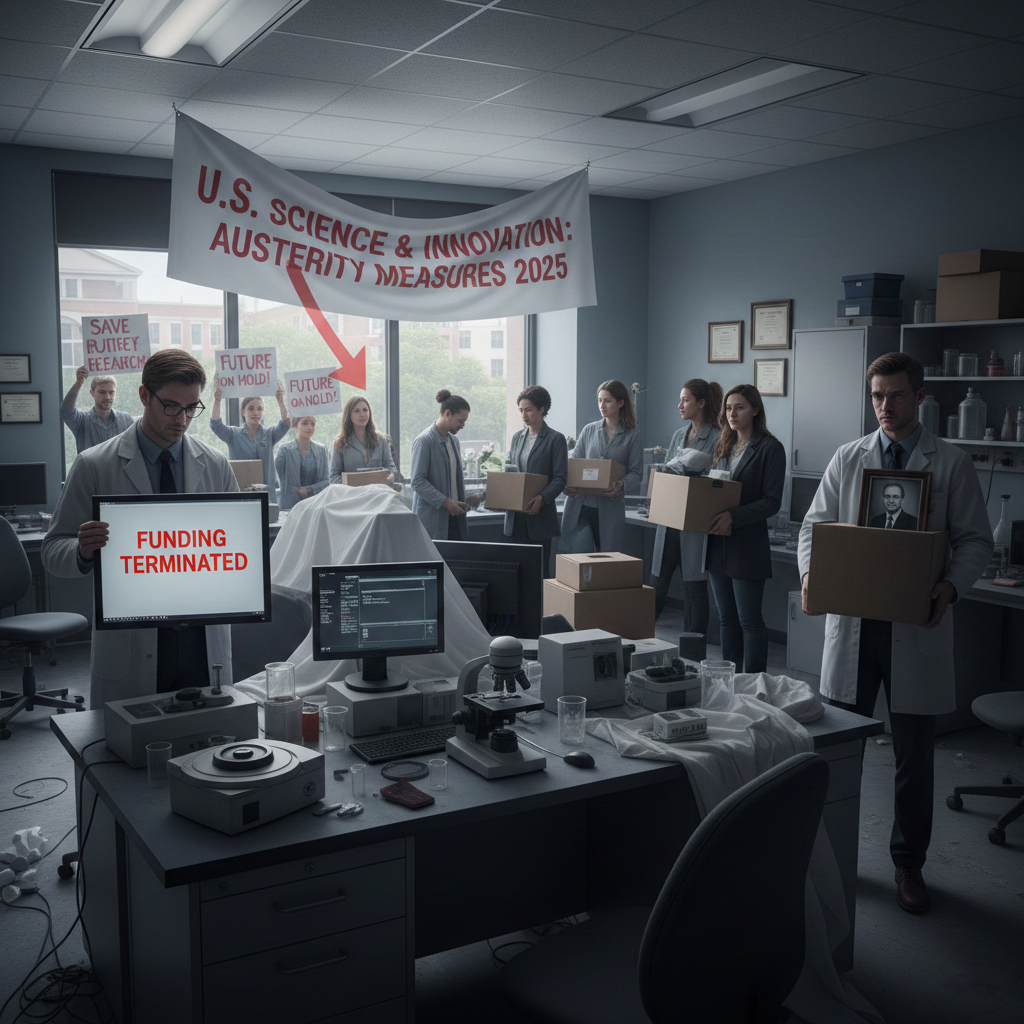
A Turning Point for U.S. Science Funding
In 2025, the United States is facing one of its most challenging periods for scientific research funding in decades. Researchers across universities, national laboratories, and independent institutions report that major cuts to science funding have halted projects, terminated grant programs, and put thousands of research careers at risk.
For a country long recognized as a global leader in science, technology, and innovation, these reductions represent more than budget adjustments. They signal a potential shift in how research is valued and supported. From biomedical breakthroughs to climate science, the ripple effects of these cuts are being felt nationwide.
This article explores what happened, why it matters, who is affected, and what the long-term consequences could be—all explained in a clear, human, and practical way.
What Changed in 2025? An Overview of Science Funding Cuts
Scale and Scope of the Reductions
In 2025, multiple federal science agencies faced significant budget reductions, affecting both new and ongoing research programs. Many competitive grants were canceled mid-cycle, while others were never renewed.
Key impacts include:
- Reduction in federal research allocations
- Termination of multi-year grant programs
- Freeze on new grant approvals in several disciplines
- Delayed or canceled infrastructure upgrades
These changes hit universities, research hospitals, and public laboratories simultaneously, compounding the problem.
Why Science Funding Matters to the U.S. Economy and Society
Science as an Economic Engine
Scientific research is not an expense—it is an investment. Historically, every dollar spent on research and development (R&D) in the U.S. has generated multiple dollars in economic return through:
- Job creation
- New industries and startups
- Technological leadership
- Public health improvements
When funding drops, innovation slows.
Impact Beyond the Lab
Science funding supports:
- Graduate students and postdoctoral researchers
- University faculty and technical staff
- Medical advancements
- Environmental protection and disaster preparedness
- National security and technological competitiveness
Cuts to research funding affect everyday life, even if the consequences are not immediately visible.
Universities Under Pressure: Research Programs at Risk
Grant Terminations and Budget Shortfalls
Universities rely heavily on federal grants to fund laboratories, research staff, and equipment. In 2025, many institutions reported:
- Ongoing projects ending abruptly
- Loss of matching funds from private partners
- Hiring freezes and layoffs
- Closure of specialized research centers
For smaller universities and public institutions, the damage is particularly severe.
Comparison: Before vs. After Funding Cuts
| Area | Before 2025 | After 2025 Cuts |
|---|---|---|
| New Research Grants | Regular cycles | Severely limited |
| Graduate Funding | Stable | Reduced or uncertain |
| Lab Operations | Fully functional | Downsized or closed |
| Faculty Hiring | Active | Mostly frozen |
Researchers and Careers: The Human Cost of Funding Cuts
Early-Career Scientists Hit the Hardest
Young researchers are among the most affected. Many postdoctoral fellows and junior faculty depend on short-term grants to build their careers.
Consequences include:
- Contract non-renewals
- Forced career changes
- Leaving academia or science entirely
- Increased competition for fewer opportunities
This creates a “lost generation” risk in U.S. science.
Mental Health and Job Security Concerns
Beyond finances, uncertainty has taken a toll on researchers’ mental health. Reports indicate increased stress, burnout, and anxiety, especially among graduate students and early-career scientists.
Which Fields Are Most Affected by the 2025 Cuts?
Biomedical and Health Research
Funding cuts in health sciences threaten:
- Disease prevention research
- Clinical trials
- Drug development pipelines
Delays in medical research can translate directly into delayed treatments for patients.
Climate and Environmental Science
Reduced funding has slowed:
- Climate modeling and forecasting
- Environmental monitoring
- Renewable energy research
This comes at a time when climate-related risks are increasing.
STEM Education and Basic Science
Basic research—often without immediate commercial returns—is especially vulnerable. Yet this is the foundation for future innovation.
Why Grant Program Terminations Are Especially Damaging
Long-Term Projects Need Stability
Many scientific projects are designed to run over five to ten years. When funding is cut midway:
- Data collection becomes incomplete
- Years of work may become unusable
- Research teams disband
- Public trust in science funding erodes
Stopping a project halfway often wastes more money than completing it.
Global Consequences: Is the U.S. Losing Its Scientific Edge?
International Competition Is Rising
While U.S. funding shrinks, other countries are increasing investment in research and innovation. This creates risks such as:
- Brain drain to better-funded countries
- Loss of leadership in key technologies
- Reduced influence in global scientific collaboration
Talent Migration Trends
Highly skilled researchers are increasingly exploring opportunities abroad where funding stability is stronger.
Industry and Private Sector: Can They Fill the Gap?
Limits of Private Funding
Private companies and foundations play an important role, but they cannot fully replace federal science funding because:
- They focus on applied or profitable research
- Basic science is often excluded
- Long-term public-interest research is deprioritized
Public funding remains essential for foundational discovery.
What Researchers and Institutions Are Doing to Adapt
Cost-Cutting and Restructuring
To survive, institutions are:
- Merging departments
- Sharing research facilities
- Reducing lab sizes
- Seeking alternative funding sources
Diversifying Funding Streams
Researchers are increasingly turning to:
- Industry partnerships
- International grants
- Philanthropic foundations
- Interdisciplinary collaborations
However, these options are competitive and limited.
Potential Long-Term Risks of Reduced Science Funding
Innovation Slowdown
Breakthroughs often come from sustained investment over time. Funding instability slows progress and reduces risk-taking in research.
National Security and Technology Risks
Science funding underpins advances in:
- Cybersecurity
- Artificial intelligence
- Space exploration
- Defense technologies
Cuts may weaken future readiness.
Public Perception and Policy Challenges
Why Science Funding Is Often Misunderstood
Science budgets are sometimes viewed as optional or abstract. In reality, they support:
- Public health systems
- Infrastructure safety
- Economic growth
- Education and workforce development
Better public communication is critical.
What Could Reverse the Trend?
Policy Reassessment
Long-term solutions may include:
- Multi-year funding commitments
- Protecting basic research budgets
- Stronger science advocacy
- Improved accountability and transparency
Public Engagement and Awareness
When the public understands the value of research, funding priorities can shift.
Frequently Asked Questions (FAQs)
Why did science funding decrease in the U.S. in 2025?
Budget reallocations, competing national priorities, and political decisions led to reduced allocations for research agencies.
Which researchers are most affected by funding cuts?
Early-career scientists, graduate students, and researchers on short-term grants face the highest risk.
Do funding cuts affect everyday Americans?
Yes. Reduced research funding can slow medical advances, weaken environmental protection, and impact economic growth.
Can private funding replace federal science funding?
No. Private funding cannot fully support basic, long-term, or public-interest research.
Is the U.S. at risk of losing scientific leadership?
If funding instability continues, the U.S. risks falling behind countries investing more heavily in research and innovation.
Conclusion: Why Science Funding Decisions Matter More Than Ever
The major cuts to science funding in the United States in 2025 have created a challenging environment for researchers, universities, and innovation as a whole. Beyond halted projects and lost grants, the deeper cost is the potential loss of talent, momentum, and global leadership.
Science thrives on stability, trust, and long-term vision. Without sustained investment, even the strongest research ecosystems can weaken.
