

A Turning Point for Japan’s Science and Research Ecosystem
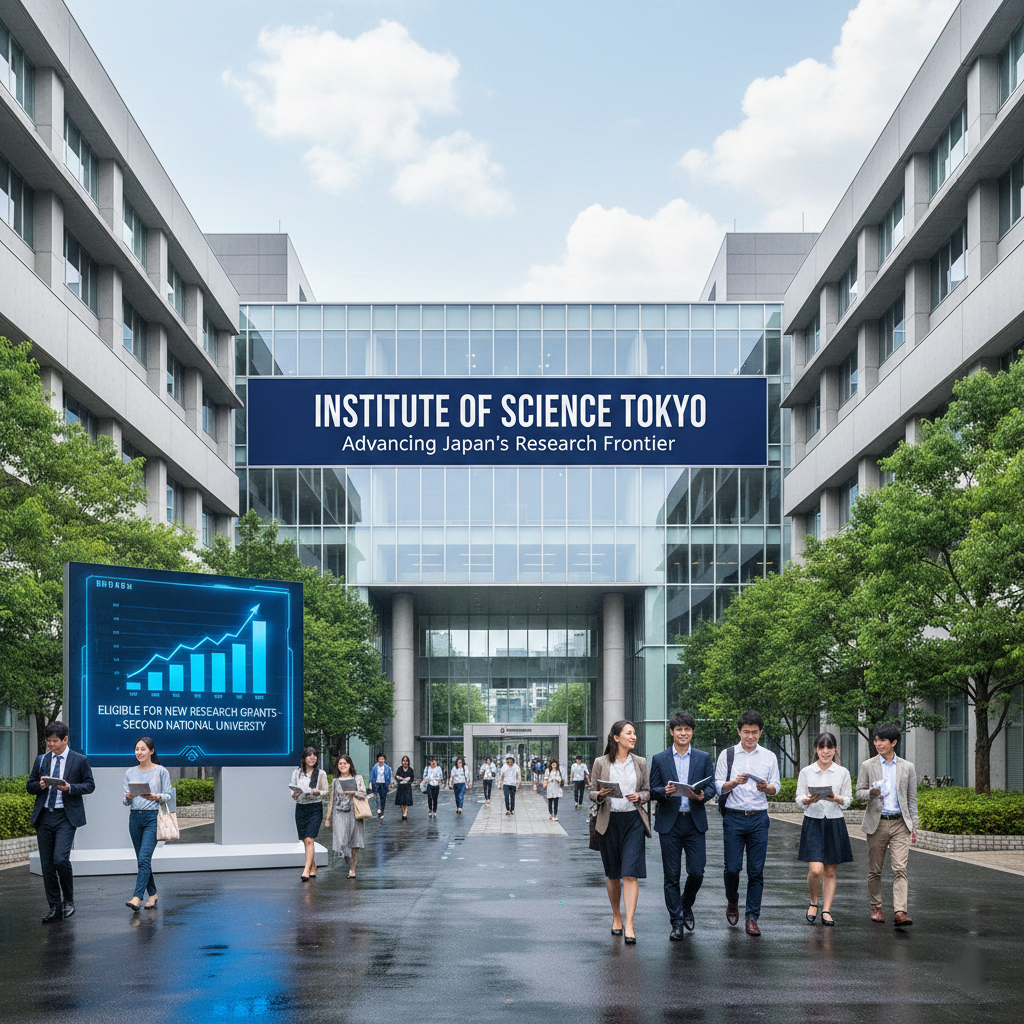
Japan’s science policy is entering a transformative phase, and at the center of this shift is the Institute of Science Tokyo. Recent developments suggest that the Institute of Science Tokyo may soon become only the second university in Japan eligible for major new national research funding, a distinction that carries immense academic, economic, and global significance.
This move reflects a broader recalibration of Japan’s science and technology strategy—one that prioritizes world-class research hubs, global competitiveness, and concentrated investment. For researchers, students, policymakers, and international collaborators, this moment marks a critical inflection point.
In this article, we’ll explore why the Institute of Science Tokyo matters, what this funding eligibility means, how Japan’s science policy is evolving, and what the long-term implications could be for innovation, higher education, and global research rankings.
Understanding Japan’s New Approach to Research Funding
Japan has long been a global leader in science and technology. However, in recent years, policymakers have grown concerned about:
- Declining international research rankings
- Brain drain of top scientists
- Fragmented funding across too many institutions
- Reduced global influence compared to the US, China, and Europe
To address these challenges, Japan is shifting from broad-based funding to a selective, excellence-driven funding model.
Why Selective Funding Is Becoming the Norm
Instead of spreading limited resources thinly across hundreds of universities, Japan’s government is now focusing on:
- Creating elite research institutions
- Supporting long-term, high-impact research
- Enhancing global visibility and rankings
- Attracting international talent and partnerships
This strategy mirrors successful models seen in countries like the United States, Germany, and China.
What Makes the Institute of Science Tokyo Stand Out
The Institute of Science Tokyo is not just another academic institution. It is designed to function as a research-first university, with a strong emphasis on advanced science, engineering, and interdisciplinary innovation.
Key Strengths of the Institute of Science Tokyo
- Strong focus on fundamental and applied sciences
- Advanced infrastructure for high-impact research
- International research collaborations
- Strategic alignment with national science priorities
These strengths position the institute as a natural candidate for elite-level research funding.
Becoming Japan’s Second University Eligible for Major Research Funding
Currently, only one university in Japan holds eligibility for this level of concentrated, long-term research funding. The inclusion of the Institute of Science Tokyo would make it the second institution to reach this elite status.
Why This Eligibility Matters
Eligibility is not just symbolic—it unlocks real advantages:
- Multi-year funding commitments
- Greater autonomy in research planning
- Ability to recruit top global researchers
- Investment in cutting-edge facilities
This could fundamentally reshape Japan’s academic and research hierarchy.
A Shift in Japan’s Science Policy Landscape
The potential elevation of the Institute of Science Tokyo reflects deeper structural changes in Japan’s science governance.
From Quantity to Quality
For decades, Japan emphasized:
- A large number of universities
- Broad access to public research funds
Now, the emphasis is shifting to:
- Fewer, globally competitive institutions
- High-impact publications and patents
- Strategic national research goals
This marks a decisive move toward quality over quantity.
How This Compares with Global Research Models
Japan’s new approach aligns closely with international best practices.
Comparison with Other Leading Countries
| Country | Research Funding Model | Key Feature |
|---|---|---|
| United States | Concentrated + Competitive | Elite universities dominate funding |
| Germany | Excellence Initiative | Select universities receive major funding |
| China | State-prioritized institutions | Heavy investment in top-tier universities |
| Japan (Emerging) | Selective excellence model | Focus on a few global research hubs |
The Institute of Science Tokyo fits squarely into this global trend.
Implications for Researchers and Faculty
For scientists and academics, this shift brings both opportunities and challenges.
Benefits for Researchers at the Institute of Science Tokyo
- Increased research budgets
- Access to advanced labs and equipment
- Greater freedom to pursue long-term projects
- Enhanced international collaboration
Challenges for Other Universities
- Increased competition for limited funding
- Pressure to specialize or consolidate
- Potential widening gap between institutions
While controversial, policymakers argue that global competitiveness requires tough choices.
Impact on Students and Young Scientists
Students stand to gain significantly from the institute’s potential new status.
Opportunities for Students
- Exposure to world-class research environments
- Higher employability and global recognition
- Access to international exchange programs
- Participation in cutting-edge innovation
For doctoral and postdoctoral researchers, the institute could become a top destination in Asia.
Economic and Innovation Benefits for Japan
This move is not just about academia—it’s about national growth.
How Major Research Funding Drives the Economy
- Breakthroughs in AI, robotics, materials science, and biotech
- Stronger university–industry partnerships
- Increased startup creation and tech transfer
- Long-term productivity gains
Japan sees elite research universities as engines of economic resilience and innovation.
Strategic Research Areas Likely to Be Prioritized
If granted eligibility, the Institute of Science Tokyo is expected to focus on nationally strategic domains.
High-Priority Research Fields
- Artificial intelligence and data science
- Advanced robotics and automation
- Climate science and clean energy
- Semiconductor and materials research
- Biomedical engineering and life sciences
These areas align closely with Japan’s long-term industrial and societal goals.
Global Perception and International Collaboration
International recognition matters more than ever.
How This Elevation Boosts Global Standing
- Higher visibility in global university rankings
- Increased foreign student enrollment
- Stronger partnerships with top global institutions
- Enhanced ability to attract global research grants
The Institute of Science Tokyo could emerge as a global science brand.
Potential Risks and Criticisms
Not everyone supports this shift without reservations.
Common Concerns Raised
- Over-centralization of funding
- Marginalization of regional universities
- Reduced diversity in research topics
- Increased pressure on elite institutions
Policymakers argue these risks can be managed through balanced secondary funding programs.
What This Means for the Future of Japanese Higher Education
This development signals a long-term restructuring of Japan’s academic system.
Likely Future Trends
- Mergers and specialization among universities
- Stronger performance-based funding models
- Increased internationalization
- Clearer differentiation between teaching and research institutions
The Institute of Science Tokyo may become a blueprint for future reforms.
Frequently Asked Questions (FAQs)
What is the Institute of Science Tokyo?
The Institute of Science Tokyo is a research-focused higher education institution emphasizing advanced science, engineering, and interdisciplinary innovation.
Why is major research funding eligibility important?
It provides long-term financial support, global prestige, and the ability to conduct high-impact research at an international level.
How many universities in Japan currently qualify for this funding?
At present, only one university qualifies. The Institute of Science Tokyo may soon become the second.
How does this affect students?
Students benefit from better facilities, stronger research exposure, and improved global career opportunities.
Does this mean other universities will lose funding?
Not entirely, but funding may become more competitive and performance-driven.
Conclusion: A Defining Moment for Japan’s Science Future
The possibility that the Institute of Science Tokyo may become only the second university eligible for major new research funding marks a defining moment in Japan’s science policy evolution. It reflects a bold commitment to excellence, global competitiveness, and long-term innovation.
While challenges remain, the potential benefits—for researchers, students, industry, and society—are profound. As Japan adapts to a rapidly changing global research landscape, institutions like the Institute of Science Tokyo are poised to lead the way.
Ready to stay ahead of global education and science policy trends?
Follow our updates, share this article, and join the conversation shaping the future of research and innovation.
