
Why the WHO Global Summit on Traditional Medicine Matters
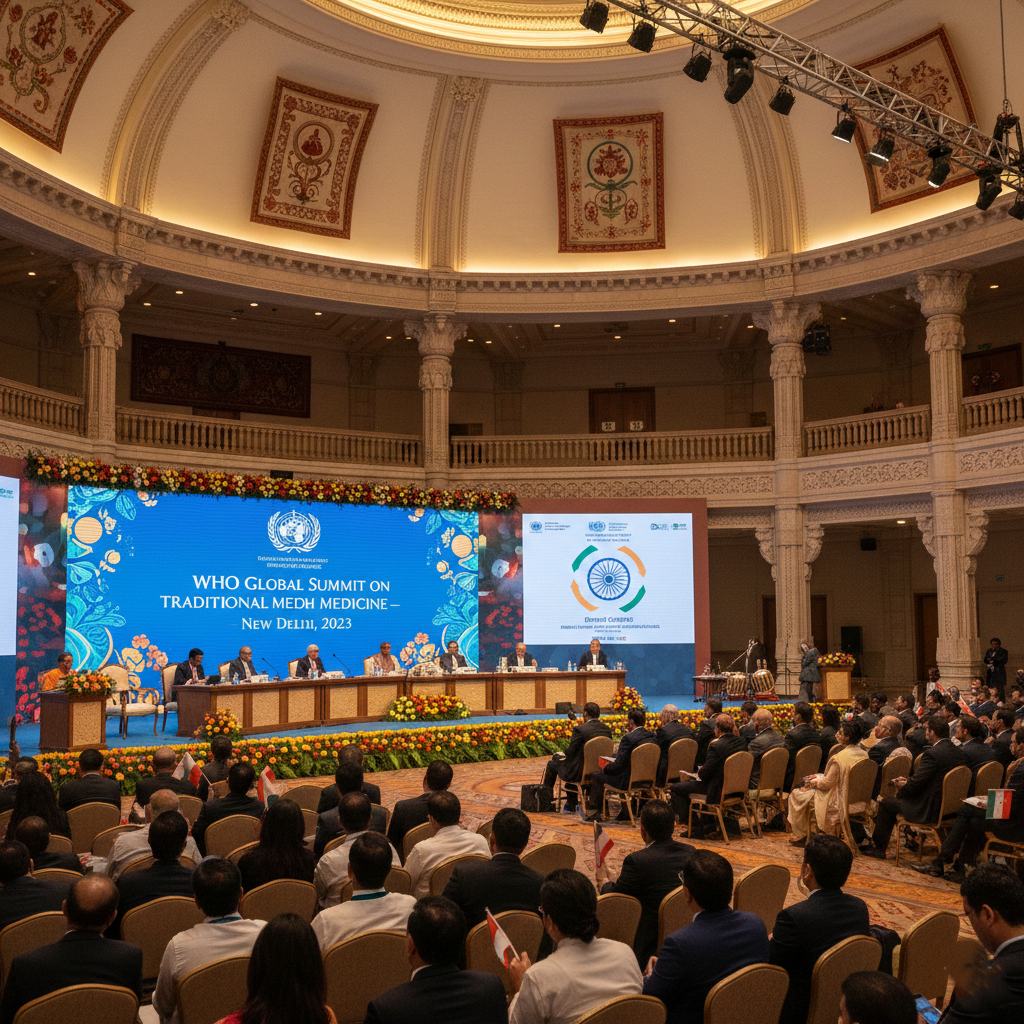
The WHO Global Summit on Traditional Medicine in New Delhi is more than just an international conference—it represents a historic shift in how the world views healthcare. For decades, traditional medicine systems like Ayurveda, Yoga, Unani, Siddha, and indigenous healing practices have been widely used but rarely integrated into formal global health policy.
By hosting this landmark summit, the World Health Organization (WHO) has acknowledged what millions already believe: traditional medicine plays a critical role in preventive care, wellness, and sustainable healthcare systems.
Held in New Delhi, India, a country with one of the world’s richest traditional medicine legacies, the summit brought together global policymakers, scientists, healthcare leaders, and traditional practitioners to shape the future of integrative medicine.
Understanding Traditional Medicine in the Global Context
What Is Traditional Medicine According to WHO?
The World Health Organization defines traditional medicine as:
“The sum total of knowledge, skills, and practices based on theories, beliefs, and experiences indigenous to different cultures, used in the maintenance of health and treatment of illness.”
This includes systems such as:
- Ayurveda
- Traditional Chinese Medicine (TCM)
- African traditional healing systems
- Indigenous herbal medicine
- Yoga, naturopathy, and mind-body therapies
Why Traditional Medicine Is Gaining Global Recognition
Traditional medicine is no longer viewed as an “alternative.” Instead, it is increasingly recognized as complementary and integrative healthcare.
Key reasons for its global acceptance include:
- Rising chronic lifestyle diseases
- Increasing healthcare costs
- Demand for holistic and preventive care
- Growing evidence-based research
- Cultural acceptance and accessibility
Why New Delhi Was Chosen as the Host City
India’s Leadership in Traditional Medicine
India is often called the global capital of traditional medicine, and for good reason. Systems like Ayurveda and Yoga originated here over 5,000 years ago and continue to serve millions daily.
India’s role includes:
- A dedicated Ministry of AYUSH
- Global promotion of International Yoga Day
- WHO Global Centre for Traditional Medicine (GCTM) in Jamnagar
- Large-scale research and standardization initiatives
Strategic Importance of Hosting the Summit in India
Hosting the summit in New Delhi offered:
- Direct exposure to living traditional systems
- Engagement with experienced practitioners
- Policy-level collaboration with emerging economies
- Cultural credibility and global trust
Key Objectives of the WHO Global Summit on Traditional Medicine
The summit was designed to move beyond discussions and into action-oriented outcomes.
Core Goals of the Summit
- Integrate traditional medicine into national health systems
- Promote evidence-based research and validation
- Ensure quality, safety, and regulation
- Protect indigenous knowledge and biodiversity
- Foster global collaboration and digital innovation
Major Themes Discussed at the Summit
Integrating Traditional Medicine with Modern Healthcare
One of the central themes was integrative healthcare, where traditional and modern medicine work together rather than in isolation.
Benefits discussed:
- Improved patient outcomes
- Personalized treatment approaches
- Reduced burden on hospitals
- Better management of chronic diseases
Evidence-Based Validation and Scientific Research
WHO emphasized that traditional medicine must be backed by scientific evidence to gain global trust.
Focus areas included:
- Clinical trials
- Pharmacological studies
- Digital documentation of traditional knowledge
- Global research collaboration
Regulation, Safety, and Quality Standards
To ensure public safety, discussions focused on:
- Global quality benchmarks
- Standardized manufacturing practices
- Ethical sourcing of medicinal plants
- Practitioner accreditation
Role of Technology and Digital Health in Traditional Medicine
Digital Documentation and Knowledge Preservation
Technology is transforming traditional medicine by:
- Digitizing ancient texts
- Creating global databases
- Preventing misuse and biopiracy
- Making knowledge accessible worldwide
AI, Data, and Innovation in Traditional Healthcare
The summit explored how:
- Artificial Intelligence can analyze herbal formulations
- Big data can validate treatment outcomes
- Telemedicine can expand reach in rural areas
Global Participation and Key Stakeholders
Who Attended the Summit?
The summit saw participation from:
- WHO leadership
- Health ministers from multiple countries
- Scientists and researchers
- Traditional healers
- Pharmaceutical and wellness industry leaders
Collaborative Global Efforts
Countries shared best practices in:
- Integrative healthcare models
- Regulation frameworks
- Public-private partnerships
- Community-based healthcare delivery
Traditional Medicine vs Modern Medicine: A Comparative View
| Aspect | Traditional Medicine | Modern Medicine |
|---|---|---|
| Approach | Holistic & preventive | Symptom-focused |
| Treatment | Personalized | Standardized |
| Cost | Often affordable | High in many regions |
| Side Effects | Generally minimal | Can be significant |
| Focus | Mind, body & lifestyle | Disease-centric |
The summit emphasized integration, not competition, between the two systems.
Economic and Healthcare Impact of Traditional Medicine
Global Market Potential
According to WHO estimates:
- Over 80% of the world’s population uses traditional medicine
- The global traditional medicine market is valued at hundreds of billions of dollars
- Rapid growth expected due to wellness trends
Employment and Sustainability
Traditional medicine supports:
- Rural livelihoods
- Sustainable farming of medicinal plants
- Indigenous knowledge preservation
- Green and eco-friendly healthcare models
Challenges Highlighted During the Summit
Despite its potential, traditional medicine faces challenges such as:
- Lack of standardization
- Limited global regulation
- Insufficient clinical evidence
- Risk of commercialization without ethics
- Loss of indigenous knowledge
The summit aimed to address these gaps through global cooperation and policy frameworks.
Outcomes and Key Announcements
Policy-Level Commitments
Major outcomes included:
- Strengthening WHO’s Traditional Medicine Strategy
- Support for national integration policies
- Expansion of the WHO Global Centre for Traditional Medicine
- Promotion of ethical research and innovation
Long-Term Vision for Global Health
The summit laid the foundation for:
- Universal health coverage using integrative models
- Affordable and accessible healthcare
- Preventive health as a global priority
Frequently Asked Questions (FAQs)
What is the WHO Global Summit on Traditional Medicine?
It is a global event organized by the World Health Organization to promote integration, research, and regulation of traditional medicine worldwide.
Why was New Delhi chosen for the summit?
India has a strong heritage in traditional medicine and plays a leadership role through Ayurveda, Yoga, and the Ministry of AYUSH.
How does this summit impact global healthcare?
It encourages countries to integrate traditional medicine into formal health systems, improving accessibility and preventive care.
Is traditional medicine scientifically validated?
WHO supports evidence-based research to scientifically validate traditional practices and ensure safety and effectiveness.
What is the future of traditional medicine after this summit?
The future includes stronger regulation, global collaboration, digital innovation, and integration with modern healthcare systems.
Conclusion: A New Era for Integrative Global Health
The WHO Global Summit on Traditional Medicine in New Delhi marks a defining moment in global healthcare history. It signals a shift from fragmented healthcare approaches to inclusive, integrative, and people-centric systems.
By recognizing the value of traditional medicine and aligning it with modern science, WHO has opened the door to a healthier, more sustainable future for billions worldwide.
