

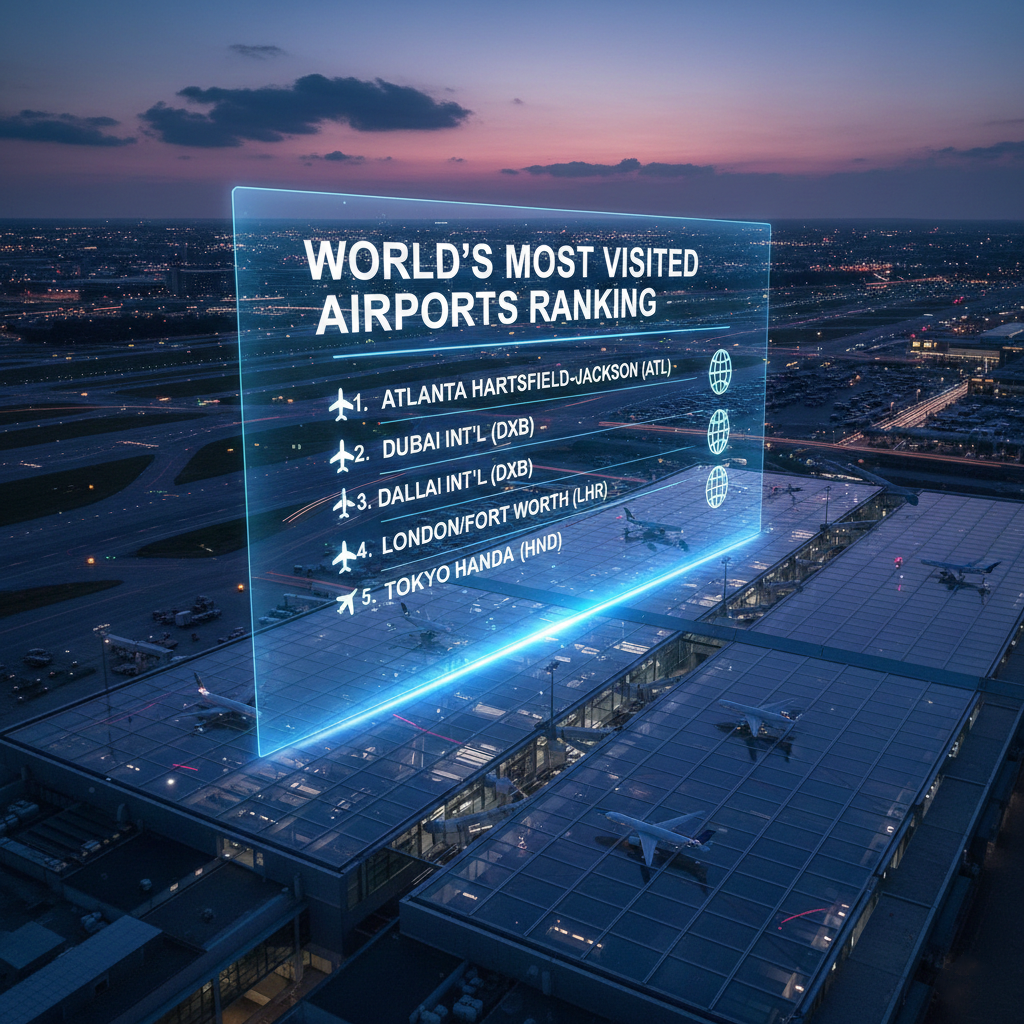
Airports are more than just transit points—they are powerful indicators of global connectivity, economic strength, and travel demand. Every year, millions (and in some cases, billions) of passengers pass through the world’s busiest airports, turning them into vital engines of tourism, trade, and international mobility.
In this in-depth guide on the world’s most visited airports ranking, we break down the busiest airports by passenger traffic, explain why they dominate global aviation, and explore trends shaping the future of air travel. Whether you’re a frequent flyer, aviation enthusiast, travel blogger, or business professional, this article gives you clear, valuable insights—without fluff.
What Does “Most Visited Airport” Really Mean?
Before diving into rankings, it’s important to understand the criteria.
Passenger Traffic Explained
The term most visited airport usually refers to total annual passenger traffic, which includes:
- Departing passengers
- Arriving passengers
- Transit and connecting passengers
Most global rankings are based on data published by Airports Council International (ACI), the most trusted authority in airport performance metrics.
Why Passenger Volume Matters
High passenger traffic indicates:
- Strong international and domestic connectivity
- Robust airline presence
- Strategic geographic location
- Economic and tourism significance
World’s Most Visited Airports Ranking (Global Overview)
Below is a snapshot of the airports that consistently dominate global passenger traffic rankings.
Top 10 Busiest Airports in the World (By Passenger Traffic)
| Rank | Airport Name | City | Country | Approx. Annual Passengers |
|---|---|---|---|---|
| 1 | Hartsfield–Jackson Atlanta International Airport (ATL) | Atlanta | USA | 100+ million |
| 2 | Dubai International Airport (DXB) | Dubai | UAE | 85–90 million |
| 3 | Dallas/Fort Worth International Airport (DFW) | Dallas–Fort Worth | USA | 80+ million |
| 4 | London Heathrow Airport (LHR) | London | UK | 75–80 million |
| 5 | Denver International Airport (DEN) | Denver | USA | 75+ million |
| 6 | Istanbul Airport (IST) | Istanbul | Turkey | 70+ million |
| 7 | Los Angeles International Airport (LAX) | Los Angeles | USA | 65–70 million |
| 8 | O’Hare International Airport (ORD) | Chicago | USA | 65+ million |
| 9 | Paris Charles de Gaulle Airport (CDG) | Paris | France | 65+ million |
| 10 | Indira Gandhi International Airport (DEL) | New Delhi | India | 65+ million |
Passenger numbers vary slightly by year and recovery cycles but reflect the latest global trends.
Why Atlanta Airport Continues to Dominate the World
Hartsfield–Jackson Atlanta International Airport (ATL)
Atlanta has held the top spot in the world’s most visited airports ranking for decades—and for good reason.
Key Reasons for ATL’s Dominance
- World’s largest airline hub (Delta Air Lines)
- Strategic location for U.S. domestic travel
- High frequency of short-haul and long-haul flights
- Extremely efficient airport operations
ATL proves that domestic connectivity can be just as powerful as international traffic.
Dubai International Airport: King of International Travel
Dubai International Airport (DXB)
Dubai International Airport is unmatched when it comes to international passenger traffic.
What Makes DXB Special?
- World’s busiest airport for international passengers
- Home hub of Emirates Airline
- Central location connecting Europe, Asia, Africa, and Australia
- Luxury infrastructure and premium passenger experience
Even with fewer domestic flights, DXB remains a global aviation powerhouse.
Fastest-Growing Airports in Passenger Traffic
Some airports are climbing the rankings faster than ever, driven by emerging markets and infrastructure investments.
Airports Showing Rapid Growth
- Istanbul Airport (IST) – Major Europe–Asia connector
- Delhi Airport (DEL) – Driven by India’s travel boom
- Denver International Airport (DEN) – Expanding U.S. domestic demand
- Doha Hamad International Airport (DOH) – Premium global transit hub
These airports reflect shifting travel patterns toward Asia, the Middle East, and developing economies.
Regional Breakdown: Busiest Airports by Continent
North America
- Atlanta (ATL)
- Dallas/Fort Worth (DFW)
- Denver (DEN)
- Los Angeles (LAX)
North America dominates due to massive domestic air travel demand.
Europe
- London Heathrow (LHR)
- Paris Charles de Gaulle (CDG)
- Istanbul (IST)
- Amsterdam Schiphol (AMS)
Europe’s airports thrive on international connectivity and tourism.
Asia-Pacific
- Tokyo Haneda (HND)
- Delhi (DEL)
- Beijing Capital (PEK)
- Shanghai Pudong (PVG)
Asia-Pacific is the fastest-growing aviation region globally.
Middle East
- Dubai (DXB)
- Doha (DOH)
- Abu Dhabi (AUH)
These airports specialize in long-haul international transit.
Domestic vs International Traffic: Key Differences
Airports Leading in Domestic Travel
- Atlanta (ATL)
- Denver (DEN)
- Dallas/Fort Worth (DFW)
- Beijing Capital (PEK)
Airports Leading in International Travel
- Dubai (DXB)
- London Heathrow (LHR)
- Paris Charles de Gaulle (CDG)
- Istanbul (IST)
Understanding this split helps explain why some airports rank high despite fewer total flights.
How COVID Changed Airport Rankings (And What Stayed the Same)
The pandemic disrupted aviation worldwide, but recovery patterns revealed important insights.
Major Changes Observed
- Domestic-focused airports recovered faster
- Asia-Pacific airports rebounded more slowly due to restrictions
- Middle East hubs regained international traffic quickly
Despite disruptions, top airports retained long-term dominance due to infrastructure and airline partnerships.
What Makes an Airport One of the Most Visited in the World?
Several factors influence airport rankings.
Key Success Drivers
- Strategic geographic location
- Strong airline hubs
- Government investment in infrastructure
- Efficient operations and passenger experience
- High tourism and business travel demand
Airports that excel in these areas consistently outperform others.
Future Trends in Global Airport Traffic
Looking ahead, the world’s busiest airports may look slightly different.
Emerging Trends
- Growth of Indian and Southeast Asian airports
- Expansion of mega airports in the Middle East
- Increased use of biometric and AI-driven airport systems
- Focus on sustainability and green airport design
Airports that adapt quickly will lead future rankings.
Frequently Asked Questions (FAQs)
Which is the world’s most visited airport?
Hartsfield–Jackson Atlanta International Airport is currently the world’s most visited airport by total passenger traffic.
Which airport handles the most international passengers?
Dubai International Airport leads globally in international passenger traffic.
Is any Indian airport in the top 10 busiest airports?
Yes, Indira Gandhi International Airport in New Delhi consistently ranks among the world’s top 10 busiest airports.
Why do U.S. airports dominate the rankings?
The U.S. has a massive domestic travel market with frequent short-haul flights, boosting total passenger numbers.
Will Asian airports dominate future rankings?
Yes, with rising middle-class travel demand, Asian airports are expected to climb higher in global rankings.
Conclusion: Why Airport Rankings Matter More Than Ever
The world’s most visited airports ranking offers a fascinating look into how people, economies, and continents connect. From Atlanta’s unmatched domestic network to Dubai’s global reach, these airports shape the way the world travels.
As air travel continues to evolve, airports that invest in efficiency, technology, and passenger experience will remain at the top. For travelers, understanding these rankings means smarter travel planning. For businesses and policymakers, they reveal where the world is moving—literally.
👉 If you found this guide helpful, share it with fellow travelers or aviation enthusiasts and stay updated with the latest global travel insights.
