

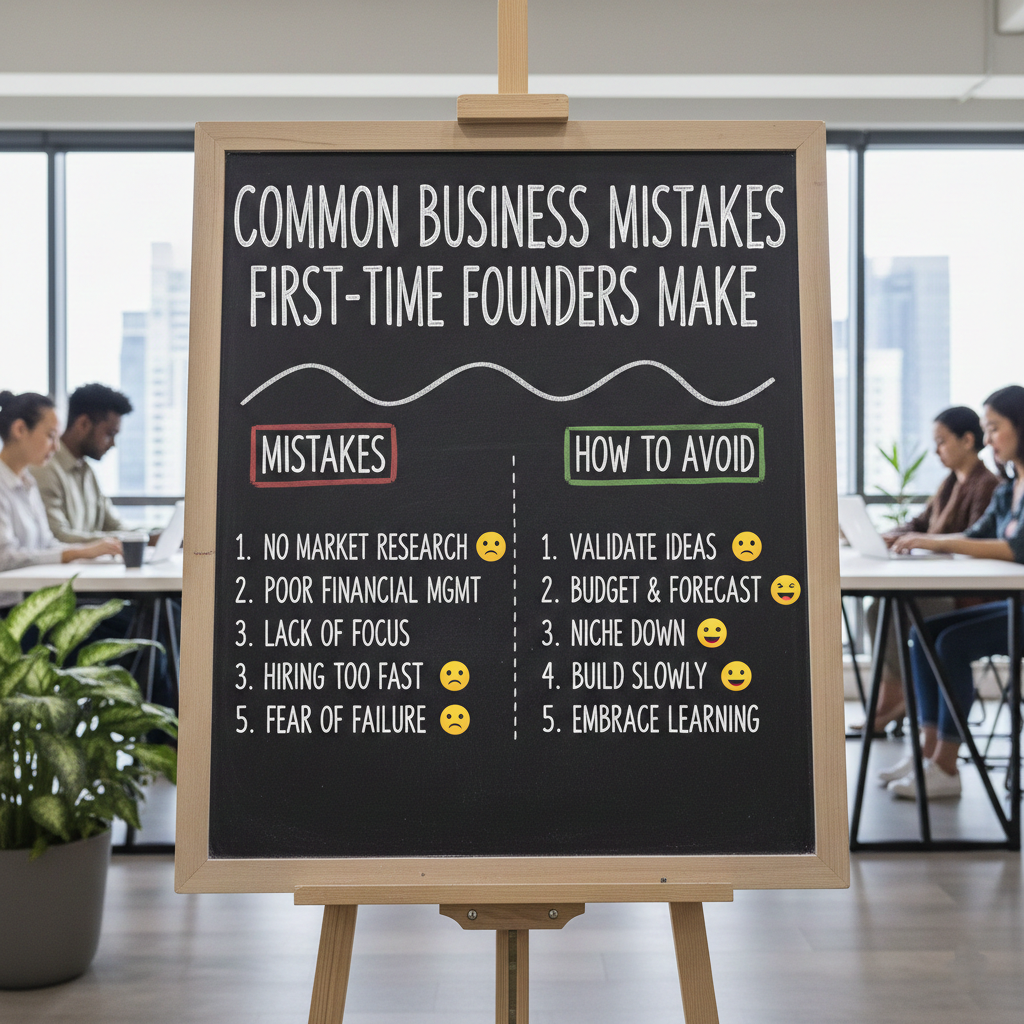
Why First-Time Founders Often Struggle
Starting a business for the first time is exciting, empowering, and—let’s be honest—terrifying. Many first-time founders jump in with passion, ideas, and ambition, but without experience, they often make avoidable mistakes that cost time, money, and sometimes the entire business.
In fact, studies show that around 90% of startups fail, and a large portion of those failures are caused by basic business mistakes—not bad ideas.
The good news?
Most of these mistakes are predictable and preventable.
In this detailed guide, we’ll break down the most common business mistakes first-time founders make, explain why they happen, and show you how to avoid them. Whether you’re planning a startup or already running one, this article will help you build smarter and grow stronger.
Mistake #1: Starting Without Proper Market Research
Why Market Research Is Non-Negotiable
One of the biggest mistakes first-time founders make is assuming their idea is great without validating it. Loving your idea doesn’t mean customers will pay for it.
Many founders build products nobody actually needs.
Common Signs of Poor Market Research
- Relying only on friends and family opinions
- Ignoring competitors
- Not understanding customer pain points
- Guessing prices instead of testing them
How to Avoid This Mistake
- Talk to real potential customers before building
- Study competitors and their weaknesses
- Validate demand using surveys, landing pages, or MVPs
- Use tools like Google Trends, keyword research, and social listening
Pro tip: If customers aren’t actively searching for a solution, demand may be weak.
Mistake #2: Lack of a Clear Business Plan
Why “Just Start” Is Risky
Many first-time founders skip writing a business plan because it feels boring or unnecessary. But without a plan, decisions become reactive instead of strategic.
A business plan doesn’t need to be 50 pages—but it must exist.
Key Elements Every Business Plan Should Include
- Clear problem and solution
- Target audience
- Revenue model
- Pricing strategy
- Marketing plan
- Cost structure
- Growth roadmap
Simple Business Plan vs No Plan
| Aspect | With Plan | Without Plan |
|---|---|---|
| Decision-making | Clear & strategic | Confused |
| Budget control | Planned | Overspending |
| Investor confidence | High | Low |
| Growth clarity | Structured | Random |
Mistake #3: Underestimating Startup Costs
Why Money Runs Out Faster Than Expected
First-time founders often assume:
“I’ll start small, costs will be low.”
Reality says otherwise.
Hidden expenses like marketing, tools, taxes, hiring, and delays add up quickly.
Commonly Missed Costs
- Legal and compliance fees
- Marketing and branding
- Software subscriptions
- Customer acquisition costs
- Emergency cash buffer
How to Avoid Cash Flow Problems
- Create a realistic financial forecast
- Add a 20–30% buffer to your budget
- Track expenses weekly
- Separate personal and business finances
Rule of thumb: Always plan for more expenses and slower revenue than expected.
Mistake #4: Trying to Do Everything Alone
The “Solo Founder Burnout” Trap
Many first-time founders believe they must handle everything—sales, marketing, tech, finance, operations. This leads to burnout, poor execution, and slow growth.
Why This Hurts Your Business
- You waste time on low-impact tasks
- Skill gaps reduce quality
- Decision fatigue increases
- Growth becomes limited
Smarter Alternatives
- Outsource non-core tasks
- Hire freelancers early
- Build a small but strong team
- Use automation tools
Remember: Delegation is not weakness—it’s leadership.
Mistake #5: Ignoring Marketing and Branding Early
“If the Product Is Good, It Will Sell” Is a Myth
Even the best product fails without visibility. First-time founders often delay marketing until it’s “perfect.” That delay can kill momentum.
Common Marketing Mistakes
- No brand identity
- No website or poor SEO
- Ignoring social media
- No clear messaging
What Smart Founders Do Early
- Build a simple but professional brand
- Invest in SEO from day one
- Collect emails early
- Create content that educates customers
Fact: Startups with strong branding grow faster and earn more trust.
Mistake #6: Not Understanding the Target Customer Clearly
Why “Everyone” Is Not Your Customer
A classic beginner mistake is trying to sell to everyone. When you target everyone, you connect with no one.
Problems Caused by Poor Targeting
- Weak marketing messages
- Low conversion rates
- High ad costs
- Confused product features
How to Define Your Ideal Customer
- Age, location, income
- Pain points and goals
- Buying behavior
- Preferred platforms
Create a customer persona and make every decision around it.
Mistake #7: Weak Pricing Strategy
Underpricing Is Just as Dangerous as Overpricing
First-time founders often underprice out of fear. Low prices may attract users—but they rarely build sustainable businesses.
Common Pricing Errors
- Copying competitors blindly
- Ignoring costs
- Not testing different prices
- Fear of charging what you’re worth
Better Pricing Practices
- Price based on value, not fear
- Test pricing tiers
- Include profit margins from day one
- Communicate value clearly
Confidence in pricing reflects confidence in your product.
Mistake #8: Avoiding Sales or Feeling Uncomfortable Selling
Sales Is Not Dirty—It’s Survival
Many founders dislike sales and avoid it. But without sales, there is no business.
Why Sales Fear Hurts Growth
- Leads go cold
- Revenue stagnates
- Cash flow suffers
How to Improve Sales as a Founder
- Learn basic sales psychology
- Focus on solving problems, not pushing products
- Build trust through education
- Follow up consistently
Sales is simply helping the right people make the right decision.
Mistake #9: Ignoring Legal, Compliance, and Documentation
Small Legal Mistakes Can Destroy Big Dreams
Skipping legal formalities might save money initially, but it can cause massive problems later.
Common Legal Oversights
- Not registering the business properly
- Ignoring contracts
- No intellectual property protection
- Tax compliance issues
How to Stay Safe
- Register your business correctly
- Use written agreements
- Consult a professional early
- Maintain proper records
Legal clarity protects both your business and your peace of mind.
Mistake #10: Lack of Focus and Constant Pivoting
Shiny Object Syndrome Is Real
First-time founders often chase every new idea, trend, or opportunity. This lack of focus dilutes effort and slows growth.
Symptoms of Poor Focus
- Changing strategy frequently
- Launching too many features
- No clear priority
How to Stay Focused
- Set clear goals
- Measure results regularly
- Commit to one core strategy
- Avoid distractions
Consistency beats intensity in business.
Mistake #11: Not Tracking Data and Metrics
Guessing Is Not a Strategy
Running a business without data is like driving blindfolded.
Key Metrics Every Founder Should Track
- Revenue and expenses
- Customer acquisition cost
- Conversion rates
- Customer lifetime value
- Churn rate
Use dashboards and review numbers weekly—not yearly.
Mistake #12: Giving Up Too Early
Success Takes Time
Many first-time founders quit too soon because they expect fast results. Businesses take time to grow, stabilize, and succeed.
Why Patience Matters
- Trust builds slowly
- Markets take time to respond
- Skills improve with experience
Persistence, learning, and adaptability separate successful founders from failed ones.
Frequently Asked Questions (FAQs)
What is the biggest mistake first-time founders make?
The biggest mistake is starting a business without validating market demand. Without customers, even great ideas fail.
How can first-time founders avoid failure?
By doing proper research, planning finances, focusing on customers, investing in marketing, and continuously learning from feedback.
Is a business plan really necessary?
Yes. A simple business plan helps guide decisions, manage risk, and attract investors or partners.
Why do most startups fail in the first year?
Common reasons include lack of cash flow, poor market fit, weak marketing, and operational mistakes.
Can first-time founders succeed without experience?
Absolutely. Many successful entrepreneurs were first-time founders who learned fast, avoided common mistakes, and stayed consistent.
Conclusion: Build Smarter, Not Harder
Every successful entrepreneur was once a first-time founder. Mistakes are part of the journey—but repeating avoidable mistakes is optional.
By understanding these common business mistakes first-time founders make, you gain a powerful advantage. Planning better, focusing on customers, managing finances wisely, and staying consistent can dramatically improve your chances of success.
Your Next Step
If you’re starting or growing a business:
- Review your strategy today
- Fix one mistake at a time
- Keep learning and improving
Smart founders don’t avoid mistakes—they learn faster and build stronger.
If you want help with business planning, marketing, branding, or growth strategies, now is the time to take action. 🚀
