

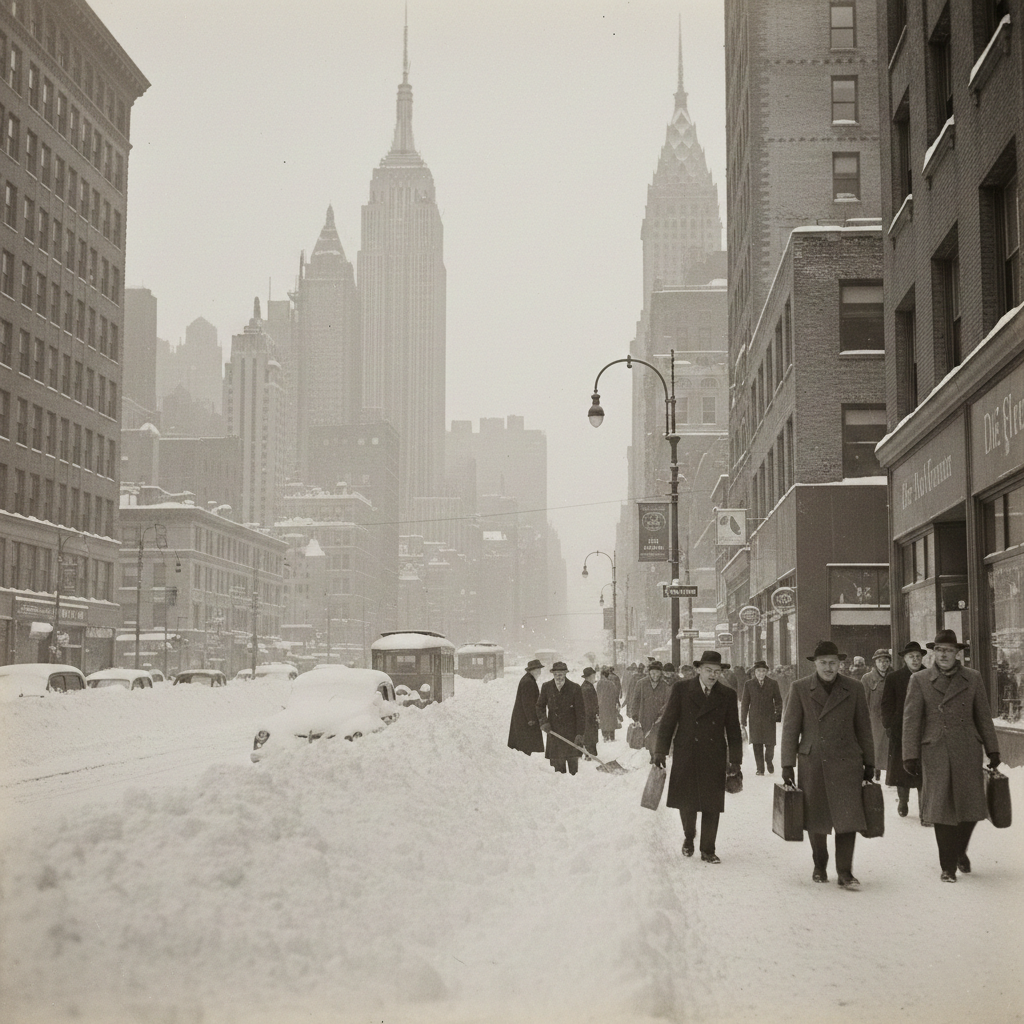
The Winter Storm That Changed New York Forever
Long before weather apps, satellite forecasts, and emergency alerts, New York City faced one of the most dramatic winters in its history. The NYC blizzard of 1947 arrived with little warning, burying the city under record-breaking snowfall and bringing daily life to a grinding halt. Streets disappeared, transportation collapsed, and millions of New Yorkers were forced to adapt overnight.
More than seven decades later, the 1947 blizzard is still remembered as a defining moment in the city’s relationship with extreme weather. This wasn’t just a snowstorm—it was a citywide test of resilience, community, and survival.
In this detailed look back, we’ll explore what caused the blizzard, how New York responded, how it compares to modern storms, and why it still matters today.
The Blizzard of 1947: A Snapshot of History
When and How It Happened
The blizzard struck December 26–27, 1947, right after Christmas, catching residents completely off guard. Weather forecasts at the time predicted only light snowfall. Instead, New York City was slammed with over 26 inches of snow, making it the heaviest snowfall ever recorded in NYC at that time.
What made this storm particularly devastating was not just the amount of snow, but the lack of preparation.
Key Facts at a Glance
| Detail | Blizzard of 1947 |
|---|---|
| Dates | December 26–27, 1947 |
| Snowfall | ~26.4 inches in NYC |
| Forecast Accuracy | Severely underestimated |
| Transportation Impact | Near-total shutdown |
| Death Toll | Limited but significant for the era |
| Economic Impact | Millions in damages |
Why the Blizzard of 1947 Was So Destructive
No Warning, No Preparation
In 1947, meteorology was still developing. There were no Doppler radars or real-time satellite imagery. As a result:
- Snowplows were not deployed in advance
- Emergency services were understaffed
- Citizens were unprepared for days of isolation
When the snow began falling heavily, it was already too late.
Snowfall Without Strong Winds
Unlike many blizzards, the 1947 storm had relatively low wind speeds. This meant the snow fell straight down and accumulated rapidly instead of drifting away. Streets filled up fast, sometimes reaching waist-high levels.
How New York City Came to a Standstill
Transportation Breakdown
Transportation was among the hardest-hit sectors.
- Subways: Many lines stopped entirely as entrances were buried
- Buses: Immobilized due to snow-packed streets
- Trains: Regional rail services were delayed for days
- Airports: LaGuardia and Newark effectively shut down
For a city that never sleeps, this was unprecedented.
Streets That Disappeared
Entire avenues vanished beneath snowbanks. In some neighborhoods, residents exited buildings through second-floor windows because doors were blocked.
Photographs from the time show:
- Cars completely submerged
- Pedestrians walking on top of snow-covered vehicles
- Children sledding down major city streets
Daily Life During the Blizzard
How Residents Coped
Despite the chaos, New Yorkers adapted quickly.
- Neighbors shared food and coal
- Local shopkeepers extended credit
- Children helped shovel sidewalks
- Communities organized informal rescue efforts
This spirit of cooperation became one of the most enduring legacies of the storm.
Businesses and Workplaces
Most offices, factories, and schools closed for multiple days. Delivery services failed, leading to shortages of:
- Milk
- Bread
- Fuel
Yet remarkably, the city avoided widespread panic.
The Human Stories Behind the Snow
Unsung Heroes of the Blizzard
Sanitation workers, police officers, and firefighters worked around the clock, often on foot. Thousands of city employees shoveled snow manually, sometimes using nothing more than basic tools.
Mayor William O’Dwyer publicly praised these workers, acknowledging that without them, recovery would have taken far longer.
A Holiday Blizzard Like No Other
The timing—right after Christmas—made the blizzard especially memorable. Families were stranded together, travel plans were canceled, and holiday celebrations extended unexpectedly.
For many older New Yorkers, it became a lifelong story told to children and grandchildren.
How the Blizzard of 1947 Changed NYC Forever
Major Improvements in Snow Management
The storm exposed serious weaknesses in New York City’s emergency planning. In response, officials implemented long-term changes:
- Expansion of the snowplow fleet
- Better coordination between city agencies
- Improved weather monitoring systems
- Emergency snow removal protocols
These reforms helped NYC respond far more effectively to later storms.
Influence on Modern Urban Planning
The 1947 blizzard played a role in shaping:
- Street-clearing priorities
- Public transit contingency plans
- Building access regulations
Many of today’s winter preparedness strategies trace their roots back to lessons learned that winter.
Comparing the Blizzard of 1947 to Other NYC Snowstorms
How It Stacks Up Against Later Storms
| Blizzard | Year | Snowfall in NYC |
|---|---|---|
| Great Blizzard | 1888 | ~21 inches |
| Record Blizzard | 1947 | ~26 inches |
| Blizzard of 1996 | 1996 | ~20 inches |
| Snowmageddon | 2010 | ~20 inches |
| Jonas | 2016 | ~27.5 inches |
While the 2016 Blizzard Jonas technically surpassed it, the 1947 blizzard remains iconic because it occurred in a time of limited technology and resources.
Media Coverage and Public Reaction
Newspapers and Radio
Newspapers printed dramatic front-page photos of buried landmarks. Radio became the primary source of updates, offering:
- Snow clearance announcements
- Emergency instructions
- Reassurance to residents
There was no social media, yet information spread rapidly through traditional channels.
Lessons from the Blizzard of 1947 That Still Matter Today
Why This Storm Is Still Relevant
Modern cities face growing risks from extreme weather due to climate change. The 1947 blizzard teaches us that:
- Underestimating weather can be costly
- Infrastructure resilience is essential
- Community cooperation saves lives
Even with advanced forecasting, preparation remains critical.
Frequently Asked Questions About the NYC Blizzard of 1947
How much snow fell in New York City during the blizzard of 1947?
Approximately 26.4 inches of snow fell, making it the largest snowfall NYC had seen at the time.
Why was the 1947 blizzard so unexpected?
Weather forecasting technology was limited, and forecasts predicted only light snow, not a major blizzard.
Did the blizzard of 1947 cause many deaths?
While fatalities occurred, the number was relatively low compared to the scale of the storm, largely due to community cooperation.
Is the 1947 blizzard still the biggest in NYC history?
It was the biggest at the time. Later storms, such as Blizzard Jonas in 2016, slightly surpassed it in snowfall totals.
How did the city recover after the storm?
It took several days to clear major roads and nearly a week for full recovery. The event led to permanent improvements in snow response planning.
The Blizzard’s Place in New York’s Collective Memory
For many longtime residents, the blizzard of 1947 isn’t just history—it’s personal memory. It symbolizes a time when New York was tested and proved its ability to endure.
Old photographs, archived news reports, and oral histories keep the story alive, reminding newer generations how fragile urban life can be when nature takes control.
Conclusion: A Storm That Still Echoes Through Time
The record-breaking NYC blizzard of 1947 was more than a weather event—it was a turning point. It exposed vulnerabilities, strengthened communities, and reshaped how the city prepares for winter.
As climate patterns continue to shift and extreme weather becomes more common, remembering storms like the blizzard of 1947 isn’t just about nostalgia. It’s about learning, adapting, and staying prepared.
If you enjoy deep dives into historic events that shaped modern cities, explore more stories like this and stay connected with the past that continues to influence our future.
