
Understanding the Software Development Lifecycle
The Software Development Lifecycle (SDLC) is the backbone of modern software engineering. Whether you’re building a small business website, a mobile app, or an enterprise-level ERP system, SDLC provides a structured, step-by-step approach to planning, creating, testing, deploying, and maintaining software.
In today’s competitive digital world, companies that follow a well-defined SDLC deliver better quality software, reduce development costs, minimize risks, and meet deadlines more consistently. This guide explains SDLC in simple terms, with real-world insights, practical examples, and SEO-friendly structure to help both beginners and professionals.
If you’re interested in more tech and development insights, explore related guides on thenews.zone for deeper learning.
What Is the Software Development Lifecycle (SDLC)?
The Software Development Lifecycle is a systematic process used by software teams to design, develop, test, deploy, and maintain applications efficiently.
Instead of coding randomly, SDLC ensures that:
- Business requirements are clearly understood
- Development follows a planned roadmap
- Quality and security are built into the product
- Maintenance and scalability are considered early
Why SDLC Matters in Modern Software Development
Without SDLC, projects often fail due to:
- Poor requirement understanding
- Missed deadlines
- Budget overruns
- Low-quality or insecure software
According to industry reports, over 60% of failed software projects lack proper planning and lifecycle management, highlighting the importance of SDLC.
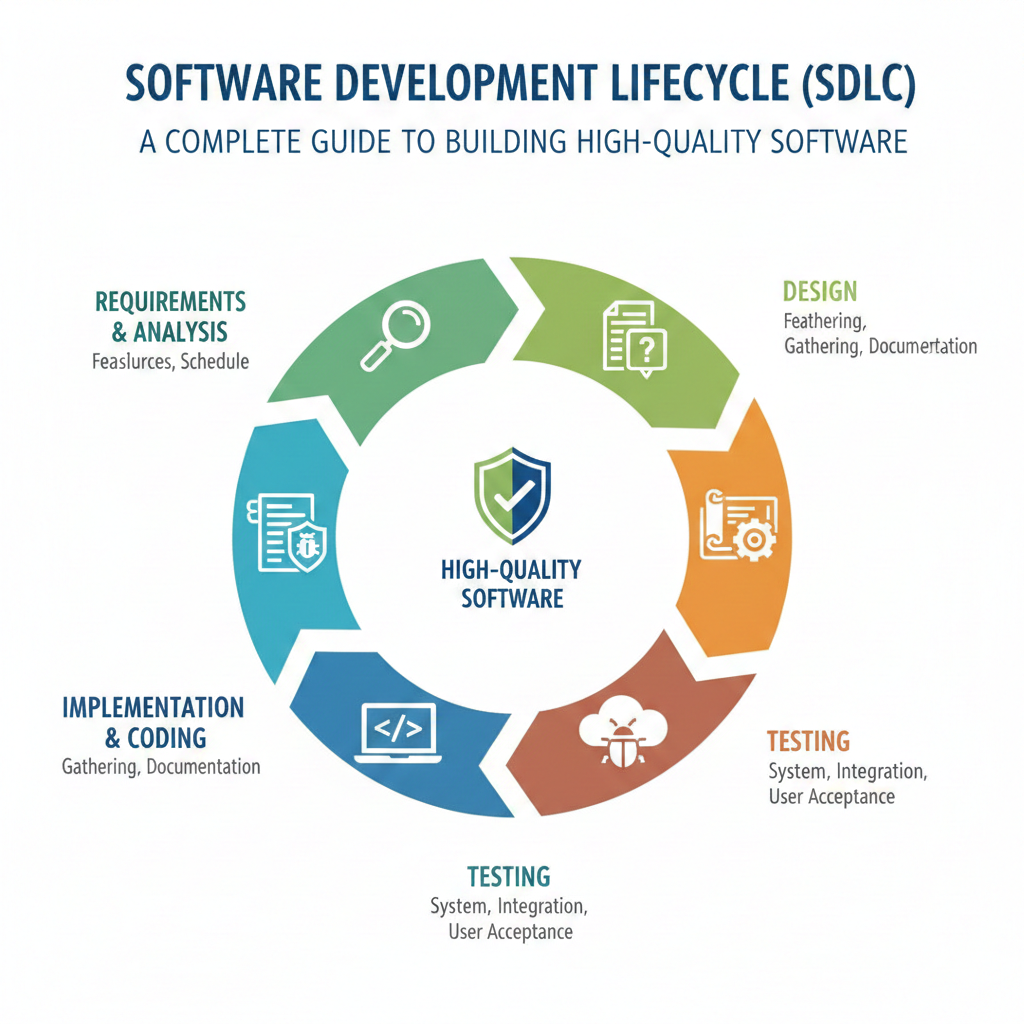
Key Phases of the Software Development Lifecycle
Every SDLC model includes core phases. While names may vary slightly, the fundamentals remain the same.
Requirement Analysis and Planning
This is the foundation of the entire SDLC. Any mistake here affects all later stages.
What Happens in This Phase?
- Stakeholders define business goals
- Functional and non-functional requirements are gathered
- Feasibility studies (technical, financial, operational)
- Project timeline and cost estimation
Key Deliverables
- Software Requirement Specification (SRS)
- Project roadmap
- Risk assessment
Pro Tip: Clear documentation at this stage can reduce rework by up to 40% later in development.
System Design and Architecture
Once requirements are finalized, the focus shifts to how the system will work.
Design Includes:
- System architecture
- Database design
- UI/UX wireframes
- Technology stack selection
Types of Design
- High-Level Design (HLD): Overall system structure
- Low-Level Design (LLD): Detailed component behavior
Good design ensures:
- Scalability
- Security
- Performance optimization
For design best practices, many teams follow principles from trusted sources like IBM’s software architecture guidelines.
Software Development and Coding
This is where ideas turn into reality.
Activities in the Development Phase
- Writing clean, maintainable code
- Following coding standards
- Version control using Git
- Code reviews and collaboration
Best Practices for Developers
- Write modular code
- Use meaningful variable names
- Follow SOLID principles
- Document important logic
Modern teams often integrate CI/CD pipelines to automate builds and reduce errors.
Software Testing and Quality Assurance
Testing ensures the software works as expected and meets user requirements.
Common Types of Testing
- Unit Testing
- Integration Testing
- System Testing
- User Acceptance Testing (UAT)
- Security Testing
- Performance Testing
Why Testing Is Critical
Studies show that fixing bugs after deployment costs 5x–10x more than fixing them during development.
Testing improves:
- Reliability
- User trust
- Product reputation
Deployment and Release Management
After successful testing, the software is ready for production.
Deployment Strategies
- Big Bang Deployment
- Phased Deployment
- Blue-Green Deployment
- Canary Releases
Key Considerations
- Server configuration
- Database migration
- Backup and rollback plans
- Monitoring setup
Cloud platforms like AWS and Azure have made deployment faster and more reliable.
Maintenance and Continuous Improvement
SDLC doesn’t end at deployment.
Maintenance Includes:
- Bug fixes
- Performance optimization
- Security updates
- Feature enhancements
Types of Maintenance
- Corrective
- Adaptive
- Perfective
- Preventive
Well-maintained software delivers long-term value and customer satisfaction.
Popular Software Development Lifecycle Models
Different projects require different SDLC models.
Waterfall Model
Best for: Small, well-defined projects
Pros
- Simple and structured
- Clear milestones
Cons
- No flexibility
- Late testing
Agile Development Model
Best for: Dynamic, fast-changing projects
Pros
- Continuous feedback
- Faster delivery
- Customer involvement
Cons
- Requires experienced teams
Agile frameworks like Scrum and Kanban dominate modern software development.
Spiral Model
Best for: Large, high-risk projects
Key Feature
- Risk analysis at every iteration
V-Model (Verification and Validation)
Best for: Safety-critical systems
Advantage
- Testing planned alongside development
DevOps Model
Best for: Continuous delivery environments
Benefits
- Faster releases
- Better collaboration
- Automation-driven workflows
SDLC Models Comparison Table
| Model | Flexibility | Risk Handling | Best Use Case |
|---|---|---|---|
| Waterfall | Low | Low | Fixed requirements |
| Agile | High | Medium | Rapid development |
| Spiral | Medium | High | Large systems |
| V-Model | Low | Medium | Regulated industries |
| DevOps | Very High | Medium | Continuous delivery |
Benefits of Following a Strong SDLC Process
A well-implemented SDLC delivers measurable advantages:
- Improved software quality
- Reduced development cost
- Better project predictability
- Enhanced team collaboration
- Higher customer satisfaction
Organizations that adopt SDLC best practices see up to 30% faster time-to-market.
Common SDLC Challenges and How to Overcome Them
Unclear Requirements
Solution: Regular stakeholder communication
Scope Creep
Solution: Change control process
Poor Testing
Solution: Automated testing tools
Security Gaps
Solution: Security-by-design approach
Best Practices for an Effective Software Development Lifecycle
- Involve stakeholders early
- Choose the right SDLC model
- Automate testing and deployment
- Focus on documentation
- Monitor performance post-release
For ongoing software trends and expert opinions, internal resources on thenews.zone provide valuable insights into development and technology strategies.
FAQs About Software Development Lifecycle
What is the main purpose of SDLC?
The main purpose of SDLC is to deliver high-quality software efficiently while minimizing risks and costs.
Which SDLC model is best?
There is no single best model. Agile works well for evolving projects, while Waterfall suits fixed-scope requirements.
How long does the SDLC process take?
It depends on project size and complexity. It can range from weeks to several months.
Is SDLC only for large projects?
No. SDLC benefits small, medium, and large projects alike.
Where can I learn more about SDLC standards?
You can explore global standards from organizations like ISO/IEC (outbound authority) and practical insights on thenews.zone.
Conclusion: Why SDLC Is Essential for Software Success
The Software Development Lifecycle is not just a technical framework—it’s a strategic approach to building reliable, scalable, and secure software. By following a structured SDLC process, businesses reduce risks, improve quality, and achieve long-term success in an increasingly digital world.
Whether you’re a student, developer, or business owner, mastering SDLC concepts gives you a strong foundation in software development.
👉 Want more expert-written technology guides, software insights, and development trends?
Visit thenews.zone today and stay ahead in the tech world.
